Most homeowners fall into one of two extremes: they either don’t pay attention to their trees at all, or they care a little too much. Neglect can look like parking vehicles under trees, compacting the soil, failing to water during establishment, or simply not noticing when something changes. Over time, this lack of attention can lead to decline and eventually give urban trees a bad reputation when they fail. On the other hand, some homeowners overwater, over-mulch, over-fertilize, and apply treatments that aren’t needed. I also see a lot of unnecessary pruning done with the belief that it automatically makes trees healthier. In reality, over-pruning and improper pruning are common causes of stress and structural problems. My view is that trees are resilient living organisms. We ask them to grow in urban environments that are far from natural, so our job is to create the right conditions for them to succeed and then allow them to do what trees have evolved to do.
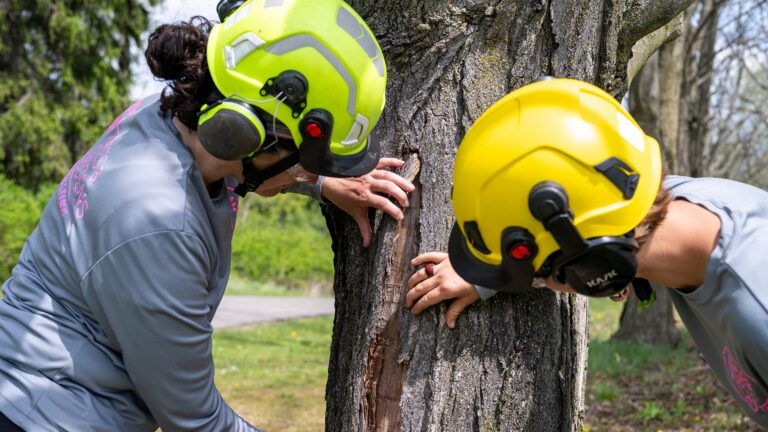
2. How do I know if a tree is healthy—or just looks healthy? If you’re not familiar with trees, this can be difficult to determine. The best place to start is by simply paying attention. Look at your trees throughout the seasons and from year to year. If something changes noticeably in appearance, that can be an early sign that something is wrong. Ideally, trees should be evaluated by a Certified Arborist periodically, yearly if possible, much like an annual health screening. It’s also important to understand that tree health and tree risk are not the same thing. A tree can be perfectly healthy and still have structural defects that make parts of it prone to failure. Conversely, a dead tree may remain standing for decades. Health and risk are related, but they are not interchangeable.
3. When should I be concerned about a tree becoming hazardous? One of the first things I explain to clients is that there is no such thing as a zero-risk tree. Any tree within striking distance of a target carries some level of risk. When arborists assess risk, we’re evaluating both the likelihood of failure and the consequences if failure occurs. A truly hazardous tree is one that is likely to fail under normal conditions and has the potential to strike something of significant value, such as a home, vehicle, or occupied area. Most homeowners can identify the target. The harder part is recognizing the defects that increase the likelihood of failure. If you have large trees near structures, driveways, play areas, or other high-value targets, periodic evaluation is a good idea.
4. Can a declining tree be saved, or is removal usually the only option? Many declining trees can absolutely be saved. We can often address insect infestations, manage certain diseases, improve soil conditions, correct nutrient deficiencies, reduce compaction, and even mitigate some construction-related damage. Girdling roots can sometimes be removed, and plant health care treatments can help support recovery. There are situations where our options become limited. Certain vascular diseases, advanced root rot, severe flooding issues, and extensive root loss may not be reversible. But for trees that are important to a property, it’s usually worth having them evaluated before assuming removal is the only option.
5. Why do trees seem to struggle years after construction or landscaping projects are completed? I call this the “Christmas tree effect.” When you cut down a Christmas tree, it’s dead—but it doesn’t look dead immediately. The same thing happens when a tree loses a significant portion of its root system during construction. Trees store energy reserves in their stems, branches, and roots. After major root damage, they may continue to look healthy for years while living off those stored resources. Eventually, the tree can no longer support itself, and decline
becomes visible. In some cases, a tree may not show serious symptoms until seven to ten years after construction. The extent of the damage often depends on how much of the critical root zone was disturbed.
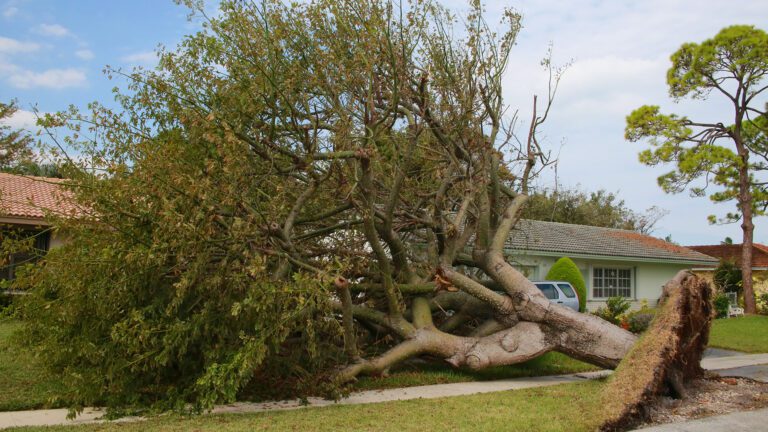
6. What should homeowners look for after a major storm? Most people notice the obvious damage—a large limb on the ground—but it’s important to look a little closer. Check for broken branches that may be hanging in the canopy, limbs that are lodged in other branches, cracked stems, or newly leaning trees. If your tree has cables or support systems installed, those should also be inspected after significant weather events. Take a look at the soil around the base of the tree as well. Soft, heaving, or lifted soil can indicate that the root plate has started to move, which may signal a serious stability issue.
7. Is there really a difference between hiring a tree service and consulting with an arborist? Absolutely. There are only eight states that require a license to operate a tree business. In Ohio, basically anyone can start a tree care business and call themselves a professional arborist. However, becoming an ISA Certified Arborist requires education, experience, examination, and continuing education. Many tree service companies employ highly skilled professionals, but not every company has a Certified Arborist on staff. If you’re seeking advice about tree health, risk, diagnosis, or management decisions, it’s worth asking specifically whether a Certified Arborist will be involved. You can also verify credentials through the International Society of Arboriculture’s “Trees Are Good.”
8. How important is soil health to the long-term health of trees and shrubs? It’s the most important thing you can do for your landscape. Everything starts in the soil. Water uptake, nutrient availability, oxygen exchange, root growth, microbial activity—none of it happens without healthy soil. Many of the tree problems we see above ground actually originate below ground. If you improve soil conditions, you improve the foundation that supports everything else.
9. What tree or landscape issue are you seeing most often right now in our area? Trees planted too deeply and excessive mulch piled against trunks. Trees need oxygen around their root flare, which is where the trunk transitions into the root system. When that area is buried under soil or mulch, it can create long-term health problems and increase the risk of decline. If I could solve one widespread landscape issue tomorrow, it would be correcting planting depth and eliminating mulch volcanoes.
10. If you could give every homeowner one piece of advice about their landscape, what would it be? Look at your trees as living organisms. Trees need light, air, water, and healthy growing conditions. They respond to stress, adapt to their environment, and become vulnerable when conditions aren’t favorable. When evaluating a tree, imagine where that species naturally grows—often in a forest setting with healthy soil and protected roots. Then compare that environment to the conditions on your property. The closer we can get to meeting those natural needs, the more successful our landscapes will be.
11. What is one tree care practice that people often do with good intentions but that can actually cause harm? Pruning. Pruning is one of the most valuable tools we have, but it’s also one of the easiest to do incorrectly. Removing too much foliage, making large cuts, lion- tailing, topping, or pruning at the wrong time can all create long-term problems. Good pruning has a purpose. It improves structure, reduces risk, and supports long-term health. More pruning does not automatically mean a healthier tree.
12. What makes a landscape resilient during periods of drought, excessive rain, or severe weather? The answer is often simpler than people expect. Start with the right plant in the right place. Native species and well-adapted cultivars tend to be more resilient because they’re suited to local conditions. Then focus on the fundamentals: healthy soil, proper mulching, adequate rooting space, and good structural training when trees are young. Those practices create stronger plants that can better tolerate weather extremes throughout their lives.
Tina Graver
Owner – Trees and Gardens Consulting
Board Certified Master Arborist
Tree Risk Assessment Qualified
Certified Treecare Safety Professional
Any content, resident submissions, guest columns, advertisements, and advertorials are not necessarily endorsed by or represent the views of Best Version Media LLC (BVM) or any municipality, homeowners associations, businesses, or organizations that this publication serves. BVM is not responsible for the reliability, suitability, or timeliness of any content submitted, inclusive of materials generated or composed through artificial intelligence (AI). All content submitted is done so at the sole discretion of the submitting party.