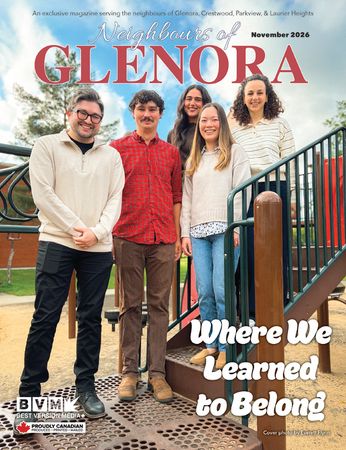
Grief is one of the most personal experiences a person can go through, and often the most isolating. Life does not simply return to normal after the service is over; quiet mornings, empty chairs, familiar songs, birthdays, holidays, and all the ordinary moments now feel different, and while well-meaning friends and family encourage us to move on, this can often feel impossible. We’re asked to navigate a world without those who occupy the deepest places in our hearts.
Everyone grieves in their own way. Some want to talk of their loved ones; others find it difficult to put their feelings into words. Some feel the sadness straight away, while others experience only numbness, anger, guilt, confusion, or even relief. Grief can affect sleep, memory, energy, relationships, and a person’s sense of purpose. There is no perfect timeline and no single correct way to heal.
(Submitted by Everett Flynn)
That is why grief support can be so valuable. Programs that create safe, compassionate spaces allow people to express their feelings without judgment or pressure. Park Memorial’s Soft Landings, Art for the Grieving Heart, and Men’s Grief Support programs offer meaningful examples of how community can help people move through loss with care, dignity, and connection.

(Submitted by Everett Flynn)
Soft Landings was created for the earliest days of grief, when loss can feel overwhelming, unfamiliar, or impossible to put into words. This gentle, practitioner-led program offers grounding, breathing, optional movement, practical guidance, and quiet support. There is no expectation to speak or share – participants can simply come as they are.
(Submitted by Everett Flynn)
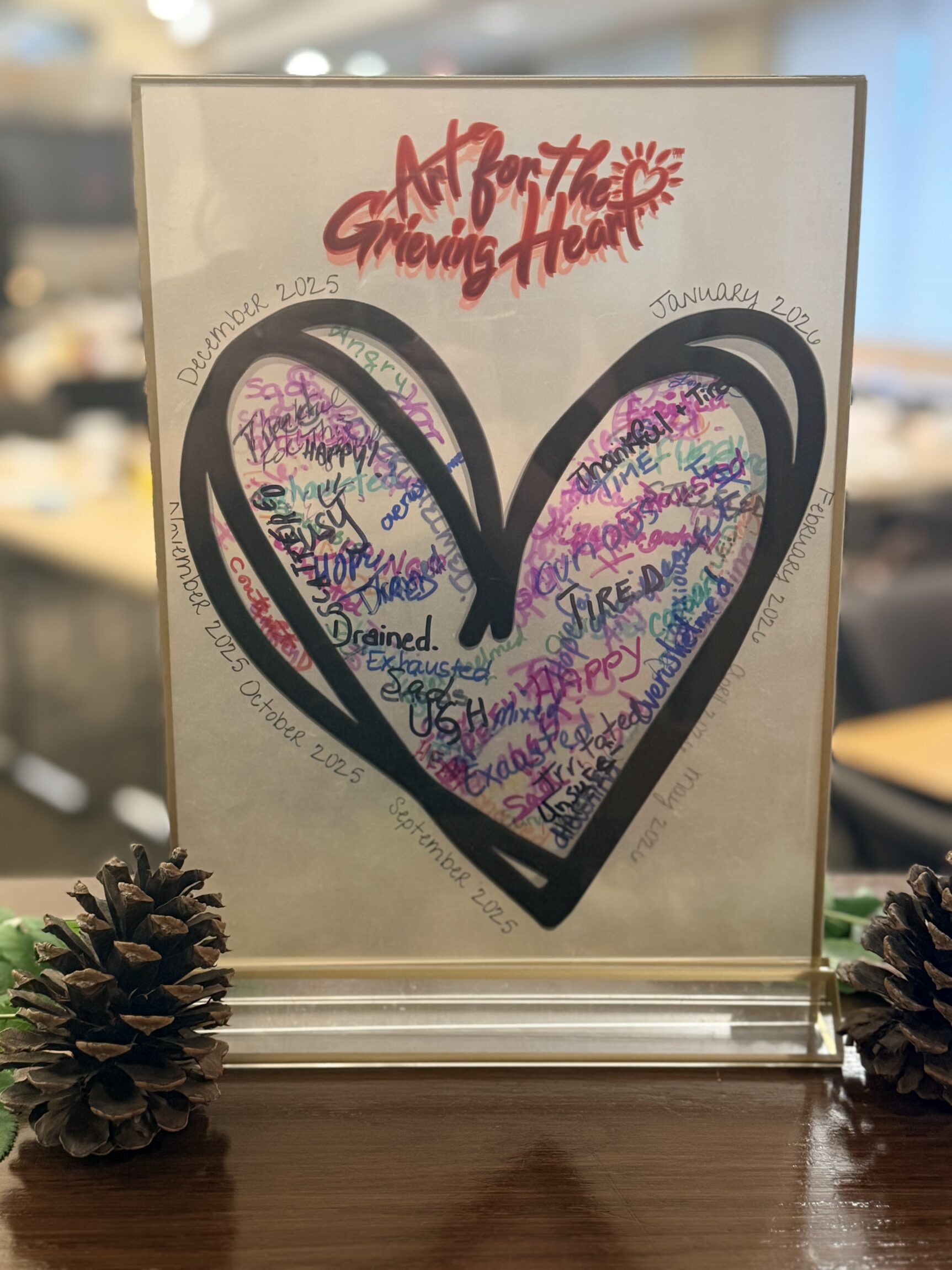
Art for the Grieving Heart gives participants a creative way to process grief. For many people, art can express what words cannot. A simple project can become a tribute, a memory, a release, or a way to honour love that continues after death. The value is not in artistic skill, but in the act of giving grief somewhere gentle to go.
Cristina first came to Art for the Grieving Heart expecting to process the loss of her brother, Tony, who died when she was 16. But the classes helped her realize grief had taken many forms in her life. “I thought I was grieving my brother, but I realized I was grieving a person I once was,” she says. Surrounded by others who understand, Cristina found comfort in knowing “there’s no timestamp on grief.” Through art, she discovered a way to express what had been buried. “The art quiets the mind, so you can actually deal with it all.” And the outcome can be both surprising and cathartic: “You just start somewhere, and it takes you – and sometimes, when you’re doing these activities, it bubbles up.”

(Submitted by Everett Flynn)
Doris, who lost her husband in April, says she is not naturally someone who opens up easily. But in the grief support setting, she found herself surprised by how safe it felt to talk and listen. What stood out most was the absence of judgment and the shared understanding in the room. “Grief can feel very lonely and vulnerable, but being there helped me realize I wasn’t alone,” she says. “Everyone was carrying something, and even though our stories were different, the grief was the same.” For Doris, the group offered permission to be honest about the complicated feelings grief can bring – the guilt of laughing, the guilt of not thinking about loss for even a few minutes, and the quiet rituals people keep to stay connected. “It doesn’t help you move on – because that sounds like leaving something behind – but it helps you move forward.”
(Submitted by Everett Flynn)
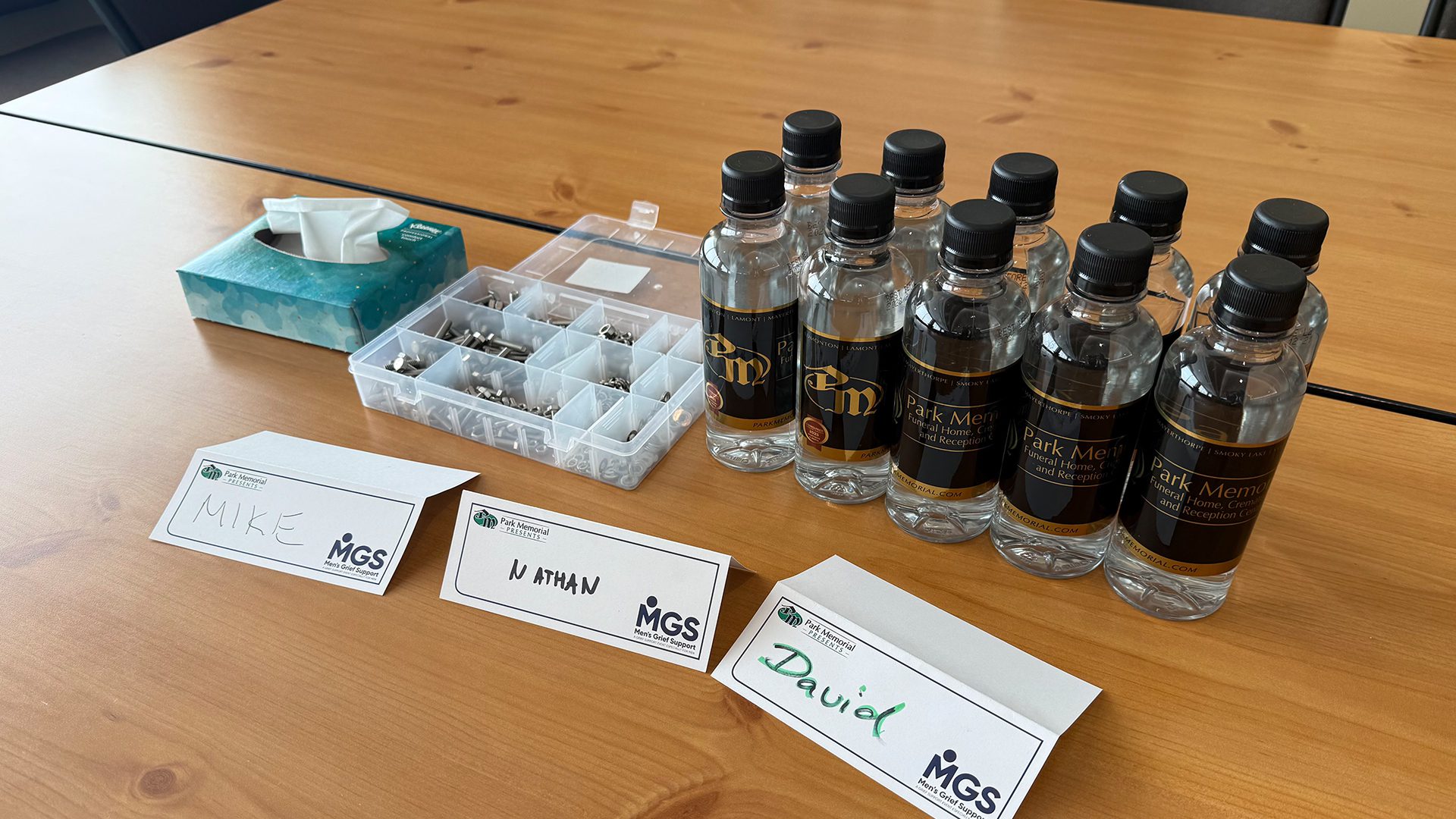
Men’s Grief Support addresses another important need. Many men have been taught, directly or indirectly, to stay strong by staying quiet. They may feel pressure to support others, get back to work, manage practical details, or hide the depth of their sadness. But grief does not disappear when it’s kept inside.
For Josh, one of the most important parts of the program is the freedom to speak openly. “What I get out of it is being able to talk about it without people quickly avoiding or diverting the conversation,” he says. That simple permission – to name grief, to tell the story, to say the hard thing out loud – can be deeply healing.
(Submitted by Everett Flynn)
Gerald describes the value in the connection between men who understand each other’s loss. “There’s just something about the camaraderie – the fellowship of men with men,” he says. For him, the group offers not only support but a sense of steadiness and renewal. “I never feel low leaving here. I always feel good leaving here.”
What makes these programs meaningful is that they meet people where they are. No one needs to have the right words. No one needs to be “doing well.” Participants can show up with sadness, questions, silence, tears, memories, or simply the need to be near others who understand. Grief support does not erase loss. It does not rush people toward closure or ask them to move on. Instead, it offers companionship along the way and a space to simply move forward. It reminds people that love continues, that remembrance matters, and that healing can happen slowly, through conversation, creativity, community, and time.

(Submitted by Everett Flynn)
For anyone grieving, taking the first step into a support program can feel difficult. But it can also be an act of courage. Park Memorial’s grief support programs offer something deeply needed after loss: a place where grief is welcomed, understood, and gently held — whether someone is in the earliest days of loss, ready to process through creativity, or seeking honest conversation with others who understand.
Any content, resident submissions, guest columns, advertisements, and advertorials are not necessarily endorsed by or represent the views of Best Version Media LLC (BVM) or any municipality, homeowners associations, businesses, or organizations that this publication serves. BVM is not responsible for the reliability, suitability, or timeliness of any content submitted, inclusive of materials generated or composed through artificial intelligence (AI). All content submitted is done so at the sole discretion of the submitting party.