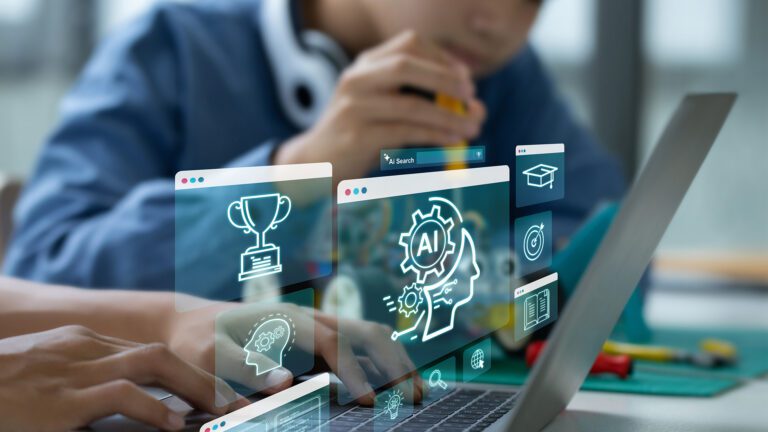
In recent months, we have learned about artificial intelligence (AI), what it is, and where it has become more commonly used across different industries.
One thing we haven’t discussed is the use of AI in schools and its growing demand. AI adoption in U.S. schools shows that approximately 85% of teachers and students are utilizing generative AI frameworks, such as ChatGPT.
Students are using AI for research and tutoring, while teachers are using it to create lesson plans, streamline grading, and improve and automate aspects of their classrooms.
As with any new technology, there are pros and cons to consider as its use and demand continue to skyrocket.
Benefits of AI in Schools
Personalized Learning
AI adjusts its knowledge base and output based on the information it receives. This provides a more targeted approach to responses and reduces the need for teachers to create multiple versions of lesson plans.
Reduced Teacher Workload
AI can create drafts, questions, rubrics, summaries, and samples in record time. This allows teachers to focus the time they have been given back on other areas of the classroom.
Immediate Student Feedback
Students can receive immediate feedback through automated grading and summaries of their assignments. This can help them build confidence and continue self-directed learning while allowing teachers to devote their time to other areas.
Increased Availability
AI can serve as a 24/7 tutor for students, offering translation, support, captioning, and alternative learning methods for those who need additional study time. Instead of waiting for tutoring time to become available with a teacher or staying before or after school, students can use AI to guide them toward answers and help them understand how those answers were reached.
Increased Student Engagement
AI provides tools that can draw students into learning in ways that make them feel active and productive, similar to why students enjoy learning through interactive games. Simulations and interactive tasks allow students to complete goals and adapt to the learning curve while feeling as though they are playing a game.
Concerns and Recommended Actions
Protecting Student Data
AI relies heavily on user-provided information. As with any smart-enabled tool, students need to be careful about the type of personal information they enter into AI technology. This technology is essentially a cloud-based platform that stores data.
Implementation Challenges
AI has a vast amount of resources and technology behind it, so properly implementing it within a school environment is critical.
Overreliance on Technology
AI should be used to support learning, not replace independent thinking and effort. Some students are relying too heavily on AI and its ability to write papers, solve math problems, explain the meaning of a short story, and complete other tasks.
We need to be careful to use AI as an adaptive learning tool rather than as a replacement for learning.
Inaccurate or Misleading Outputs
An AI platform’s knowledge base and responses are often only as good as the information it is given. Students and teachers need to understand that they should not treat every AI response as the definitive answer. Always question the output, and don’t be afraid to research and learn further.
Any content, resident submissions, guest columns, advertisements, and advertorials are not necessarily endorsed by or represent the views of Best Version Media LLC (BVM) or any municipality, homeowners associations, businesses, or organizations that this publication serves. BVM is not responsible for the reliability, suitability, or timeliness of any content submitted, inclusive of materials generated or composed through artificial intelligence (AI). All content submitted is done so at the sole discretion of the submitting party.