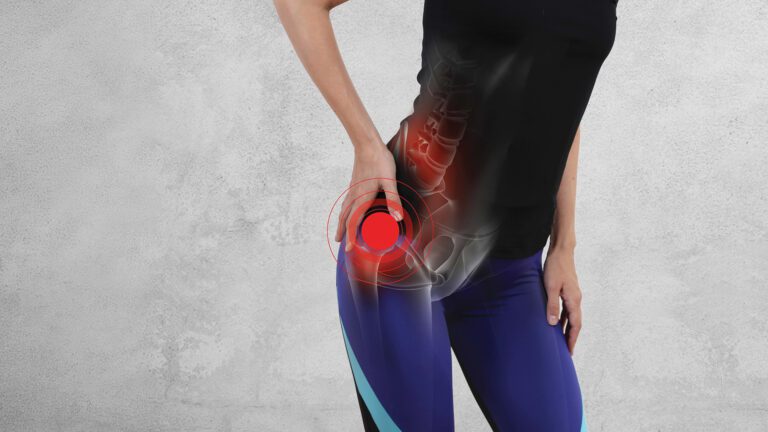
Hip osteoarthritis is one of the leading causes of pain and mobility loss in older adults. The condition develops gradually, often beginning with mild stiffness before progressing into persistent discomfort during walking, standing, or daily activities.
The hip joint functions as a ball-and-socket system. Smooth cartilage covers the surfaces of both bones, allowing movement with very little friction. Osteoarthritis develops when that cartilage begins to wear down. As protection decreases, the joint loses space and movement becomes less efficient. Inflammation increases. Pain often settles deep in the groin, outer hip, or upper thigh. Many people notice stiffness first thing in the morning or after long periods of sitting.
Daily movement becomes more difficult as symptoms progress. Walking long distances, climbing stairs, and getting out of a car often create sharp discomfort. Some people develop a limp due to weakness or pain avoidance. Hip mobility declines over time, especially rotation and extension. Simple tasks such as putting on shoes or crossing the legs may become frustrating.
Diagnosis typically includes a physical examination and imaging studies. Clinicians assess hip mobility, strength, walking mechanics, and pain patterns. X-rays often show joint-space narrowing, bone spurs, or degenerative changes within the joint.
Physical therapy plays an important role in managing hip osteoarthritis. Treatment focuses on improving joint mobility, strengthening the muscles that support the hip, and reducing stress placed on irritated structures. Therapists often target the gluteal muscles, quadriceps, and core to improve stability during walking and transfers. Stretching exercises help restore motion that has gradually been lost through stiffness and guarding.
Movement training is equally important. Many individuals unknowingly shift weight away from the painful side, which creates poor movement mechanics and additional strain elsewhere in the body. Physical therapists correct these compensations through gait training, balance activities, and functional strengthening exercises. Education on activity modification, posture, and exercise progression also helps patients remain active without
constantly aggravating symptoms.
Hip osteoarthritis is common, but loss of function does not need to happen quickly. Early treatment, regular movement, and targeted strengthening can significantly improve mobility, decrease pain, and help individuals maintain independence during daily life.
Any content, resident submissions, guest columns, advertisements, and advertorials are not necessarily endorsed by or represent the views of Best Version Media LLC (BVM) or any municipality, homeowners associations, businesses, or organizations that this publication serves. BVM is not responsible for the reliability, suitability, or timeliness of any content submitted, inclusive of materials generated or composed through artificial intelligence (AI). All content submitted is done so at the sole discretion of the submitting party.