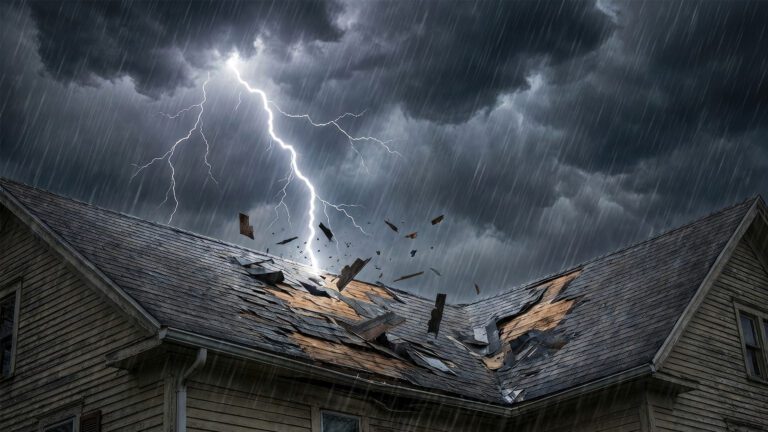
Hurricane season is rolling in on a forecast calling for fewer storms this year. According to the National Oceanic and Atmospheric Administration (NOAA), 8–14 storms are predicted, below the annual average of about 14. But as Mother Nature has shown us repeatedly, storms and the damage they bring don’t always follow the script.
Whether you live along the coast or in the heartland, relying too heavily on forecasts or seasonal patterns can create a dangerous gap between what people think will happen and what actually does. The traditional idea of clearly defined weather seasons is disappearing. And when the timing or the locations of storms become less predictable, home preparedness can’t be limited to a season either. It has to be part of everyday home care.
Everyday preparedness replaces seasonal planning
When a hurricane does churn up, it often comes with a relatively clearer timeline and track, giving homeowners more lead time for storm preparations. That’s not always true for other weather events.
Forecasted storms can move quickly, but dangerous factors such as high winds, hail, lightning, heavy rain, tornadoes, and flooding can be less predictable. The days of seeing specific catastrophic weather at defined times, or only in certain places, are fading.
In 2025, State Farm paid $15 billion in catastrophe claims. The Company paid more than $5.7 billion in LA Wildfires claims. No hurricanes made landfall to add to the catastrophes, and of the remaining catastrophe claims paid, hail claims accounted for $5.6 billion.
What does this mean for homeowners?
The message is simple: preparation can’t wait for “hurricane season” or “storm season.” Preparation needs to be as routine as basic household maintenance, just like mowing grass, changing filters, or checking smoke alarms.
Even with this year’s lower hurricane forecast, one storm is all it takes to cause devastating damage—and the best way to reduce harm is to prepare before disaster strikes.
Just as important, preparation helps prevent the second disaster: the one that happens after the storm, when families face repairs, need important documents and decisions about recovery.
Preparing homes to be storm resistant
Think of preparedness as a household system that works for hurricanes, severe storms, tornadoes and flooding conditions. The best preparations are ongoing and prevent or limit damage that can come from storms.
- Stand up against wind with a stronger roof and roof-to-wall connections. Impact-resistant roof materials can withstand high winds, hail and water.
- Cover openings with hurricane-resistant doors and window shutters or heavy curtains.
- Secure loose objects outside so they don’t become dangerous projectiles.
- Remove debris from gutters, drains and downspouts so heavy rains can flow freely and water drains away from the home.
- Prune tree limbs and branches to minimize debris that could damage buildings or power lines.
- Use the FEMA Flood Map Service Center to know your flood risk.
Regularly reviewing the homeowners insurance policy with an agent can make sure the right coverages, deductibles and endorsements are in place. An agent can also make sure homeowners get all the discounts they qualify for—like using impact-resistant materials.
The Takeaway
Storm and hurricane seasons aren’t what they used to be, but homeowners still control what happens next. With weather being less predictable and severe conditions often striking with little warning, preparation needs to be a year-round habit.
Being prepared ahead of time means focusing on what’s important when it matters most, staying safe during the event and getting help faster afterward.
Any content, resident submissions, guest columns, advertisements, and advertorials are not necessarily endorsed by or represent the views of Best Version Media LLC (BVM) or any municipality, homeowners associations, businesses, or organizations that this publication serves. BVM is not responsible for the reliability, suitability, or timeliness of any content submitted, inclusive of materials generated or composed through artificial intelligence (AI). All content submitted is done so at the sole discretion of the submitting party.