What butterflies, bees, and modern neuroscience can teach us about the art of recalibration
The easiest way to hold a butterfly isn’t to chase it. It’s to stand still.
Every summer, I find myself holding out a finger and waiting. More often than you might expect, a butterfly—or even the occasional bumblebee—climbs aboard.
It isn’t luck. It isn’t a special gift. It’s simply what becomes possible when we stop moving long enough to observe rather than interrupt.
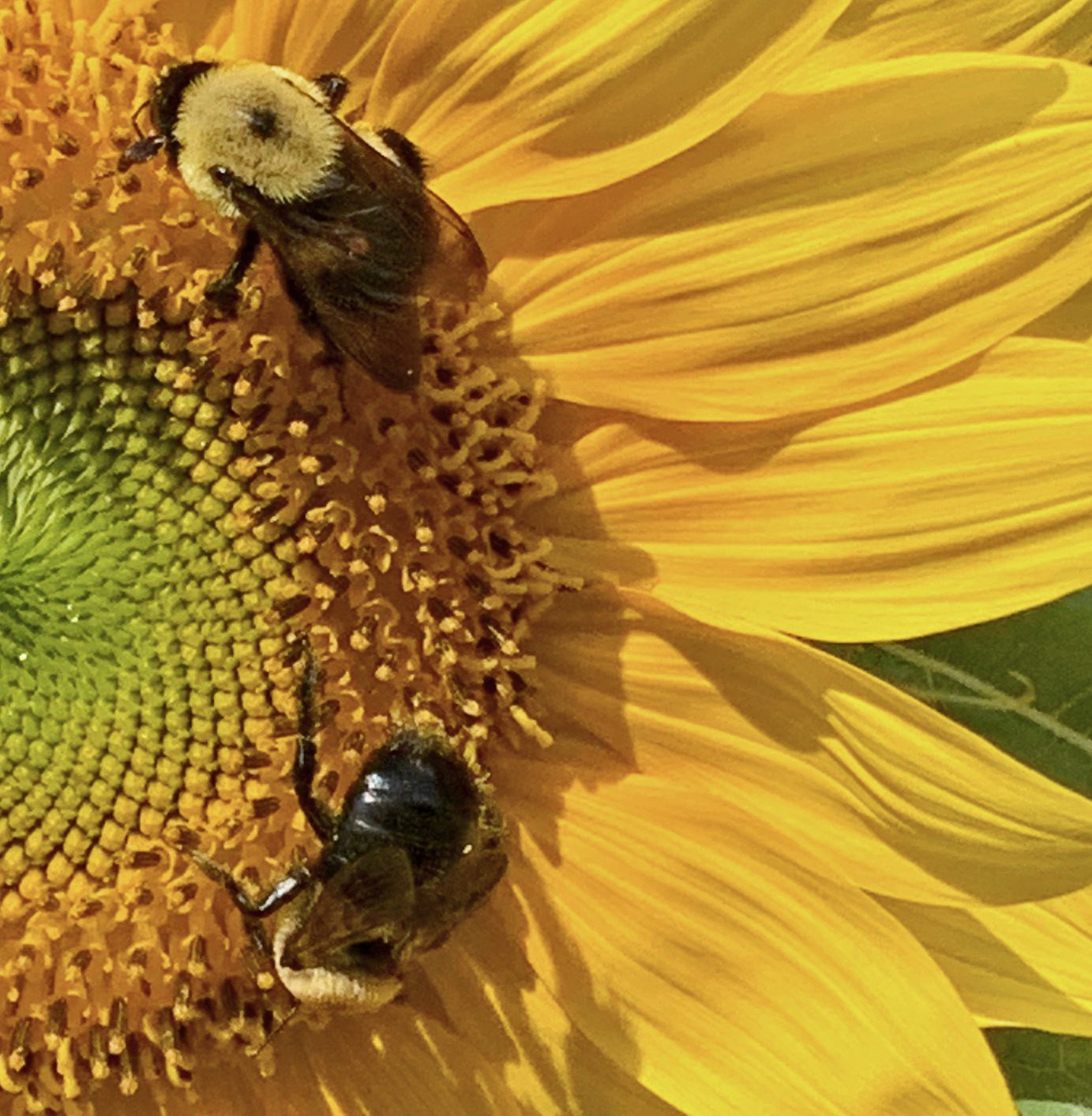
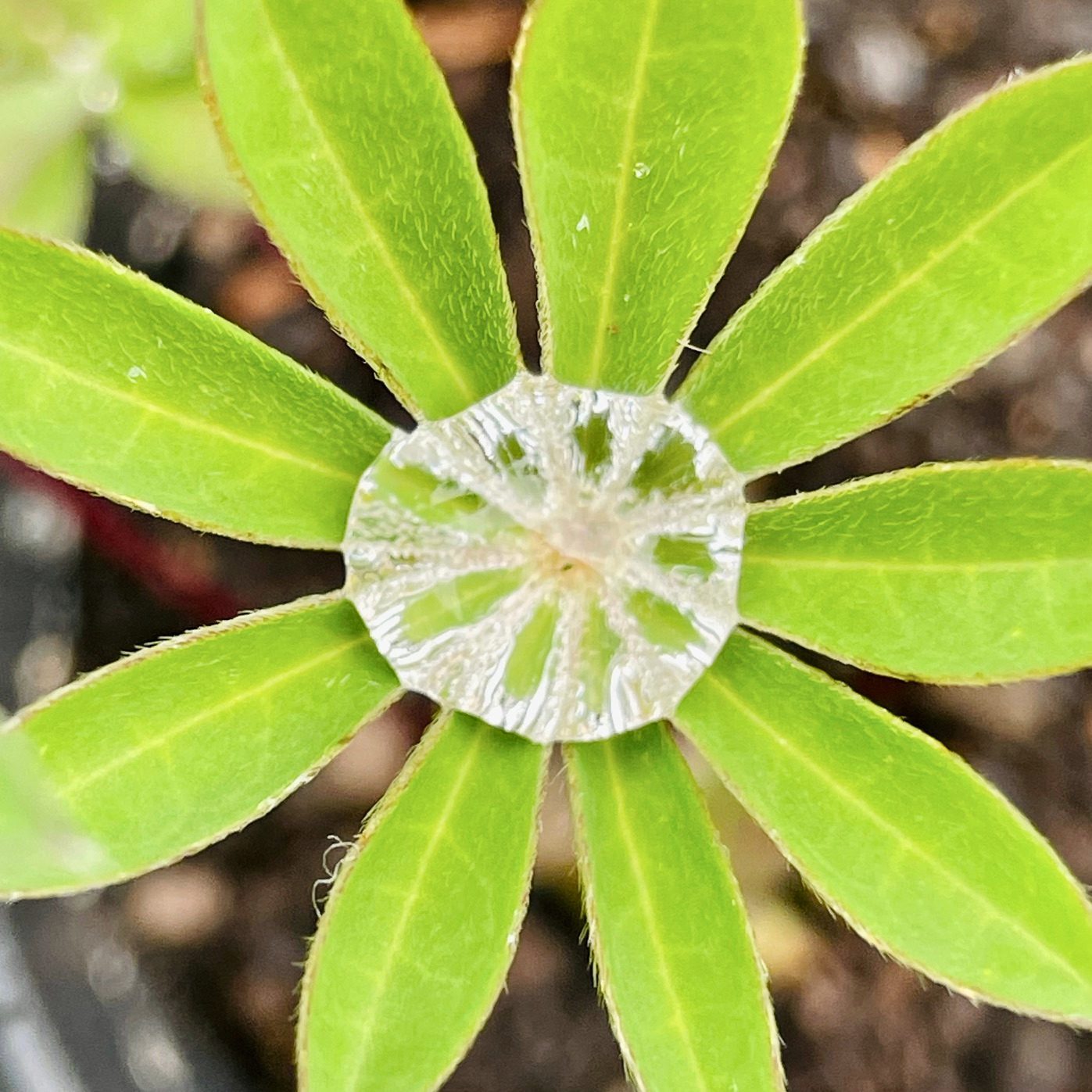
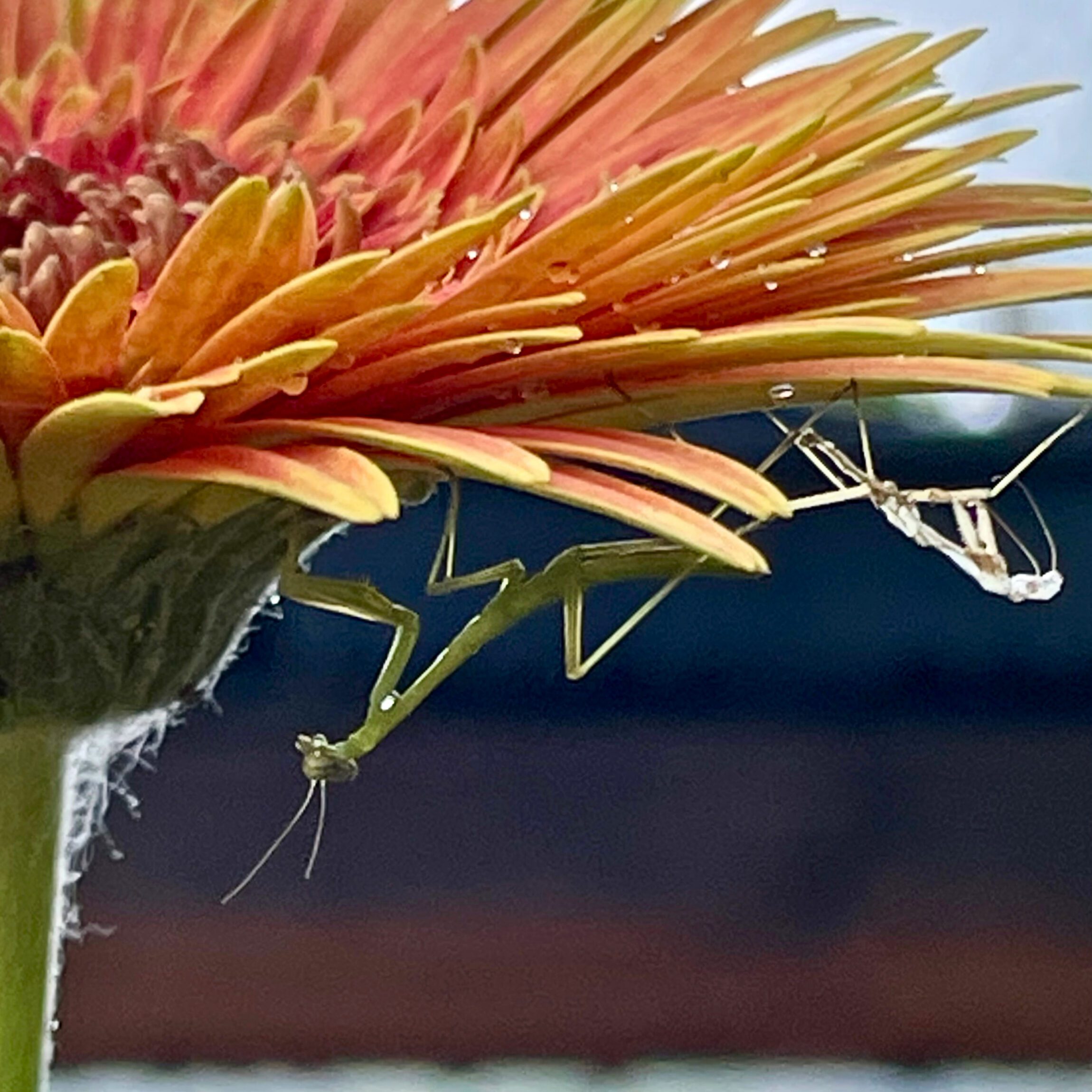
Stand quietly in a summer garden. The world begins to reveal itself. A butterfly pauses on your hand. A bumblebee moves steadily from flower to flower. Beneath a blossom, a tiny praying mantis slips free of its old skin. Even the humble potato, better known for what grows beneath the soil than what blooms above it, produces delicate lavender flowers that most people never notice.
In a summer garden, beauty isn’t decoration. It’s information.
Submitted photo
Every flower is sending signals. Color, fragrance, shape, and even ultraviolet nectar guides—invisible to our eyes—direct pollinators with remarkable precision. Scientists have also discovered that bees detect faint electrical fields around flowers, allowing them to distinguish blossoms that have already been visited from those still rich with nectar. What appears to be peaceful beauty is actually an intricate web of communication unfolding every moment of the day.
The more I learn about plants and insects, the more I appreciate the extraordinary intelligence of these living systems. Increasingly, scientists are discovering that the story includes us.
We are part of it, too.
Submitted photo
Our brains evolved in landscapes like these, shaped by changing light, living plants, birdsong, and the countless relationships unfolding around us. Researchers are beginning to understand why these moments feel so restorative. They call one of these responses soft fascination—the effortless attention we give to following a butterfly across the garden or watching a bee disappear into the heart of a flower. Unlike the intense focus demanded by screens, emails, and endless decisions, these quiet moments allow the brain to recover from mental fatigue.
The garden engages every sense. The fragrance released when we brush past basil or lavender, the feel of soil between our fingers, the gentle rhythm of tending plants, and even beneficial microorganisms in healthy soil all appear to support mood, attention, and mental clarity. Our nervous systems evolved in relationship with the living world. Perhaps it isn’t surprising that they still respond so readily to it.
I’ve come to recognize this in my own life. After hours at the computer, I rarely need another cup of coffee. More often, I need five minutes in the garden. I pull a few weeds, brush my hand across the herbs, notice what’s changed since morning, and return to my desk thinking more clearly than when I left.
Submitted photo
We often think of rest as something we earn after we’ve finished our work. The garden reminds me that sometimes the most productive thing we can do is step outside long enough to remember how living systems actually work.
Perhaps the greatest intelligence of a summer garden lies not only in how beautifully it functions, but in how quietly it reminds us of the importance of recalibration.
Harlow Tighe is the founder of Botanica, a South Carolina botanical wellness company, and author of The Botanica Journal. Through her writing, photography, and botanical formulations, she explores the intersection of plants, science, and the art of living well. Learn more at botanica-USA.com.
This is your magazine! If you have a story, friend, photo, recipe, pet, or content to share please reach out to maryalexander@bestversionmedia.com.
Any content, resident submissions, guest columns, advertisements, and advertorials are not necessarily endorsed by or represent the views of Best Version Media LLC (BVM) or any municipality, homeowners associations, businesses, or organizations that this publication serves. BVM is not responsible for the reliability, suitability, or timeliness of any content submitted, inclusive of materials generated or composed through artificial intelligence (AI). All content submitted is done so at the sole discretion of the submitting party.