October in South Carolina does not always look like autumn.
The afternoons may still be warm enough for sandals. The garden may still be giving more than it takes. But the light has changed. Morning arrives later. Evening gathers sooner. The long, bright certainty of summer has begun to recede.
We notice this visually before we understand what our bodies have already registered. The sky is dark when we wake. By the time dinner is over, the windows have become mirrors. A walk that once ended in full daylight now requires a little more attention to the path ahead.

Submitted photo
Light does more than allow us to see our surroundings. It helps the body keep time—signaling whether it is time for alertness, activity, or rest. Each morning, light entering the eye helps set an internal rhythm that influences when we feel alert, when we become sleepy, and how the body regulates many of its quieter processes. As daylight diminishes, that rhythm begins preparing us for night.
This daily pattern is known as the circadian rhythm—an internal clock that continually adjusts to the world around us. Of all its cues, light is one of the most powerful. Morning light helps establish the beginning of the day. Diminishing light helps signal that biological night is approaching.
Sleep is shaped by many things, of course: stress, health, routine, age, the circumstances of one’s life. Light is not the problem behind every difficult night, but it is part of the background information that the body is always processing, whether we pay attention to it or not.

Submitted photo
This is one reason why our typical evenings can confuse our bodies. We move from the brightness of our workday into other brightly lit rooms, illuminated screens, errands, messages, and more things to finish. The clock says it is evening, but the environment keeps insisting that it is still day. This is less a failure of our bedtime routine than a consequence of how thoroughly contemporary life can blur the difference between day and night.
October makes that contrast harder to ignore. Even in the South, where the season changes by degrees, the earlier darkness begins to alter the shape of evening. Lamps come on sooner. Dinner moves closer to dusk. The garden, so visibly alive throughout summer, begins to hold evening light differently: low across the grasses, caught in the edges of leaves, gone before we realize it.
There is something useful in allowing the evening to have its own character. Not an elaborate ritual, and not another item on the list of things we should do correctly—just a little more recognition that the day is changing. A walk before dark. A lowered lamp rather than constant overhead light. A few minutes outside after dinner. Leaving the phone elsewhere while we read, cook, or talk.
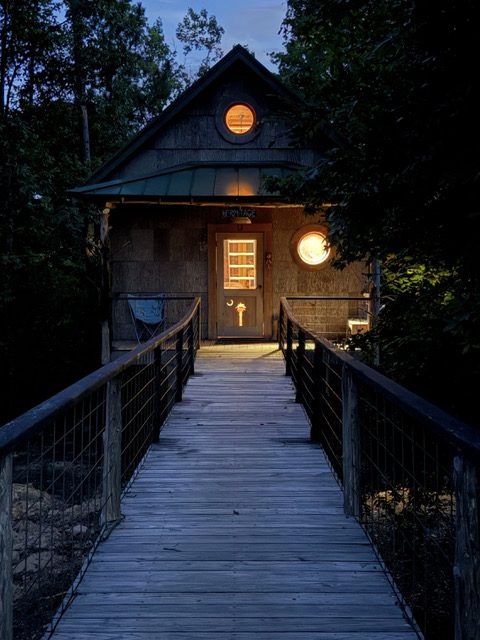
Submitted photo
The particular practice matters less than the signal it sends. Daylight has receded. The body does not need to remain on full alert.
We cannot always control how quickly sleep arrives. But we can be more attentive to the hours that lead up to it. The aim is not a perfect evening routine, or an early withdrawal from life’s activities. Instead, it is about allowing the body to recognize that the day has ended, rather than asking it to carry the same brightness, speed, and demands into the night.
October makes that distinction visible. The diminishing light reminds us that rest does not begin the moment we close our eyes. It begins earlier, in the gradual loosening of the day—when the world grows quieter, and we allow ourselves to follow.
Harlow Tighe spent two decades in Italy before returning to South Carolina, where she founded Botanica, a botanical wellness company, and writes The Botanica Journal. Through her writing, photography, and botanical formulations, she explores the intersection of plants, science, and the art of living well.
Any content, resident submissions, guest columns, advertisements, and advertorials are not necessarily endorsed by or represent the views of Best Version Media LLC (BVM) or any municipality, homeowners associations, businesses, or organizations that this publication serves. BVM is not responsible for the reliability, suitability, or timeliness of any content submitted, inclusive of materials generated or composed through artificial intelligence (AI). All content submitted is done so at the sole discretion of the submitting party.