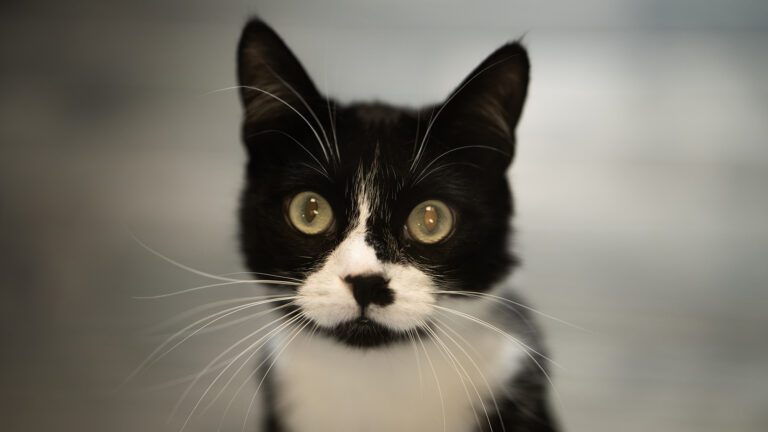

We all love gazing into our pet’s gentle eyes. They express their inner warmth and melt away all our stress. Keeping your pet’s eyes healthy will enrich this bond and keep them active and engaged in living their best life by your side.
A tiny cloud of blue, a little squint, some sticky discharge, or red where it used to be white can all be signals of eye diseases that are painful, and if left untreated could affect your pet’s ability to see.
From a veterinarian’s perspective, any time a pet parent calls with a concern about their dog or cat’s eyes, it is treated as urgent until we have assessed it to be otherwise.
Conjunctivitis (sometimes referred to as pink eye) is a condition affecting the conjunctiva, or inner membranes of the eyelids. The eyelids look swollen, red, and often there is a watery or yellow discharge. The eyes are itchy and often the pet squints or seems sensitive to light. The most common causes of conjunctivitis are infectious. Viral infections are especially prevalent in cats and are often also associated with other symptoms of an upper respiratory tract infection. Bacterial infections, allergies, and chemical irritation can also cause conjunctivitis.
Dry eye, or keratoconjunctivitis sicca (KCS) is a condition where the water component of the tears is no longer being produced in sufficient amounts by the tear glands. The mucus component of the tears is still being produced, so these pets have abundant amounts of mucus adhered to the fur around their eyes and stuck on the cornea. The eyes become red and irritated. Because tears have a natural antibacterial agent in them, there is often a secondary infection on the eyes. Tears bring vital nutrients to the cornea, and without them, the cornea can become ulcerated or develop a dark pigmentation that will result in permanent vision impairment, even if the tear production is reinstated. Fortunately, this condition is easily diagnosed and generally easy to manage, but does require life long treatment.
Corneal scratches and ulcers are painful wounds on the surface of the transparent layer of the eye known as the cornea. These need to be aggressively treated immediately or they can become infected or melt into the deeper layers of the cornea and cause rupture of the eye. Signs of these corneal wounds are similar to those of conjunctivitis.
Acquired degenerative ocular diseases can develop as early as the age of 6 or 7 depending on the breed of your pet. A condition called lenticular sclerosis or nuclear sclerosis occurs in essentially 100% or senior dogs and cats. It is a relatively benign condition of the lens of the eye causing it to develop a blue haze. It is non painful and does not require treatment. It results from the lens fibers becoming more densely packed as the lens ages. It causes some mild impairment of night and near vision. Turning on the outdoor light, using night lights, and taking a flashlight on night walks can help your pet feel safer as their vision declines.
Cataracts cause a white color change to the lens. They may start as a starburst appearance. They occur in 10-15% of dogs and are much rarer in cats. They can develop due to age, diabetes, or genetics. Depending on the type, they can lead to moderate to complete vision loss. They occur due to an accumulation of protein in the lens. Cataracts can cause changes within the eye which could lead to the development of glaucoma. If your pet loses their vision, you will need to consult with your veterinarian regarding how to help them cope with the loss of their sight. Cataract surgery, done by specialized surgeons, can also be done to remove the diseased lenses and restore sight.
Glaucoma is one of the most serious ocular emergencies. It is a condition where the fluid pressure within the eye (the intraocular pressure) becomes too high due to more fluid being produced than is able to drain away. This is a very painful condition and generally the signs seen at home are a very red, sometimes enlarged eye that is highly light sensitive. The pupil is also dilated and the pet is often quiet and acting ill due to the pain. The pressure of the fluid build up will rapidly damage the optic nerve and the retina and cause permanent vision loss. It requires immediate and aggressive treatment, and even then, the eye may not be able to be saved.
When it comes to your pet’s eye health, early detection is not just about preserving sight it is about protecting their overall quality of life. If you think your pet is suffering from an eye disease, schedule an assessment right away. For help, contact aldergroveanimalclinic.com or call 705-726-5031.
Any content, resident submissions, guest columns, advertisements, and advertorials are not necessarily endorsed by or represent the views of Best Version Media LLC (BVM) or any municipality, homeowners associations, businesses, or organizations that this publication serves. BVM is not responsible for the reliability, suitability, or timeliness of any content submitted, inclusive of materials generated or composed through artificial intelligence (AI). All content submitted is done so at the sole discretion of the submitting party.