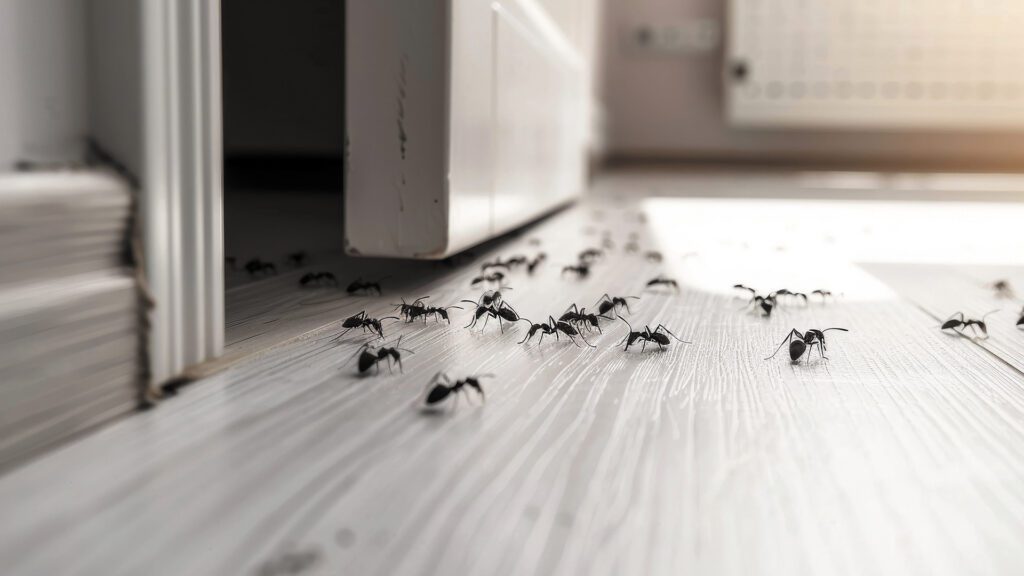
Few household pests are as persistent—or as frustrating—as ants. You wipe up a trail in the kitchen, only to find another one the next day. While they may seem harmless at first, ants can quickly become a major nuisance, and some species can even damage your home or deliver painful stings.
In Oklahoma, ants become especially active during the warmer months. As temperatures rise, colonies expand and workers search relentlessly for food and water. Even the smallest crumb on a countertop or a tiny plumbing leak can attract hundreds of ants within hours. Because ants communicate through pheromone trails, once one ant finds a food source, the rest of the colony is likely to follow.
One of the most common species we encounter is the odorous house ant. These tiny brown or black ants often invade kitchens and pantries, feeding on sugary foods and leaving behind distinct trails. Another common invader is the pavement ant, which nests under sidewalks, driveways, and foundations before making its way indoors. Fire ants, on the other hand, are commonly found in yards throughout Oklahoma. Their aggressive behavior and painful stings make them more than just a nuisance, especially for children and pets.
The key to preventing ant infestations starts with eliminating what attracts them. Keep food stored in airtight containers, wipe down counters regularly, clean up spills promptly, and avoid leaving pet food out overnight. Sealing cracks around doors, windows, and utility penetrations can also reduce the number of entry points into your home. Outdoors, trimming vegetation away from the house and correcting moisture issues around the foundation can make your property less inviting.
Many homeowners reach for over-the-counter ant sprays when they first notice ants. While these products may kill the ants you can see, they often fail to eliminate the colony itself. In fact, spraying certain ant species can cause colonies to split into multiple nests, making the infestation even more difficult to control. This is why professional ant control focuses on targeting the colony, not just the individual ants.
Professional treatments typically use carefully selected baiting systems and non-repellent products that worker ants carry back to the nest. This allows the treatment to reach the queen and the rest of the colony, providing longer-lasting control than surface sprays alone. Every infestation is different, so identifying the species is one of the most important steps in developing an effective treatment plan.
At Arrow Pest Management, we believe education is just as important as treatment. We take the time to identify the source of the problem, explain why ants are invading, and provide practical recommendations to help prevent future infestations. Our goal isn’t simply to eliminate today’s ants—it’s to help keep them from coming back.
If you’ve noticed increasing ant activity around your home, don’t wait until the problem becomes overwhelming. Early intervention is almost always easier, less expensive, and more effective than waiting for a colony to grow. With the right combination of prevention and professional treatment, you can enjoy an ant-free home all season long.
Any content, resident submissions, guest columns, advertisements, and advertorials are not necessarily endorsed by or represent the views of Best Version Media LLC (BVM) or any municipality, homeowners associations, businesses, or organizations that this publication serves. BVM is not responsible for the reliability, suitability, or timeliness of any content submitted, inclusive of materials generated or composed through artificial intelligence (AI). All content submitted is done so at the sole discretion of the submitting party.