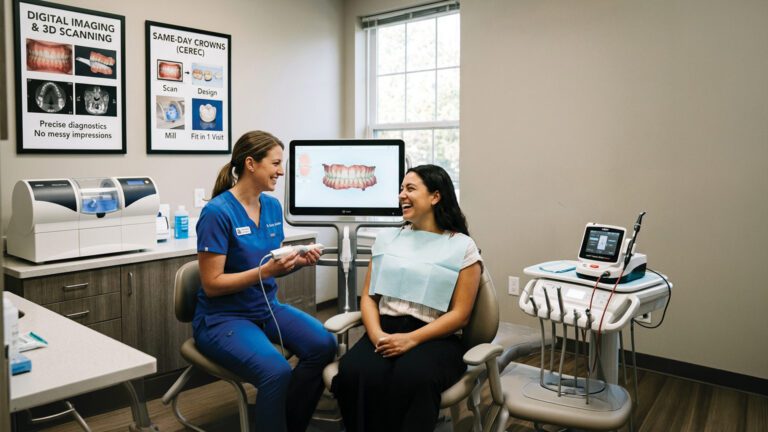
Most people think of a visit to the dentist as a way to keep their teeth healthy, but oral health professionals are also trained to recognize signs that may point to concerns beyond the mouth. One area that often surprises people is the connection between oral health and sleep, particularly obstructive sleep apnea, a common but frequently undiagnosed sleep disorder.
Working at Hendricks Family Dentistry has given me the opportunity to learn from experts in many areas of dentistry, including Dr. Tonya Frys, a Diplomate of the American Board of Dental Sleep Medicine. Many people are unaware that the mouth can provide important clues about a person’s sleep health, making routine dental visits an opportunity to identify concerns that may extend beyond the teeth and gums.
Obstructive sleep apnea occurs when the airway repeatedly becomes blocked during sleep, causing breathing to briefly stop and restart throughout the night. While loud snoring is one of the most recognized symptoms, other signs may include waking up with a dry mouth, morning headaches, daytime fatigue, difficulty concentrating, or a partner noticing pauses in breathing during sleep.
Because these interruptions often happen without fully waking a person, many individuals don’t realize their sleep is being affected. Research has shown that untreated sleep apnea is associated with an increased risk of conditions such as high blood pressure, heart disease, stroke, and type 2 diabetes.
During a routine dental examination, dentists may notice physical signs that could suggest an airway concern. Findings such as significant tooth wear from nighttime grinding, a scalloped tongue, or certain characteristics of the mouth and airway can sometimes provide pieces of a larger picture. While these observations don’t diagnose sleep apnea, they may prompt a conversation with a patient’s physician or a sleep specialist when appropriate.
Good sleep is essential to overall health, just like proper nutrition and regular exercise. Understanding the connection between sleep and oral health helps us recognize that our mouths can reveal much more than cavities—they can offer valuable insights into our overall well-being.
Any content, resident submissions, guest columns, advertisements, and advertorials are not necessarily endorsed by or represent the views of Best Version Media LLC (BVM) or any municipality, homeowners associations, businesses, or organizations that this publication serves. BVM is not responsible for the reliability, suitability, or timeliness of any content submitted, inclusive of materials generated or composed through artificial intelligence (AI). All content submitted is done so at the sole discretion of the submitting party.