When most people think about movement, they think about bending forward, standing upright, walking, or reaching overhead. Yet one of the most important ways the body is designed to move often receives very little attention: rotation.
From the moment we get out of bed, rotational movement is woven into everyday life. We turn to look behind us while backing out of a driveway, reach across the body to fasten a seatbelt, carry groceries, garden, play sports, and navigate uneven environments. Even walking—a movement most of us take for granted—relies on a coordinated rotational relationship between the feet, legs, pelvis, rib cage, and shoulders.
Rotation is often one of the first movement qualities to decline in modern lifestyles. Much of daily life occurs directly in front of us. We sit at desks, drive cars, work on computers, and spend hours looking at phones or tablets. Over time, the body adapts to these repetitive patterns, and our movement options can gradually become more limited.
One reason this change often goes unnoticed is that the body is remarkably adaptable.
When mobility decreases in one area, other regions frequently compensate. For example, if the thoracic spine and rib cage become less mobile, the neck, shoulders, or lower back may contribute additional movement to accomplish the same task. While these strategies allow us to continue functioning, they may require more effort and reduce overall movement efficiency.
Rotation plays an important role in how forces are transferred throughout the body. During walking, subtle rotational movements help distribute load, conserve energy, and create smooth, coordinated movement patterns. The rib cage is particularly important in this process. Breathing naturally creates movement throughout the ribs and thoracic spine, contributing to the body’s ability to rotate, adapt, and respond to changing demands. When movement becomes restricted in this region, opportunities for rotational movement may also become more limited.
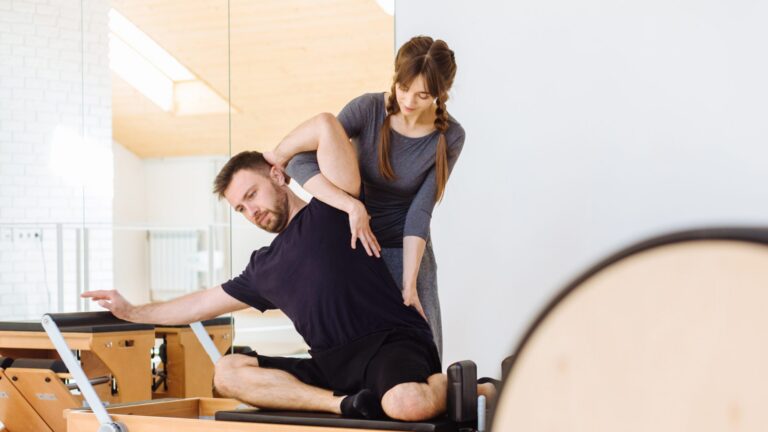
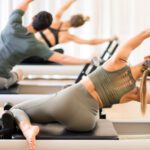
Pilates recognizes that the body is designed to move in three dimensions. Movements such as Spine Twist, Saw, Mermaid, and standing rotational variations encourage the body to distribute movement across multiple regions rather than concentrating it in a single area.
These varied movement experiences help maintain mobility while expanding the body’s capacity to adapt to different situations.
Perhaps the greatest benefit of preserving rotational mobility is not flexibility itself, but adaptability. Life rarely occurs in straight lines. Whether reaching into the back seat of a car, carrying a child, hiking on uneven terrain, or simply turning to greet a friend, the body is constantly responding to changing environments and movement demands.
Healthy movement is not defined by how far we can stretch or how much weight we can lift. It is also reflected in our ability to move comfortably in multiple directions and respond efficiently to the world around us. By continuing to explore rotational movement throughout life, we can support the variety, coordination, and resilience that contribute to lifelong mobility. Sometimes the movements we pay the least attention to are the ones that matter most.
Any content, resident submissions, guest columns, advertisements, and advertorials are not necessarily endorsed by or represent the views of Best Version Media LLC (BVM) or any municipality, homeowners associations, businesses, or organizations that this publication serves. BVM is not responsible for the reliability, suitability, or timeliness of any content submitted, inclusive of materials generated or composed through artificial intelligence (AI). All content submitted is done so at the sole discretion of the submitting party.