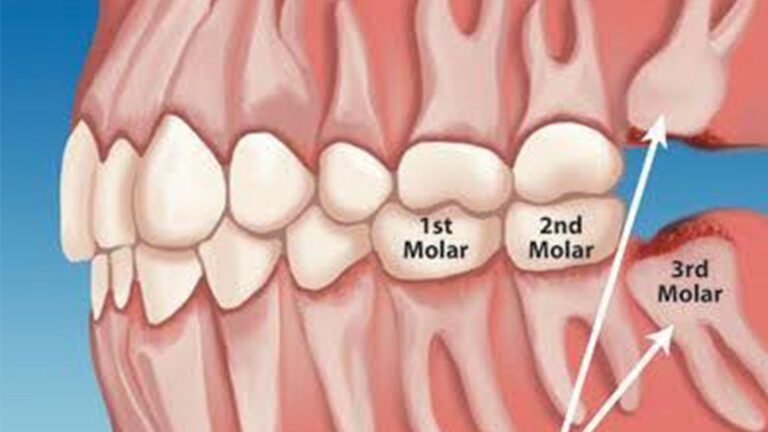
Third molars, commonly known as wisdom teeth, are the last set of molars to erupt, typically appearing between the ages of 17 and 25. For many people, these teeth become impacted—meaning they fail to emerge fully or grow at an angle due to insufficient space in the jaw. This positioning makes them difficult or impossible to clean properly with regular brushing and flossing. Food particles, bacteria and plaque easily become trapped, setting the stage for problems.
Impacted wisdom teeth are extremely common, affecting a large majority of individuals. While some remain asymptomatic for years, dental professionals often emphasize the importance of evaluation and, in many cases, proactive removal to prevent a range of oral health complications.
Key Risks of Leaving Impacted Wisdom Teeth Untreated
Even if impacted wisdom teeth aren’t currently causing pain, they carry significant long-term risks. Dental associations and clinical studies highlight several potential issues:
- Infection and Pericoronitis
- Damage to Adjacent Teeth
- Tooth Decay and Gum Disease
- Cyst and Tumor Formation
Research indicates that a high percentage of retained wisdom teeth eventually develop issues, even if initially asymptomatic. For example, studies associated with the American Association of Oral and Maxillofacial Surgeons (AAOMS) have shown that many young adults with seemingly healthy retained wisdom teeth develop problems within several years.
Benefits of Removal, Especially in Younger Patients
Professional guidelines from organizations like the AAOMS and Mayo Clinic often recommend evaluation by the late teens or early 20s. Removal at this stage offers several advantages:
- Lower Surgical Risks and Easier Recovery: Younger patients typically have less developed roots, softer bone and better healing capacity. Complications like nerve damage, dry socket, or prolonged swelling are less common compared to surgery in older adults.
- Prevention of Future Problems: Proactive extraction avoids the cascade of infections, decay, cysts and damage to neighboring teeth that can occur later.
- Overall Health Considerations: Reducing chronic oral inflammation and bacterial load may support broader systemic health, though evidence varies.
Not all wisdom teeth need removal. The decision should be individualized based on X-ray findings, symptoms, tooth position and patient health.
The Procedure and Recovery
Wisdom tooth extraction is a common outpatient procedure performed by oral surgeons, often under local anesthesia, sedation or general anesthesia. Recovery typically involves some swelling, discomfort and a soft-food diet for a few days to a week, with most people returning to normal activities relatively quickly. Post-operative care focuses on pain management, infection prevention and proper healing.
When to See a Professional
Consult an oral surgeon promptly if you experience jaw pain, swelling, gum tenderness, difficulty chewing, or bad tastes near the back of the mouth. Even without symptoms, routine dental visits with panoramic X-rays in the late teens can identify potential issues early. Do not wait for severe pain, as complications can escalate.
Early evaluation and timely removal, when indicated, is generally the most effective way to protect your oral health, preserve adjacent teeth, and minimize future interventions.
Dr. Pamela Alberto earned her DMD from the University of Pennsylvania School of Dental Medicine and her certificate in oral and maxillofacial surgery from the University of Medicine and Dentistry of New Jersey’s University Hospital. Dr. Alberto is the former assistant dean of predoctoral education at New Jersey Dental School. She is currently a clinical associate professor at Rutgers School of Dental Medicine.
Any content, resident submissions, guest columns, advertisements, and advertorials are not necessarily endorsed by or represent the views of Best Version Media LLC (BVM) or any municipality, homeowners associations, businesses, or organizations that this publication serves. BVM is not responsible for the reliability, suitability, or timeliness of any content submitted, inclusive of materials generated or composed through artificial intelligence (AI). All content submitted is done so at the sole discretion of the submitting party.