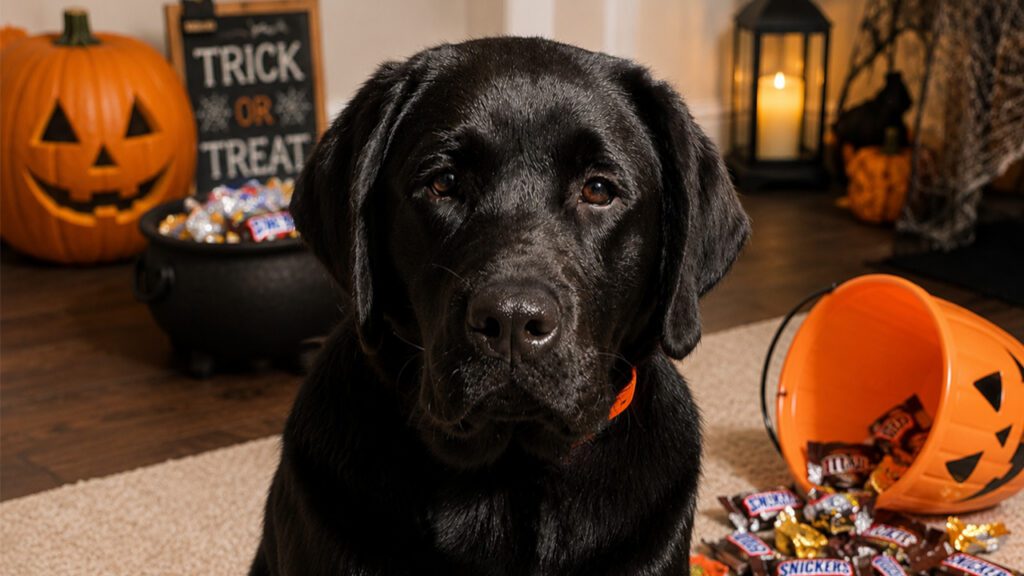
Every October, veterinary hospitals receive a familiar phone call: “My dog got into the Halloween candy. What should I do?” Sometimes the evidence is obvious: An overturned trick-or-treat bucket, empty wrappers, and a very innocent-looking dog nearby. Other times, no one knows exactly what was eaten or how much.
Not All Chocolate Is Created Equal
Chocolate contains theobromine and caffeine, compounds dogs metabolize much more slowly than people. Risk depends on your dog’s weight, the amount eaten and especially the type of chocolate. Cocoa powder contains about 807 mg of methylxanthines per ounce; unsweetened baker’s chocolate about 440 mg/oz; dark or semisweet chocolate about 150-160 mg/oz; and milk chocolate about 64 mg/oz. White chocolate contains very little. Exact concentrations vary by product.
That difference matters: A relatively small amount of baker’s or dark chocolate can be far more concerning than the same amount of milk chocolate. Signs may include vomiting, diarrhea, excessive thirst, restlessness, rapid or abnormal heart rate, tremors and seizures. Chocolate products are also often high in fat, which can cause gastrointestinal upset and may trigger pancreatitis in susceptible dogs.
The Candy Isn’t Always the Only Danger
Sugar-free candy or gum may contain xylitol, which can cause a rapid, profound drop in blood sugar in dogs and, at higher exposures, serious liver injury. Raisins can cause acute kidney injury, making chocolate-covered raisins a double concern. Macadamia nuts can cause vomiting, weakness, tremors, fever and difficulty walking. Foil, plastic, cellophane, sticks and candy bags can also become gastrointestinal foreign bodies.
What Should You Do?
Determine what was eaten, approximately how much and when it happened. Save the packaging and ingredient list and know your pet’s approximate weight. Don’t wait for symptoms before calling your veterinarian. Early treatment can significantly change the options available.
Most importantly, don’t automatically induce vomiting at home. Whether vomiting is appropriate depends on what was swallowed, when it happened and your pet’s condition. Some exposures, including xylitol, warrant prompt veterinary guidance rather than at-home attempts to induce vomiting.
When in Doubt, Make the Call
A pet can look completely normal shortly after ingesting something dangerous. Call your veterinarian or contact the ASPCA Animal Poison Control Center at (888) 426-4435, available 24 hours a day, 365 days a year. A consultation fee may apply. This Halloween, keep candy bowls and trick-or-treat bags safely out of reach. Dogs can be remarkably creative when candy is involved.
Dr. Travis Cerf is a Cornell University College of Veterinary Medicine graduate and owner of Veterinary Center of Hardyston, a locally family-owned veterinary hospital serving Sussex County. With more than 20 years of veterinary experience, his professional interests include surgery, ultrasonography, emergency medicine, and geriatric medicine.
Any content, resident submissions, guest columns, advertisements, and advertorials are not necessarily endorsed by or represent the views of Best Version Media LLC (BVM) or any municipality, homeowners associations, businesses, or organizations that this publication serves. BVM is not responsible for the reliability, suitability, or timeliness of any content submitted, inclusive of materials generated or composed through artificial intelligence (AI). All content submitted is done so at the sole discretion of the submitting party.