Have you ever been excited to try a new hair color only to leave feeling disappointed?
Have you ever told your hairstylist your hair was completely natural, only to discover halfway through your appointment that your highlights were lifting different colors in every foil?
You’re not alone! In many cases the culprit isn’t permanent hair color. It’s the products used at home.
Many people assume that because a product is labeled “temporary,” “color depositing,” “washes out,” or “just a mask,” it leaves no lasting effects. Unfortunately, that’s one of the biggest misconceptions in hair color.
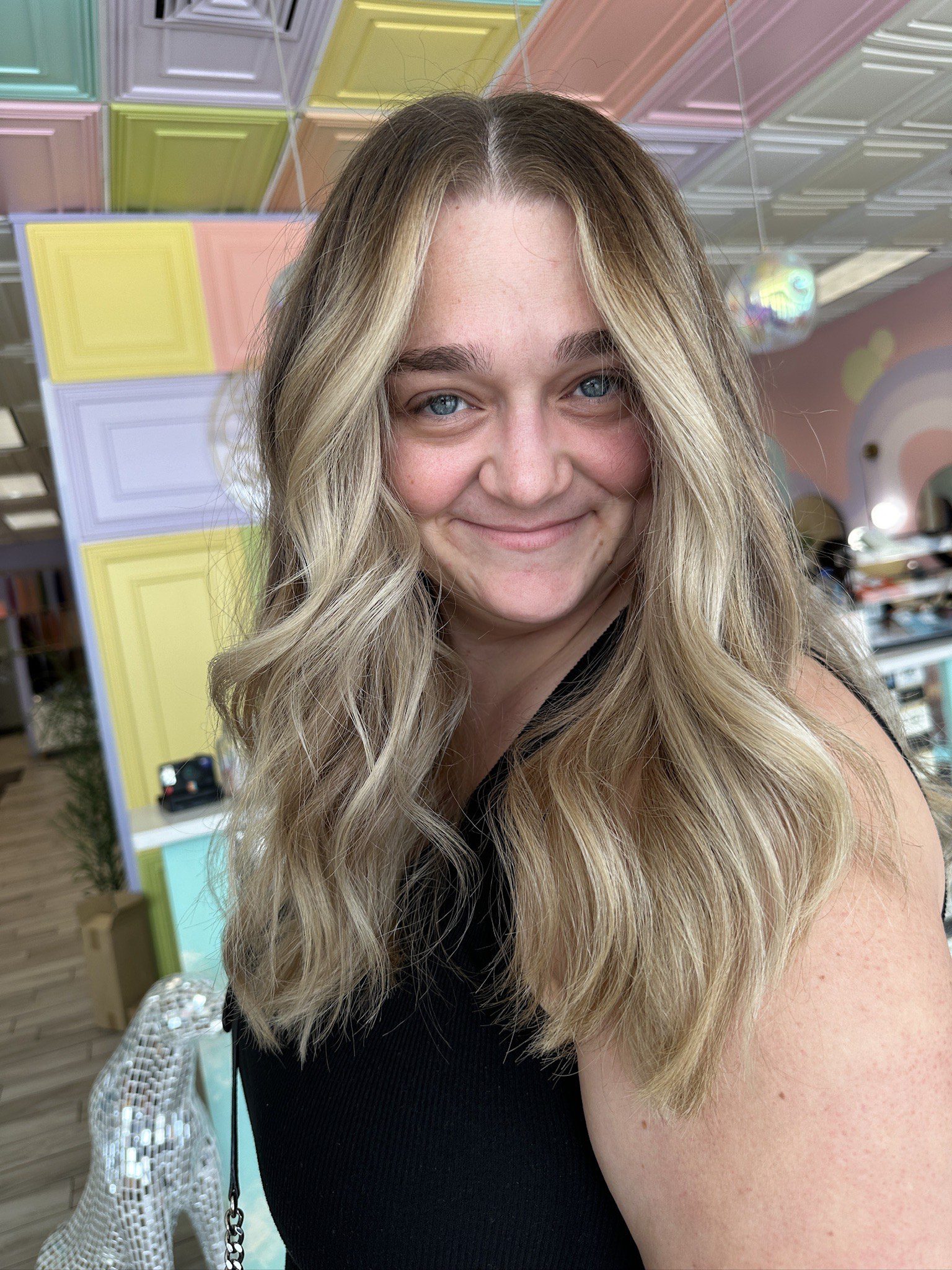
Submitted photo
Color-depositing shampoos, conditioners, masks, glosses, tinted leave-in products, root touch-up sprays, and temporary color rinses all contain pigments designed to cling to the hair. While these products may fade from what you see on the surface, microscopic pigment molecules can remain inside or attached to the hair cuticle long after the visible color is gone. Think of how a ketchup stain will keep a pink tinge to a white shirt. That’s what is happening underneath the surface on your hair strands.
That means your hair can look completely natural but still behave like previously colored hair.
When a stylist lightens the hair, bleach doesn’t just remove your natural pigment. It has to work through any artificial pigment hiding inside the hair shaft. Those leftover pigments often lift at different rates than natural melanin, creating unexpected results like warm bands, muddy sections, bright yellow pieces, or even unusual tones depending on the product that was used.

Submitted photo
Because every strand may have absorbed those pigments differently, the lightening process becomes uneven. One foil may lift beautifully while the one next to it stalls or reveals hidden staining. The hair’s history is still present and relevant even if it isn’t visible to the eye.
Some of the most common products that can affect future color services include:
- Color-depositing masks and conditioners
- Temporary color rinses
- Glosses and tinted treatments
- Purple, blue, or copper color-depositing shampoos used frequently
- Fashion color conditioners
- Root camouflage sprays and powders
- “Wash-out” colors marketed as commitment-free
The good news? None of this means you can never use these products. It simply means your stylist needs to know about them so you can make an informed choice.
The more information you share, the better your stylist can formulate, adjust expectations, perform a strand test when needed, and protect the integrity of your hair. What feels irrelevant, like using a copper mask a few months ago or a color gloss before vacation, can completely change the stylist’s approach to your appointment.
You should never feel judgement when being honest with your stylist. It’s all about creating beautiful, predictable results while keeping your hair healthy!
If you’re ever unsure whether a product “counts” as color, be sure to let your stylist know anyway. They are more equipped with knowing everything you’ve used than to be surprised halfway through a color service.
Beautiful color starts long before you sit in the salon chair and it starts with what you use. At home care plays a bigger role than most people realize, and hopefully now you feel more confident with what you need to tell your stylist before you game plan what will be needed to achieve your ideal look.
If you are wanting a color change and are looking for a new hairstylist you can book a consultation with one of our color specialists by texting or calling our salon phone at 757-754-6576 or by checking out our website at jovisalon.co. We can’t wait to meet you!
Any content, resident submissions, guest columns, advertisements, and advertorials are not necessarily endorsed by or represent the views of Best Version Media LLC (BVM) or any municipality, homeowners associations, businesses, or organizations that this publication serves. BVM is not responsible for the reliability, suitability, or timeliness of any content submitted, inclusive of materials generated or composed through artificial intelligence (AI). All content submitted is done so at the sole discretion of the submitting party.