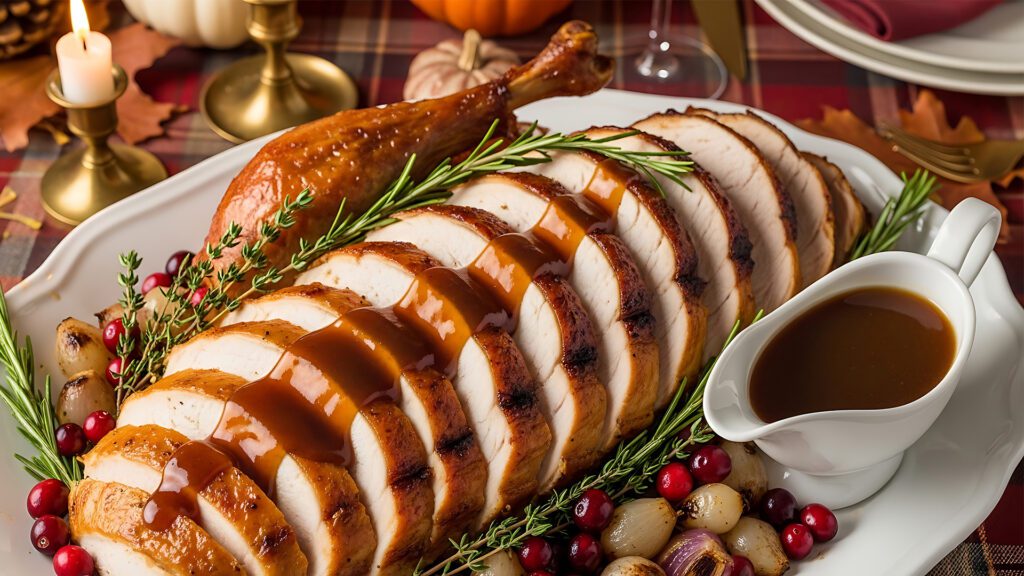

Staring at the myriad selection of turkeys in the freezer case at your local grocery store can be overwhelming. The various brands extol their virtues. “Juicy every time”, “Injected with real butter”, “Tender”, “Foolproof”, “Never Dry”. And “Dry” is the enemy of every Thanksgiving turkey dinner. The brands of turkeys making these “Juicy”, and “Never dry” claims are usually labelled ‘Seasoned’.
What does ‘Seasoned’ mean to you? I’m guessing the same as it meant to me. The turkey was sprinkled with herbs, spices, maybe garlic, some pepper….you know, seasonings.
Imagine my surprise when I learned that in Canada, the word ‘Seasoned’ on a turkey label can legally refer to a product that contains no herbs or spices at all. It actually means that the turkey has had a solution of water, salt and sodium phosphate added to it. By adding water, there will be more moisture in the turkey. Sodium phosphate, by changing the structure of muscle proteins, helps the meat retain more of that added moisture during cooking, resulting in a juicier finished product.
Many “Seasoned” turkeys contain 10% to 15% added solution. That means a portion of the weight you purchase comes from the added water and seasoning solution rather than the turkey itself.
As a chef, this alternative definition of the word ‘Seasoned’ was very confusing. Seasoning food, in the culinary sense, is what we do. It’s what you do in your kitchen. But in the food processing world and according to the Canadian Food Labelling Guidelines, ‘Seasoned’ is a regulatory term that describes a moisture-enhanced product.
Health Canada considers the phosphate salts used in processed foods to be safe for most people. However, people with kidney disease are often advised to limit foods containing added phosphates. As with many food additives, researchers continue to study their long-term effects, and many nutrition experts recommend limiting highly processed foods as part of a healthy diet.
Adding water to the turkey as described above will help you have a moist turkey to serve to your family and guests. But there are other ways to attain that perfectly moist Thanksgiving turkey. Dryness in turkey is usually a cooking problem.
A moist turkey does not require added water. There are traditional culinary techniques and modern cooking methods that can produce a tender, juicy turkey.
Precise temperature-controlled cooking methods, including ‘sous vide’ (under vacuum cooking) allow for an even, gentle cook that ensures greater retention of the meat’s natural moisture. Because the meat is not exposed to excessively high temperatures, less moisture is forced out during cooking.
Dry brining – simply rubbing salt and seasonings onto the skin a day or two before cooking helps the meat retain moisture while promoting crisp, golden skin.
Traditional wet brining – soaking it in a solution of water, salt, herbs and spices can improve flavour and juiciness without the use of phosphate additives.
Resting the turkey. No matter what type of turkey or cooking method used, resting it for 15-20 minutes before carving allows the juices to redistribute in the meat instead of leaking all over your cutting board.
So – To season or not to ‘Season’ – that is the question. You don’t need to avoid ‘Seasoned’ turkey. You simply deserve to know what ‘Seasoned’ means. Whether you choose a moisture-enhanced turkey or one that relies on traditional or modern preparation and cooking methods, an informed choice is always the best choice. Happy Turkey Day!
Any content, resident submissions, guest columns, advertisements, and advertorials are not necessarily endorsed by or represent the views of Best Version Media LLC (BVM) or any municipality, homeowners associations, businesses, or organizations that this publication serves. BVM is not responsible for the reliability, suitability, or timeliness of any content submitted, inclusive of materials generated or composed through artificial intelligence (AI). All content submitted is done so at the sole discretion of the submitting party.