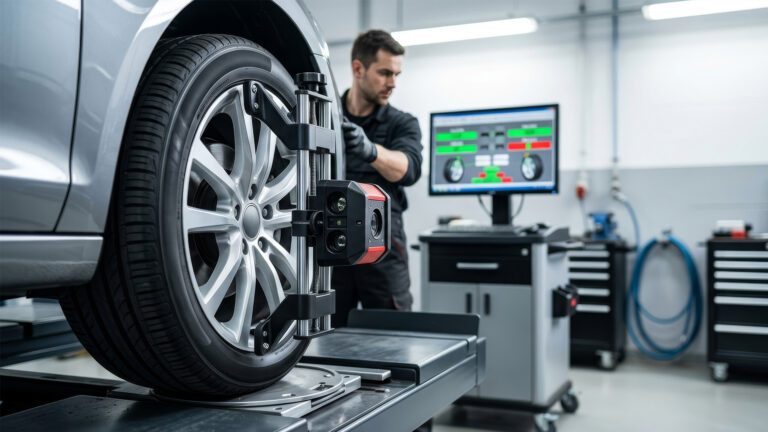
One of the most overlooked maintenance services for your vehicle is a quality wheel alignment. Whether you’re installing new tires, correcting a vehicle that pulls to one side, or addressing uneven tire wear, a proper alignment is essential for your vehicle’s performance, safety, and longevity.
Choosing the right repair shop is just as important as deciding to have the alignment performed. Not all automotive repair shops are created equal. A proper alignment involves far more than centering the steering wheel. Every suspension and steering angle must be measured and adjusted to the manufacturer’s specifications. When these adjustments aren’t made correctly, the results can include poor handling, premature tire wear, reduced fuel economy, and unnecessary suspension wear.
The condition of a repair shop can also tell you a lot. A clean, organized alignment bay often reflects technicians who take pride in their work and properly maintain their equipment. Alignment machines rely on precision cameras, sensors, and targets that must remain clean, calibrated, and in excellent working order. Just as important is a technician who knows how to properly prepare the vehicle, install the equipment, and accurately interpret the alignment data.
Unfortunately, some shops focus on producing an “all green” alignment printout rather than ensuring the vehicle is truly aligned to manufacturer standards. A quality alignment is measured by how the vehicle drives and whether every specification is correct, not simply what the report looks like.
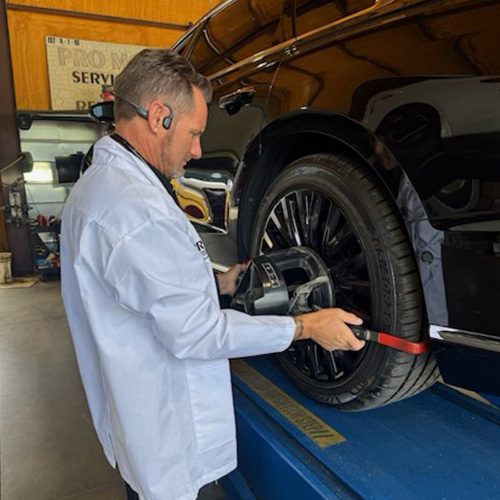
Modern vehicles have made the process even more complex. Many now feature electric power steering, adaptive cruise control, lane keeping assistance, forward facing radar, and other Advanced Driver Assistance Systems (ADAS). After certain suspension repairs or even a routine alignment, many vehicles require a Steering Angle Sensor calibration or other manufacturer specified recalibrations.
We’ve seen customers bring in vehicles that continued pulling after having alignments performed elsewhere. In several cases, the alignment angles were acceptable, but the required steering angle calibration had never been completed. Once properly calibrated, the steering and handling concerns were resolved.
Today’s alignment service requires specialized equipment, ongoing technician training, and access to manufacturer specific procedures. That is why the cost of a professional alignment may be higher than it was years ago. You are investing in accuracy, technology, and your vehicle’s safety.
The bottom line is simple. Not everyone who offers alignments performs them to the same standard. Choosing a qualified repair facility can extend tire life, reduce suspension wear, improve handling, and help ensure your vehicle’s advanced safety systems function as designed.
As the Car Doctor, my advice is simple. Ask questions before trusting someone with your vehicle. Make sure the shop maintains its alignment equipment, invests in technician training, and can perform all required manufacturer calibrations. Your vehicle, and everyone riding in it, deserves nothing less.
Any content, resident submissions, guest columns, advertisements, and advertorials are not necessarily endorsed by or represent the views of Best Version Media LLC (BVM) or any municipality, homeowners associations, businesses, or organizations that this publication serves. BVM is not responsible for the reliability, suitability, or timeliness of any content submitted, inclusive of materials generated or composed through artificial intelligence (AI). All content submitted is done so at the sole discretion of the submitting party.