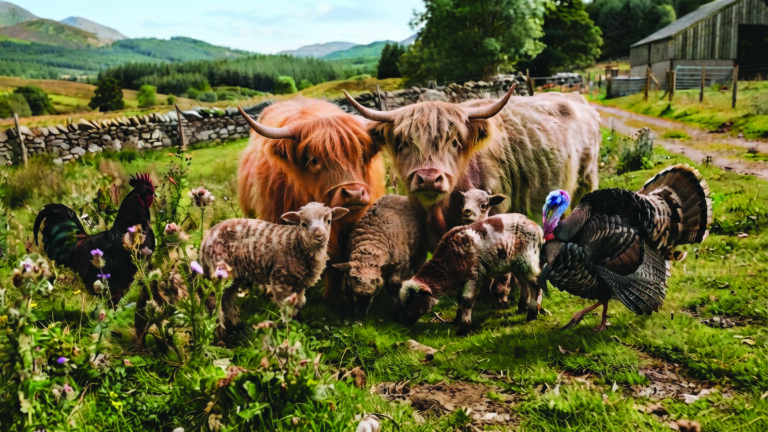
When people hear about heritage breeds, one of the first questions they often ask is, “What exactly is a heritage breed?” It is a great question, because the answer takes us back to an important part of agricultural history.
Heritage breeds are livestock breeds that were established before the rise of modern industrial agriculture, generally before the 20th century. Unlike many modern commercial breeds that have been developed for specific production traits, heritage breeds were traditionally selected for a broader range of characteristics that helped them thrive in their natural environments.
These characteristics can include the ability to forage independently, reliable reproduction, strong maternal instincts, hardiness and resilience. Heritage breeds are often slower growing than modern commercial breeds, but that slower development can contribute to their longevity and ability to thrive in less controlled environments.
That adaptability is one reason heritage breeds have played such an important role in agriculture for generations.
A Resource for the Future
Preserving heritage breeds is about more than looking back at agricultural history. Genetic diversity can be an important resource for the future of farming.
The Livestock Conservancy, an organization dedicated to protecting endangered livestock and poultry breeds, notes that rare breeds can provide genetic traits that may become increasingly valuable as farmers face changing climates and other challenges. Traits such as hardiness, foraging ability and strong mothering instincts can offer valuable options for future agricultural systems.
Where an animal is raised matters, too. A breed that thrives in one environment may not be the best fit for another. Highland cattle, for example, developed in the cool, rugged environment of Scotland. Selecting animals that are well suited to their particular climate and conditions can benefit both the animals and the sustainability of the farm.
“The greatest value of heritage breeds isn’t simply preserving them for nostalgic reasons. It’s using them to improve livestock that are adapted to local environments,” says Ryan Ayers, head of the Carroll County chapter of Young Farmers. “Historically, the best livestock breeders didn’t preserve genetics unchanged. They continually selected the animals that thrived under their specific conditions.”
That idea of adaptation is at the heart of why genetic diversity matters. Different breeds have developed different strengths over generations, giving farmers a broader range of characteristics to work with.
Remembering Where We Came From
Here in Georgia, modern commercial poultry and livestock are a familiar part of the agricultural landscape. Many commercial breeds have been carefully developed for efficient production and specific traits. Heritage breeds, on the other hand, can offer a different approach, with animals that have traditionally been selected for qualities such as hardiness, foraging ability and adaptability.
Heritage breeds can also contribute to pasture-based and regenerative farming practices. Animals that are capable of foraging and thriving outdoors can play a role in agricultural systems that make use of natural resources and allow livestock to contribute to the health of the land.
Every breed has a purpose, and modern agricultural research has made it possible to develop animals that meet specific needs. But remembering the breeds that helped sustain farms for generations is an important part of understanding how we arrived at today’s agricultural systems.
Some heritage breeds have become so uncommon that they are now considered endangered. Organizations such as The Livestock Conservancy work to educate the public and support the preservation of these animals and their genetic diversity.
Preserving heritage breeds is ultimately about more than preserving a piece of the past. It is about maintaining options for the future.
As farmers, researchers and communities consider what agriculture will look like in the years ahead, the characteristics found in these time-tested breeds may continue to offer valuable lessons.
This article is brought to you by Cluster Flock Farm, a local farm dedicated to preserving heritage breeds and sharing the importance of agricultural history and biodiversity with the community.
Any content, resident submissions, guest columns, advertisements, and advertorials are not necessarily endorsed by or represent the views of Best Version Media LLC (BVM) or any municipality, homeowners associations, businesses, or organizations that this publication serves. BVM is not responsible for the reliability, suitability, or timeliness of any content submitted, inclusive of materials generated or composed through artificial intelligence (AI). All content submitted is done so at the sole discretion of the submitting party.