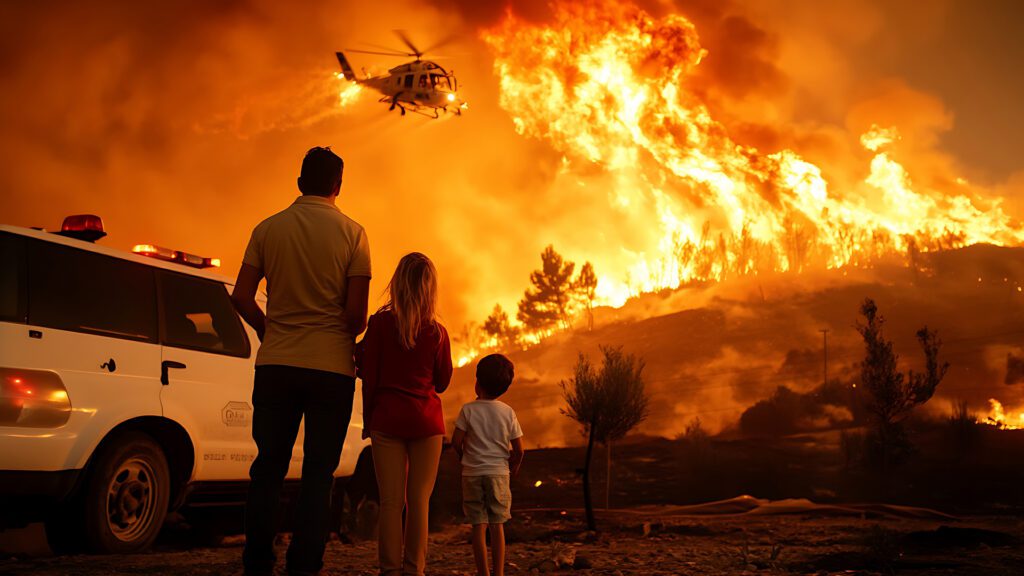
Utah’s dry climate, mountainous terrain, and growing communities along the wildland-urban interface make wildfire an ongoing concern for homeowners across the state. Every summer, dry vegetation, high winds, and lightning combine to create the right conditions for fast-moving fires.
The good news is that many of the most effective protections come down to a handful of manageable steps—most of which cost little more than time and attention. Here’s what homeowners can do before and during wildfire season to protect their property.
Start With the Yard
Create defensible space. Removing dry vegetation, weeds, brush, and wood piles from around structures gives fire less fuel to work with—and gives firefighters room to work if they need to defend your home.
Clean roofs and gutters. Leaves and pine needles that collect in gutters are easy targets for airborne embers. A clean roofline is one of the simplest ways to cut down fire exposure.
Trim trees and shrubs. Branches hanging near rooflines, siding, chimneys, or windows give a fire a direct path to your house. Keeping them trimmed back reduces that risk significantly.
When a Fire Is Nearby
Close windows and doors. If wildfire activity picks up in your area, sealing the house helps keep smoke, ash, and embers from getting inside.
Turn off HVAC and outside air intake systems. Many air conditioning and ventilation systems pull outside air directly into the home. Shutting them off during heavy smoke conditions helps protect indoor air quality.
Protect roof and attic vents. Roof, ridge, and turtle vents are common entry points for embers. It’s worth talking to a qualified professional before fire season about ember-resistant vent options.
Move combustible items away from the house. Patio furniture, propane tanks, and firewood stacked near a structure can ignite and carry fire straight to your home. Move these items farther away when wildfire activity increases nearby.
Prepare Before Disaster Strikes
Document your property now. Photos and videos of your home, belongings, and valuables make the insurance claims process much smoother if damage occurs. Take a walkthrough video every year or two and store it somewhere accessible outside the home, like cloud storage.
Review your insurance coverage. A conversation with your insurance agent before fire season can prevent unpleasant surprises later. Ask specifically about:
- Your deductible for wildfire-related claims
- Smoke damage coverage
- Additional Living Expense (ALE) benefits, which help cover costs if you’re displaced
- Debris removal coverage
- Any limitations on outbuildings or landscaping
- What documentation you’ll need to file a claim
Many homeowners only discover gaps in their coverage after a loss has already occurred. A proactive review helps you know exactly what’s covered—and what isn’t—before you need it.
Consider professional wildfire mitigation services. If you live in a wildland-urban interface area—where homes and undeveloped, fire-prone land meet—a professional assessment can identify risks you might not catch on your own and recommend targeted upgrades to your property.
The Bottom Line
None of these steps eliminate wildfire risk entirely, but together they meaningfully reduce the chances of losing your home—and make the process much easier if the worst does happen. A little preparation now, before fire season is in full swing, goes a long way.
Any content, resident submissions, guest columns, advertisements, and advertorials are not necessarily endorsed by or represent the views of Best Version Media LLC (BVM) or any municipality, homeowners associations, businesses, or organizations that this publication serves. BVM is not responsible for the reliability, suitability, or timeliness of any content submitted, inclusive of materials generated or composed through artificial intelligence (AI). All content submitted is done so at the sole discretion of the submitting party.