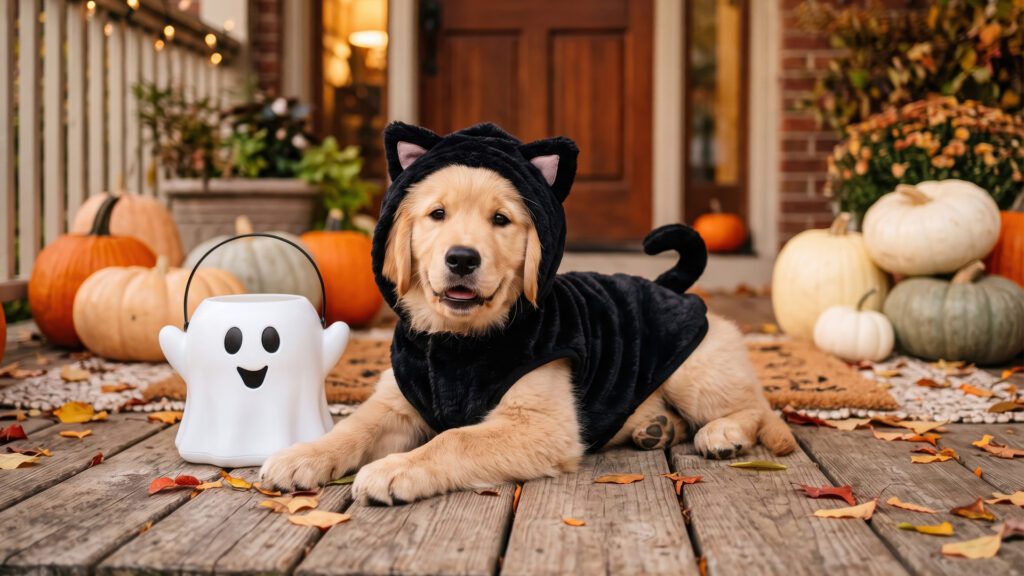
We all know dogs shouldn’t eat chocolate, but think Dallas pets don’t need parasite prevention in the cooler months? Think again! Year-round flea, tick, and heartworm prevention is chic—and chocolate is not.
Halloween in Dallas is one of the best nights of the year. But for pet owners, it also comes with hazards worth knowing before the sun goes down.
Beware This Toxic Treat
Chocolate. Most know it’s toxic to dogs, yet veterinary emergency rooms see a spike in chocolate ingestion cases every Halloween. A bowl left at the door or a bag on the floor can make your dog sick. Chocolate contains theobromine and caffeine, which dogs metabolize differently than people. The darker and more bitter the chocolate, the higher the risk. Cocoa powder and baker’s chocolate are the most dangerous. It’s a ratio of chocolate to body weight, so a small amount may affect a small dog more significantly.
Signs of toxicity include vomiting, diarrhea, restlessness, rapid heart rate, tremors, and, in severe cases, seizures. If your pet eats chocolate, don’t wait for symptoms. Call your veterinarian immediately.
Also, sugar-free candies containing xylitol are equally dangerous. Check labels carefully and keep all candy out of reach. A dog’s nose will find it.
Creepy Crawlies Don’t Take A Season Off
Here’s something veterinarians hear every fall: “We stopped the flea and tick prevention for winter.” As it gets cooler and you see fewer bugs, it feels safe to take a break, but the risk isn’t worth it.
Fleas find your home and yard perfectly comfortable year-round. A single flea can lay hundreds of eggs before you ever notice a problem. Ticks are even more stubborn. Many species remain active in temperatures almost down to freezing and carry diseases including Lyme disease, Ehrlichiosis, Rocky Mountain Spotted Fever, and Anaplasmosis. The lone star tick, common throughout Texas, is one patriotic parasite we are not a huge fan of!
And then there’s heartworm disease. Mosquitoes transmit heartworms and mosquitoes are not done with Dallas in October. By the time symptoms appear, the disease is often advanced. Treatment is costly and hard on your pet. Monthly prevention, by contrast, is simple, affordable, and nearly 100% effective when given consistently. It can even come as a once-a-year injection!
For these reasons, veterinarians recommend keeping pets on flea, tick, and heartworm prevention every month, including October and beyond.
Keeping Your Pet Safe During Trick-or-Treating
A front door opening and closing dozens of times on Halloween night is an exciting and potentially overwhelming experience. Even well-behaved pets can bolt when startled by a costume, a crowd, or a calamity.
Set your pet up in a separate, comfortable room away from the front door during trick-or-treating. Make sure ID tags are current and that your pet is microchipped. A festive bandana is a good alternative to a restrictive costume.
Halloween is one night, but chocolate safety and parasite prevention are year-round commitments. If your pet is due for a checkup or preventive care, talk with your veterinarian about the best way to keep your furry family member healthy and protected throughout the year.
Dallas Veterinary Concierge provides in-home veterinary care throughout the Dallas area; to learn more, visit dallasveterinaryconcierge.com or contact their team at info@dallasveterinaryconcierge.com.
Any content, resident submissions, guest columns, advertisements, and advertorials are not necessarily endorsed by or represent the views of Best Version Media LLC (BVM) or any municipality, homeowners associations, businesses, or organizations that this publication serves. BVM is not responsible for the reliability, suitability, or timeliness of any content submitted, inclusive of materials generated or composed through artificial intelligence (AI). All content submitted is done so at the sole discretion of the submitting party.