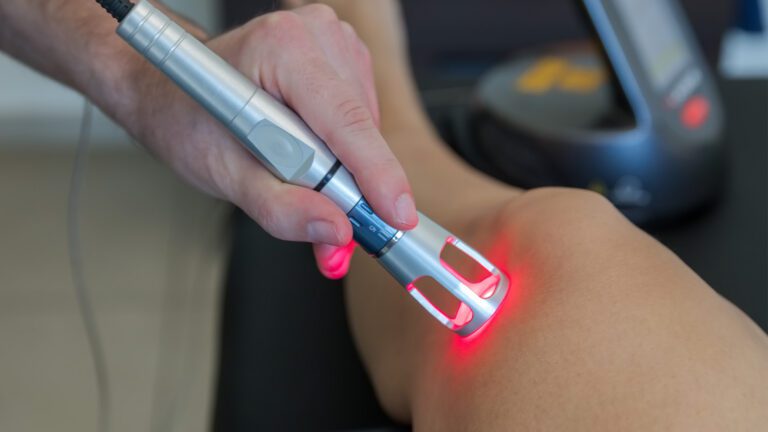
When a physical therapist says, “We’re going to use the laser today,” it is understandable if your mind jumps to science fiction. Fortunately, therapeutic laser treatment is far less dramatic—and much more comfortable—than the movies suggest.
The treatment typically involves a clinician moving a handheld device over a specific area. Patients may notice mild warmth, but there is no cutting, no loud sound, and no theatrical beam of light. The more interesting part is happening beneath the surface.
A Little Light, a Lot of Biology
Therapeutic laser is also known as photobiomodulation. It uses selected wavelengths of red and near-infrared light that can interact with light-sensitive molecules in cells. One proposed mechanism involves the mitochondria, the structures that help cells produce energy in the form of ATP.
Think of ATP as a rechargeable battery that helps power normal cellular work. By influencing cellular signaling and energy production, an appropriately selected light dose may support processes involved in tissue repair and the body’s response to inflammation. Researchers are continuing to study exactly how these effects translate into clinical outcomes for different conditions.
Laser therapy may also influence local circulation and pain signaling. In plain language, the goal is to create a more favorable environment for recovery—not to perform magic or replace the work of rehabilitation.
Why the Settings Matter
With therapeutic laser, more is not automatically better. The dose depends on factors such as the treatment area, tissue depth, stage of recovery, and the individual patient. Wavelength, power, application time, and treatment frequency all matter.
That is one reason laser therapy should be selected and applied by a clinician who has evaluated the person, understands the technology, and can determine whether it belongs in the plan of care. The same settings are not appropriate for every patient or every condition.
One Tool, Not the Whole Toolbox
At TheraSport Physical Therapy, laser therapy may be considered for certain musculoskeletal concerns, including some tendon, joint, and soft-tissue problems. Whether it is appropriate depends on the evaluation, health history, symptoms, goals, and other factors.
Just as important, the laser is not the rehabilitation plan by itself. Recovery often requires the right combination of movement, progressive loading, strength, mobility, education, and time. If laser therapy is used, it serves as one tool within that larger process.
A useful comparison is preparing a garden. Better soil and the right amount of water can create good growing conditions, but the garden still needs planting and steady care. In the same way, a modality may help support the recovery environment, while active physical therapy helps a patient build the capacity and confidence to return to everyday life.
What a Visit May Look Like
Before recommending any treatment, a physical therapist should first learn what is limiting you. That includes discussing your symptoms and goals and assessing how you move. If laser therapy is appropriate, treatment of a small area commonly takes only several minutes. The number and frequency of sessions vary, and results differ from person to person.
The TheraSport team works with neighbors throughout Johns Creek and surrounding North Atlanta communities—from student-athletes working toward a safe return to play to adults who want to garden, exercise, work, or simply move through the day with more confidence.
If a stubborn knee, shoulder, foot, or tendon problem is keeping you from an activity you enjoy, an individualized evaluation is a better starting point than choosing a treatment from a menu. A physical therapist can help identify contributing factors, explain your options, and build a plan around your needs.
To learn whether physical therapy—and possibly laser therapy—may be appropriate for you, contact TheraSport Physical Therapy to schedule an evaluation.
This article is for general educational purposes and is not a diagnosis or a substitute for care from a licensed healthcare professional. Laser therapy is not appropriate for every person or condition and should only be done under the care of a licensed professional.
Any content, resident submissions, guest columns, advertisements, and advertorials are not necessarily endorsed by or represent the views of Best Version Media LLC (BVM) or any municipality, homeowners associations, businesses, or organizations that this publication serves. BVM is not responsible for the reliability, suitability, or timeliness of any content submitted, inclusive of materials generated or composed through artificial intelligence (AI). All content submitted is done so at the sole discretion of the submitting party.