We love our bubbles! Carbonated drinks make up almost 50% of the soft drink industry. Sparkling wines are gaining popularity as party favorites too, although they still contribute a little less than 10% to the overall wine market. Even still wine contains small amounts of carbon dioxide (CO2) that contribute to the liveliness of white and rosé wines.
In sparkling wine, bubbles are formed when the concentration of CO2 exceeds its solubility limit. The traditional method to make sparkling wine (Methode Champenoise) was first developed in southwestern France in the 16th century. It involves transferring still wine to a bottle, adding sugar, and relying on residual yeast present in the wine to ferment. CO2, a byproduct of fermentation, is trapped in the capped bottle. Once the sugar is converted to CO2 the bottles are flipped head down until all the yeast settles on top of the cap. The neck of the bottle is frozen, the cap is removed along the yeast sediment line, and the bottle is quickly sealed with the typical caged cork. The traditional method is very labor intensive. The more efficient Charmat method, used to make Prosecco, takes place in pressure-resistant stainless-steel tanks rather than in each individual bottle. Carbonation, though, is still accomplished by adding sugar to the finished wine and letting the yeast ferment.
Submitted photo
After we opened our winery, we received many requests to add sparkling wines to our menu. We did not have the equipment necessary, but we identified a partner who could help us: Lakewood Vineyards located in Lake Seneca. The base wine is fermented and finished at our winery and then delivered to Lakewood Vineyards. There, the wine is transferred to a pressure-resistant tank, CO2 is infused over a week, and the carbonated wine is bottled using Lakewood’s dedicated carbonated wine bottling line. Since the CO2 is infused directly, there is no need for yeast or added sugar. The traditional and Charmat methods often use under-ripe grapes to account for the added alcohol originating from the sugar addition required for carbonation; adding CO2 directly allows us to use ripe grapes for our carbonated wines.
Submitted photo
Grape varieties that are used to make sparkling wines have high natural acidity and lower sugar levels resulting in lower alcohol crisp wines. Chardonnay, Pinot Noir, and the less known Pinot Meunier are blended into Champaign. Prosecco is made of an Italian variety called Glera. At our winery, Evansburg Vineyards, we use a tart, mineral, French-American hybrid called Vidal Blanc for our carbonated white wine, Amore. Our carbonate rosé is a blend of Marquette, a French American hybrid developed at the University of Minnesota and our estate-grown Chardonel, a Chardonnay offspring.
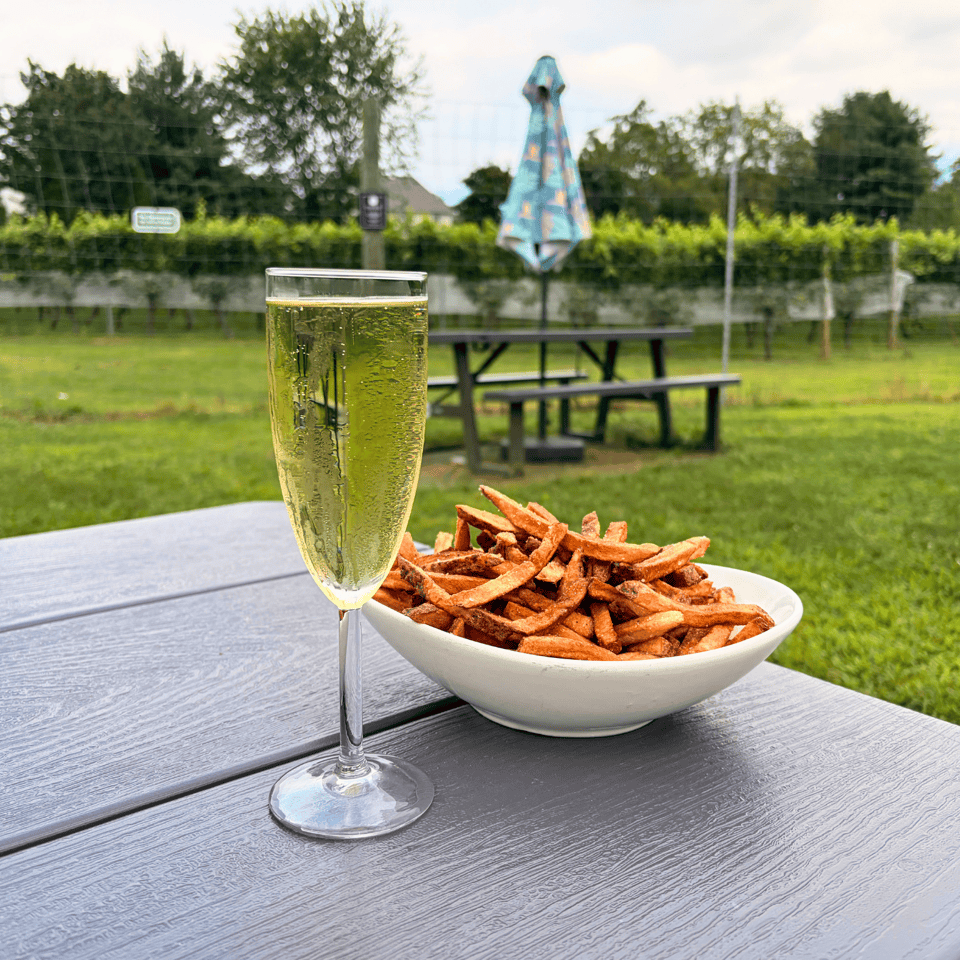
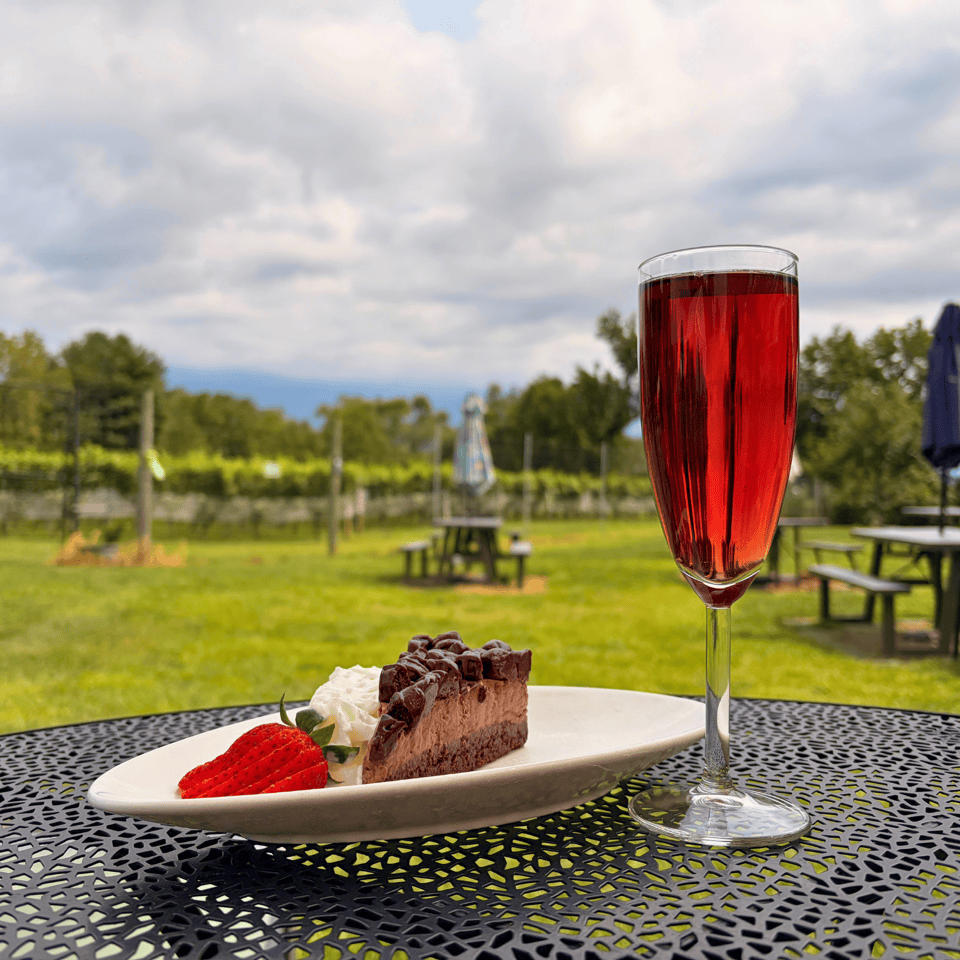
Sparkling wines are versatile in their food pairings. They go well with green salads, savory food, as well as with desserts. Amore, our sparkling white wine, pairs perfectly with our fresh-cut fries seasoned with sea salts. Fiesta, our carbonated rosé, is a great companion to our triple chocolate cake. Both carbonated wines are excellent bases for a Mimosa, an essential part of any brunch served at our bistro.
Any content, resident submissions, guest columns, advertisements, and advertorials are not necessarily endorsed by or represent the views of Best Version Media LLC (BVM) or any municipality, homeowners associations, businesses, or organizations that this publication serves. BVM is not responsible for the reliability, suitability, or timeliness of any content submitted, inclusive of materials generated or composed through artificial intelligence (AI). All content submitted is done so at the sole discretion of the submitting party.