October is National Seafood Month, which makes it a fitting time to look at one of the ingredients most deeply woven into Savannah’s story: shrimp.
Long before seafood became a staple on restaurant menus, shrimping was a way of life along the Georgia coast. Savannah and the surrounding waterways were home to a thriving fishing industry, supported by generations of fishermen, shrimpers and seafood workers who knew the tides, waterways and seasons by heart.
For many coastal communities, that knowledge was more than a livelihood. It was part of a cultural tradition.
Pin Point, just south of Savannah, offers one of the clearest examples. Established in 1896 by formerly enslaved people from Ossabaw, Green and Skidaway Islands, the community developed a strong connection to the surrounding waterways. Residents harvested shrimp, crabs and oysters, while local seafood factories provided work for generations of families.
Those skills were passed from one generation to the next. Fishing was taught by parents and grandparents, and the work supported not only individual families but entire communities. In places such as Pin Point and Sandfly, these traditions became part of the larger Gullah Geechee cultural heritage of coastal Georgia.
That history matters when we talk about Lowcountry food today.
At Ọkàn, our cooking draws inspiration from West Africa, the Caribbean and the South Carolina Coast. Those influences remind us that food is rarely confined to one place or one culture. Ingredients travel. Techniques evolve. Recipes change as people carry them into new communities.
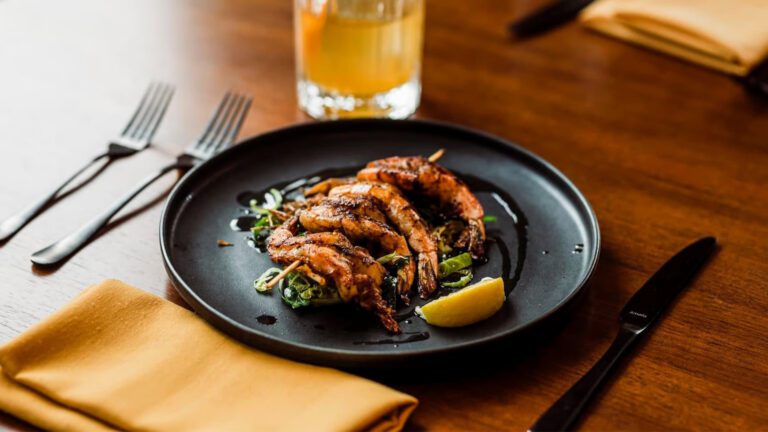
Seafood is a perfect example. The shrimp pulled from Georgia waters can become part of countless dishes, each reflecting a different history or tradition. The ingredient may be simple, but the story behind it is anything but.
National Seafood Month gives us a chance to appreciate that story, and the people who have kept it alive. It is an opportunity to think beyond what is on the plate and consider the fishermen, families and coastal communities whose knowledge helped shape the food we know today.
For us, celebrating seafood means celebrating that connection. It means honoring the Lowcountry while recognizing the many cultures that have influenced its table.
Because here on the coast, seafood has never been just something we eat. It is part of where we come from.
Any content, resident submissions, guest columns, advertisements, and advertorials are not necessarily endorsed by or represent the views of Best Version Media LLC (BVM) or any municipality, homeowners associations, businesses, or organizations that this publication serves. BVM is not responsible for the reliability, suitability, or timeliness of any content submitted, inclusive of materials generated or composed through artificial intelligence (AI). All content submitted is done so at the sole discretion of the submitting party.