How Often Should I Flush My Water Heater?
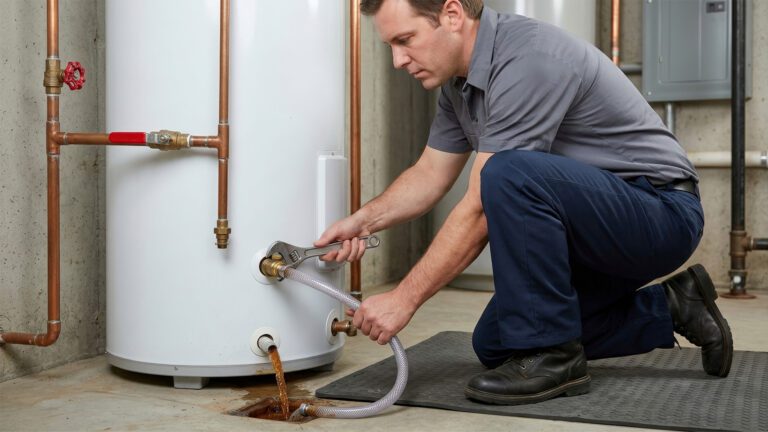
Your water heater works every day to provide hot water for showers, laundry, dishes, and cleaning. Like any major appliance, it needs routine maintenance to operate efficiently and reliably. One of the most important maintenance tasks for a traditional tank-style water heater is flushing the tank.
Why Should You Flush Your Water Heater?
Over time, minerals and sediment can collect at the bottom of your water heater tank. This buildup can make it harder for the unit to heat water efficiently, potentially increasing energy use and straining the system.
Excessive sediment can also contribute to unusual noises, inconsistent hot water, corrosion, and premature equipment failure. Routine maintenance removes this buildup, improves performance, and helps extend the life of your water heater.
How Often Should a Water Heater Be Flushed?
For many homeowners, having a traditional tank-style water heater flushed about once a year is a good general guideline.
However, the right schedule depends on several factors, including:
- Water quality and mineral content
- Household hot water usage
- Age and condition of the water heater
- Manufacturer recommendations
- Previous sediment buildup
Homes with harder water or significant mineral content may benefit from more frequent maintenance.
Tankless water heaters have different maintenance requirements. Because they don’t store a large tank of water, they don’t collect sediment the same way. However, mineral deposits can accumulate inside the heat exchanger, so periodic flushing or descaling may still be necessary.
Always follow the maintenance recommendations for your specific water heater.
Signs Your Water Heater May Need Attention
Routine maintenance can help you catch problems before they become larger repairs. Contact a plumber if you notice:
- Reduced hot water
- Rumbling, popping, or unusual noises
- Discolored hot water
- Water around the base of the tank
- Visible corrosion
- Unusual odors
- Significant changes in water temperature
A leaking tank deserves immediate attention because it may indicate the water heater is nearing the end of its service life.
Should You Flush a Water Heater Yourself?
While some homeowners are comfortable flushing their own water heaters, the process involves hot water, plumbing connections, valves, and gas or electrical components.
If you are unsure about the proper procedure, hiring a licensed plumber is the safer option. A professional can also inspect other important components while servicing the water heater and identify signs of wear, corrosion, leaks, or other potential problems.
Keep Your Water Heater Working Reliably
Routine maintenance is one of the easiest ways to protect your water heater investment. A regular flushing schedule can help reduce sediment buildup, maintain efficiency, and extend the life of your equipment.
If you’re experiencing issues with your water heater, contact Smoak’s Comfort Control. Our local plumbing team can inspect, maintain, repair, or replace conventional, tankless, and hybrid water heaters throughout Johns Island and the Lowcountry.
Any content, resident submissions, guest columns, advertisements, and advertorials are not necessarily endorsed by or represent the views of Best Version Media LLC (BVM) or any municipality, homeowners associations, businesses, or organizations that this publication serves. BVM is not responsible for the reliability, suitability, or timeliness of any content submitted, inclusive of materials generated or composed through artificial intelligence (AI). All content submitted is done so at the sole discretion of the submitting party.