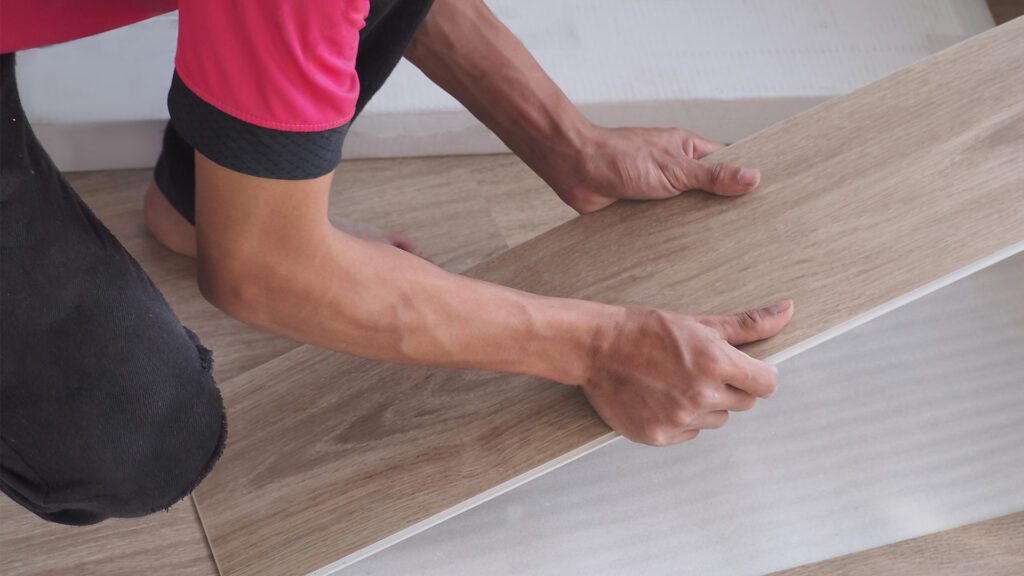
When it comes to choosing a new floor, homeowners often find themselves comparing two popular options: luxury vinyl plank (LVP) and laminate. Both can deliver the look of hardwood at a fraction of the cost, but they differ in construction, performance, appearance, environmental impact and where they work best. According to Francy Thompson, President and Interior Designer, there is more to the decision than simply choosing between “vinyl” and “laminate.”
“Most synthetic floors have layers and it is within those layers that make a difference. Comparing only basic laminate and LVPs would be missing the forest for the trees (pun intended). A deeper dive into the different brands and version of each product is necessary to truly understand the comparison.”
Understanding Laminate
Laminate flooring typically consists of several layers, including a decorative surface, a protective wear layer and a dense, wood-based core. Modern laminate can offer excellent durability, realistic wood visuals and resistance to scratches and everyday wear.
However, traditional laminate is not inherently waterproof.
“Laminate is not inherently waterproof but superior locking systems like Mohawk’s Revwood solve the issue of top down waterproofing,” Thompson explains. “Coupled with their waterproof tape, laminate can be a waterproof flooring.”
The high-density fiberboard (HDF) core is pressed under extreme pressure, creating a dense and durable material. It is typically manufactured from byproducts of the wood industry and can be recyclable. The limitation is that the core itself is not completely waterproof, meaning laminate may not be the best choice for areas that regularly experience high moisture.
The Advantages of LVP
Luxury vinyl plank has become extremely popular because it is inherently waterproof and exceptionally versatile. With a waterproof core, LVP is particularly well suited for bathrooms, laundry rooms, basements and other areas where moisture is a concern.
That doesn’t mean LVP is indestructible. As Thompson points out, “LVP is inherently waterproof but would never withstand flooding conditions.” LVP also presents an environmental consideration. Because it is a synthetic product, disposal can be problematic as older floors eventually make their way into landfills. At the same time, manufacturers are responding to performance concerns that have emerged as rigid-core LVP has become more widely used.
“The industry is recognizing some pitfalls that are exposed now that the rigid core LVP has been on the market for a while and they are responding with overall thicker planks as well as beefier wear layers on top,” says Thompson.
One example she recommends is Mannington’s Adura with a WPC core. “It’s much thicker than a typical lvp, not asking so much of a tiny locking system we’ve seen historically with LVP.”
So, Which One Is Better?
The answer depends on your home and your priorities.
Choose laminate if you want a highly realistic wood appearance, excellent scratch resistance and a dense, wood-based core—and if moisture isn’t your primary concern. Today’s premium waterproof laminate products can also be a strong option for many active households.
Choose LVP when waterproof performance is a priority, particularly in bathrooms, laundry rooms and basements. It is also a practical choice for homeowners who want a durable, low-maintenance floor.
And there is now a third option.
A Hybrid Approach
New flooring products are beginning to blur the line between laminate and LVP. Thompson points to Mohawk’s PureTech as an example.
“We are having great success with Mohawk’s Puretech. The price is very nice, it has a plant based core, and comes with a pet scratch warranty—the first we’ve ever seen in our industry.”
As flooring technology continues to evolve, the best choice isn’t necessarily the product with the longest list of features. It’s the product that best fits the way you live.
“As consumer demands and municipal requirements evolve, products will continue to adapt. And as always, we have a talent for matching products to our customers wants and needs.”
For homeowners considering new flooring, that may be the most important advice of all: look beyond the label, compare the construction and performance of individual products, and choose the floor that fits your home—not simply the trend of the moment.
Any content, resident submissions, guest columns, advertisements, and advertorials are not necessarily endorsed by or represent the views of Best Version Media LLC (BVM) or any municipality, homeowners associations, businesses, or organizations that this publication serves. BVM is not responsible for the reliability, suitability, or timeliness of any content submitted, inclusive of materials generated or composed through artificial intelligence (AI). All content submitted is done so at the sole discretion of the submitting party.