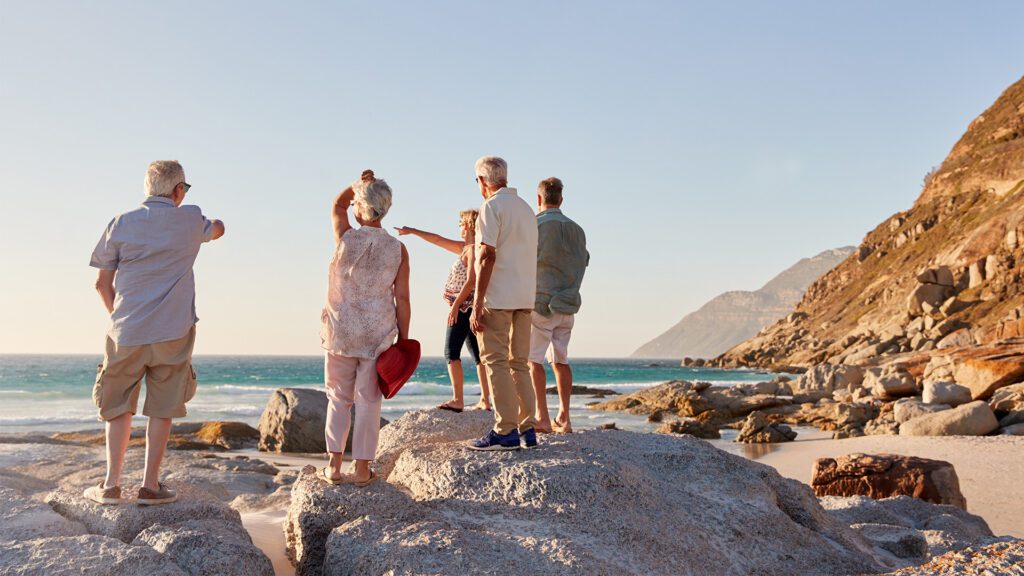

Vacation booked. Tickets bought. Passports secured. Bags packed. You are ready to enjoy the sun, climb some mountains, fly to Antarctica, or may be trek to the moon. There is one more thing you need to do. Protect yourself from travel-related diseases.
Do I really need to do this?
Picture this: You are at the resort, feet in the sand, sipping from the coconut in your hand. You worked hard all year, and this trip is your little gift to yourself. Then it starts: a little rumble. You run to the toilet. Then you go again. And again. For the next three days, the bathroom becomes your main attraction. Excursions cancelled. Dinner reservations missed. Your carefully planned vacation has become a very expensive tour of the hotel bathroom.
- Did you know? Traveller’s diarrhea is the most common travel-related illness. It can affect up to 70% of travellers, depending on where you go.
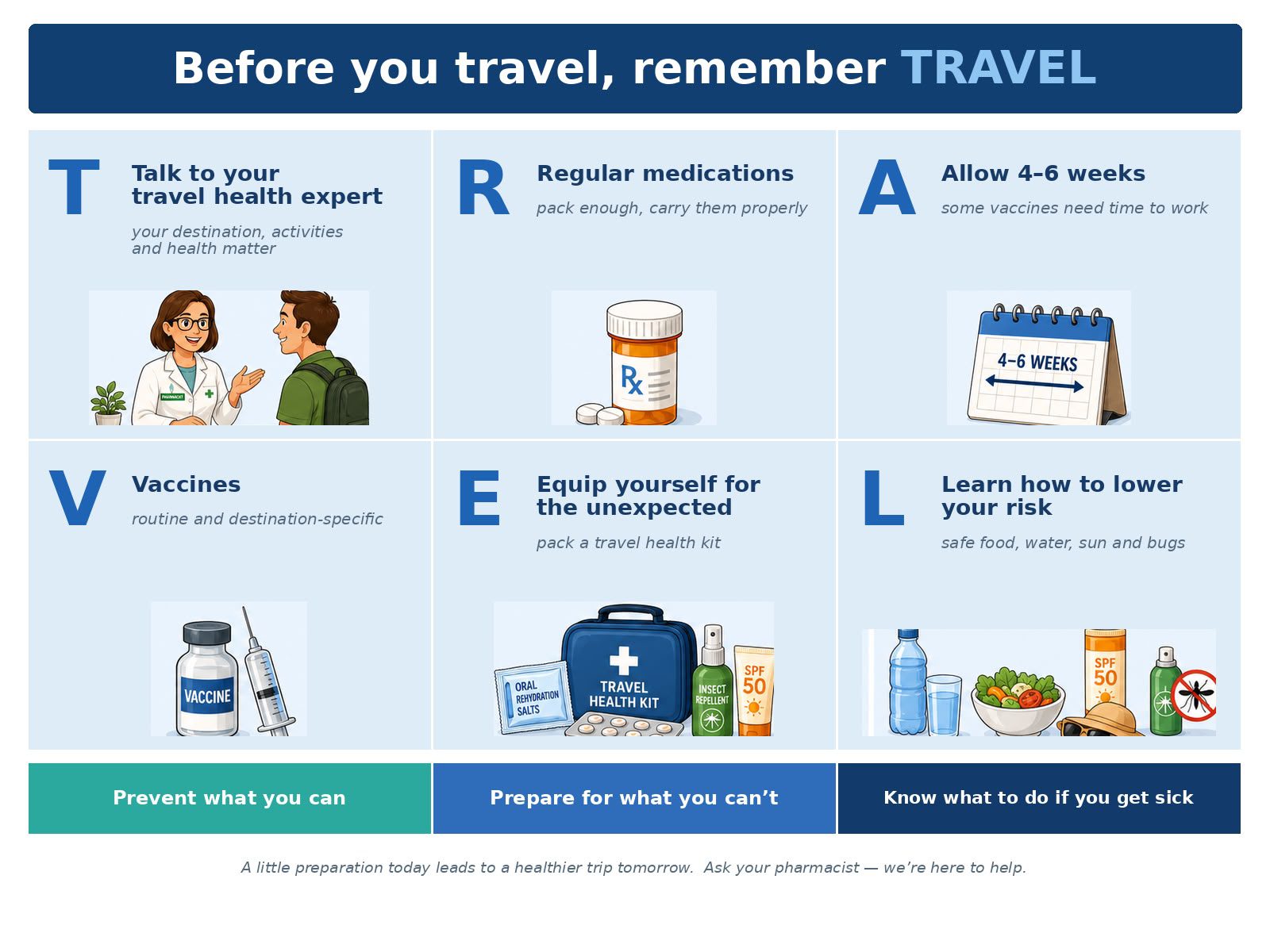
An unhappy stomach is only one way illness can derail your trip. Travel can expose you to malaria, dengue fever, and Japanese encephalitis, as well as altitude sickness and motion sickness. This is why a pre-travel consultation matters: to prevent what you can, prepare for what you cannot, and know what to do if you get sick.
You may be travelling for work, visiting family, or returning to a country you once called home. It is important to note that familiarity does not always mean lower risk. You may still be at risk of getting travel related illnesses.
What do I need?
What you need depends on where you are going, how long you will be away, what you plan to do, and your health, medications, and vaccination history.
Now back to our traveller in the bathroom. Even with careful planning, traveller’s diarrhea can still happen. A travel kit may include oral rehydration salts and loperamide (Imodium). For some travellers, a prescriber may recommend an antibiotic for self-treatment if moderate or severe diarrhea develops. This may not apply to everyone, which is why individualized advice matters.
Of course, the best travel illness is the one you never get. Safe food and water, clean hands and insect protection can prevent a lot of trouble. Vaccines may also be recommended. Depending on your destination, you may need protection against hepatitis A, typhoid, yellow fever or Japanese encephalitis, or medication to prevent malaria.
- Did you know? Japanese encephalitis is not found in Japan alone. The virus is transmitted in 24 countries across Asia and the Western Pacific.
What should I do?
- Start with a pre-travel consultation. You should do this 4–6 weeks before you leave. You may need vaccines and some take time to work or require more than one dose.
- Bring your itinerary, vaccination history, and medication list. Where you are staying and what you will be doing matter too. A week at a resort is different from backpacking through rural areas, working in remote communities or visiting family.
- Check your regular medications before you leave. Make sure you have enough for the entire trip.
- Pack a travel health kit. Depending on where you are going, you may need insect repellent, motion-sickness medication, oral rehydration salts or other items recommended during your consultation.
A shot in time saves nine. Get your shots before you pack your shorts. Bags packed already? Do not worry, it may not be too late. Stop by the pharmacy, tell us where you are headed, and we will see what you need. Your pharmacist can offer travel health advice and prescribe the medications you need if necessary.
Any content, resident submissions, guest columns, advertisements, and advertorials are not necessarily endorsed by or represent the views of Best Version Media LLC (BVM) or any municipality, homeowners associations, businesses, or organizations that this publication serves. BVM is not responsible for the reliability, suitability, or timeliness of any content submitted, inclusive of materials generated or composed through artificial intelligence (AI). All content submitted is done so at the sole discretion of the submitting party.