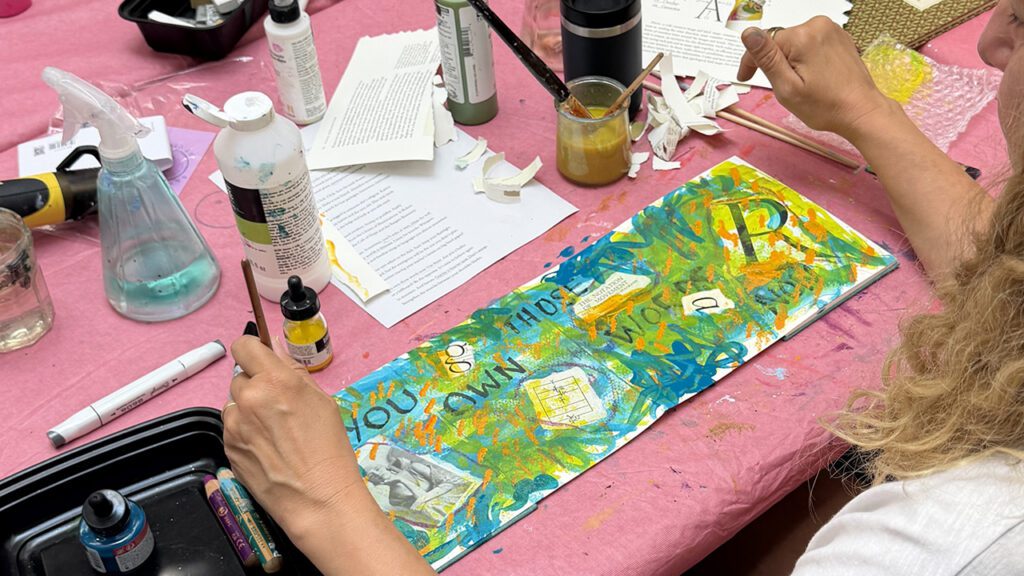
Tuesday, watercolor class. A new student, eager and ready to paint perfect flowers. She’s not overly confident, but she knows how to follow directions, so she’s got this. We get started. Watercolors moving, brushes wet, and then: a big, fat, red drip, right where it should not be! I see her gasp and then groan. It’s my cue to bring the class back to the practice: pause, and notice. It’s time to breathe. I see her face relax, her shoulders loosen, her hand no longer gripping the brush. This is not a watercolor masterclass. This is a creative practice.
I ask us to look at our papers, notice where there is a mark you love and maybe one that you don’t. We move more paint around the paper, covering the marks we don’t love and brightening the ones that call our attention. We turn the paper now, find an area that seems interesting, and add a new element. I see her take the leap and mark, her breath steady now. She is relaxing into the process, noticing the colors and the shapes she likes. I hear murmurs of “hmm” and “wow.” The talking quiets until all I hear is the sound of brushes in the water cup and gentle swishing across the page. There it is, the collective sigh.
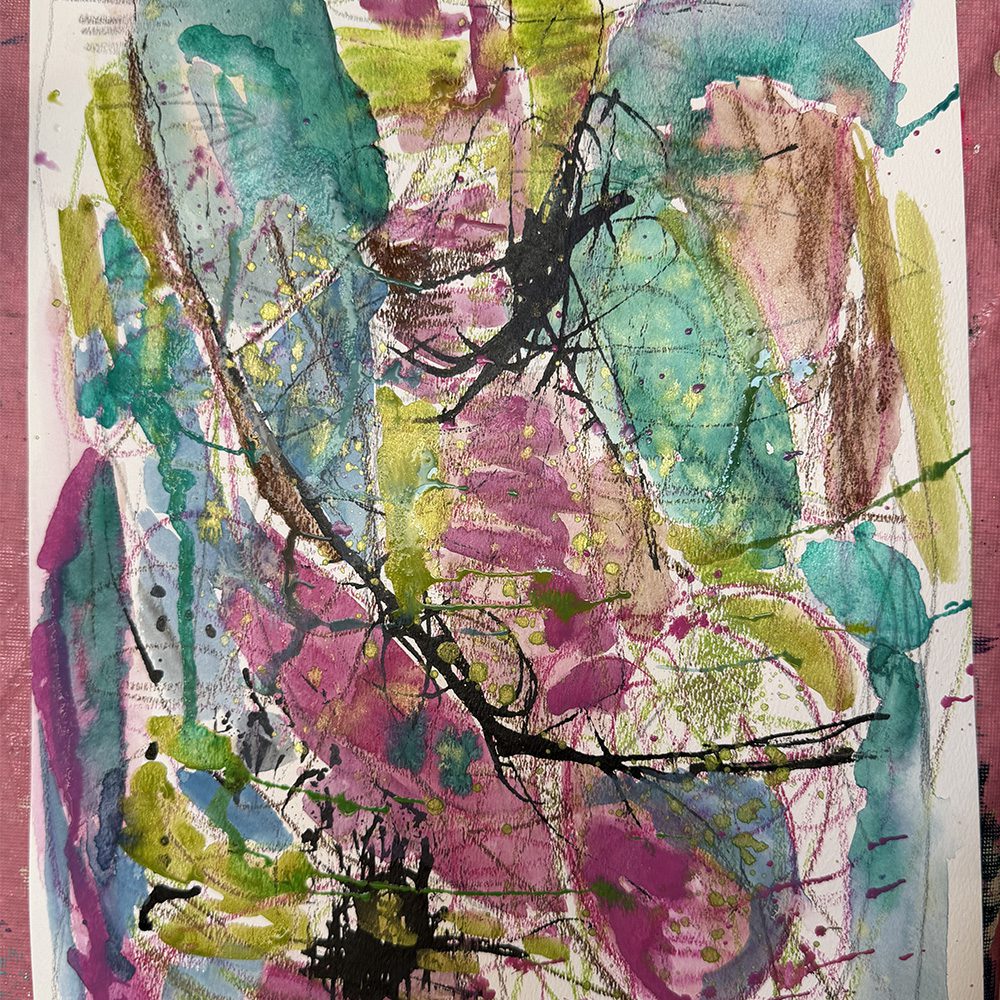
We are reminded to breathe more, especially when we make a ‘mistake’. I share the secret to the practice with a question: “Is it really a mistake or can we pivot and see something new?” We spend our last 10 minutes sharing our work for the day, what surprised us, and what came out. There is a flicker in the new student’s eye, the realization that all these paintings are different, interesting, and accepted as they are. The veterans know. Come back next week and you’ll be amazed at what you did this week.
Modern life asks us to strive, perform, and show our every move to everyone. Creative practice gives us permission to explore and respond to what we notice within ourselves. While we are in this quiet moment looking inward, we pivot when something unexpected happens, looking closely at what we initially missed and pausing before choosing the next step. As we build this practice, it slowly changes us.
Try it for yourself. Find a piece of paper and choose two different tools—a pen, pencil, marker, crayon, or paintbrush. Set a timer for five minutes, close your eyes, and begin moving one tool across the paper. Notice how the movement feels in your hand. Switch tools whenever you feel ready. Let yourself breathe, make marks, and respond without trying to create anything recognizable. When the timer ends, open your eyes and look at what is there without deciding whether it is good or bad. What surprised you? Where did it take you?
Any content, resident submissions, guest columns, advertisements, and advertorials are not necessarily endorsed by or represent the views of Best Version Media LLC (BVM) or any municipality, homeowners associations, businesses, or organizations that this publication serves. BVM is not responsible for the reliability, suitability, or timeliness of any content submitted, inclusive of materials generated or composed through artificial intelligence (AI). All content submitted is done so at the sole discretion of the submitting party.