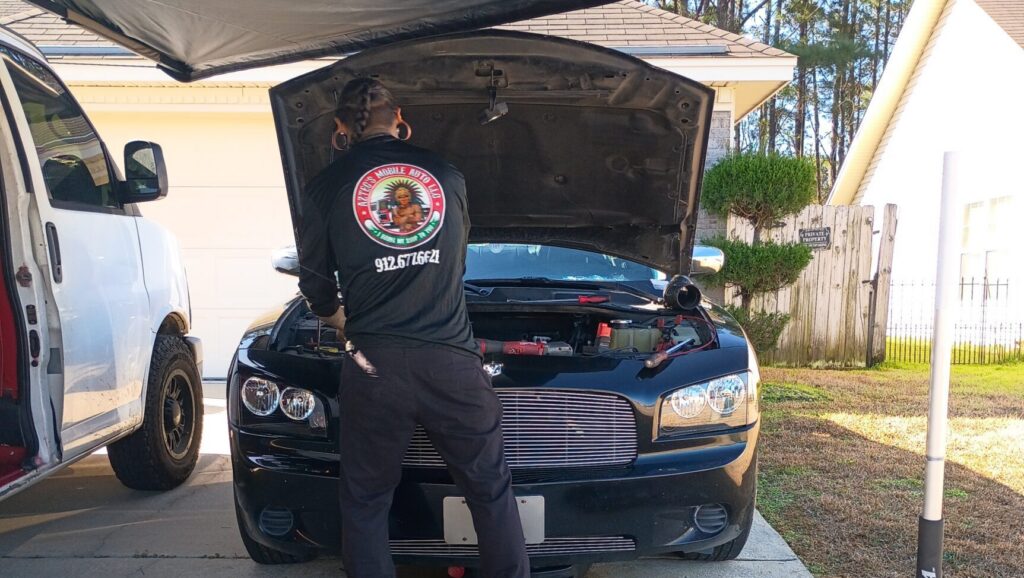
Do yourself and your bank account a favor and pay attention whenever your vehicle is trying to tell you something.
Getting a professional diagnostics run on your vehicle can save you HUNDREDS of dollars.
A professional diagnostics can help pinpoint the problem more accurately than trouble shooting alone. This will help eliminate wrong parts being ordered as well as time and labor being wasted and will prevent your bank account from taking a hit.
Listen to your vehicle. What is it trying to tell you?
Your vehicle doesn’t always need to make a dramatic noise or illuminate a warning light to signal that something needs attention. Changes in the way your car sounds, feels, starts, or handles are all worth paying attention to.
Your vehicle often gives you clues when something isn’t working the way it should. A new sound, unusual vibration, warning light, or change in performance may seem minor, but these early warning signs can be your car’s way of telling you it needs attention now rather than later.
“My Car Is Slow to Start.”
If your engine is taking longer than usual to turn over, your battery may be losing its ability to hold a charge. Summer heat can be particularly hard on automotive batteries, making fall a good time to have the battery and charging system tested. Corroded connections or a problem with the alternator can also contribute to starting issues.
“My Car Is Pulling or Vibrating.”
Does your vehicle pull to one side, shake at certain speeds, or feel different while driving? These symptoms can point to issues with tire pressure, tire wear, wheel alignment, or suspension components. Having these concerns inspected early can help prevent additional wear and keep your vehicle handling properly.
“My Brakes Sound Different.”
Squealing, grinding, or other unusual noises when braking shouldn’t be ignored. Changes in brake pedal feel, steering-wheel vibration while braking, or needing more distance to stop are also reasons to have the brake system inspected. Addressing brake concerns early can help prevent more extensive repairs.
“My Engine Is Running Hot.”
An engine that is running hotter than normal may indicate a cooling-system problem. Low coolant, a leak, a worn hose, a thermostat issue, or another component may be contributing. If your temperature gauge is consistently higher than normal, have the cooling system checked rather than waiting for the problem to worsen.
“My Check-Engine Light Is On.”
A check-engine light can indicate anything from a relatively minor issue to a problem requiring immediate attention. The important thing is not to guess—or simply ignore it. A professional diagnostic scan can help identify the underlying issue and determine the appropriate repair.
When something seems different, don’t wait for a small symptom to become a major repair.
Have a qualified automotive professional inspect the vehicle. Paying attention to what your car is telling you can help keep it running safely and reliably for miles ahead.
Any content, resident submissions, guest columns, advertisements, and advertorials are not necessarily endorsed by or represent the views of Best Version Media LLC (BVM) or any municipality, homeowners associations, businesses, or organizations that this publication serves. BVM is not responsible for the reliability, suitability, or timeliness of any content submitted, inclusive of materials generated or composed through artificial intelligence (AI). All content submitted is done so at the sole discretion of the submitting party.