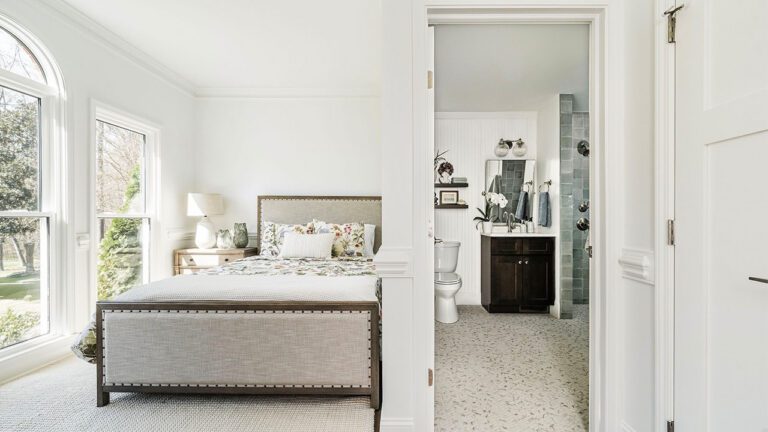
More homeowners are choosing to age in place, updating the home they love rather than moving. The goal isn’t to make your home feel clinical or institutional. It’s to create a space that’s safe, easier to navigate and still beautifully you.
At Home Theory, we approach accessible remodeling the same way we approach every project—with thoughtful space planning, elevated finishes and details that support real life. The best accessibility features are often the ones you barely notice until you need them.
Zero-Threshold Showers
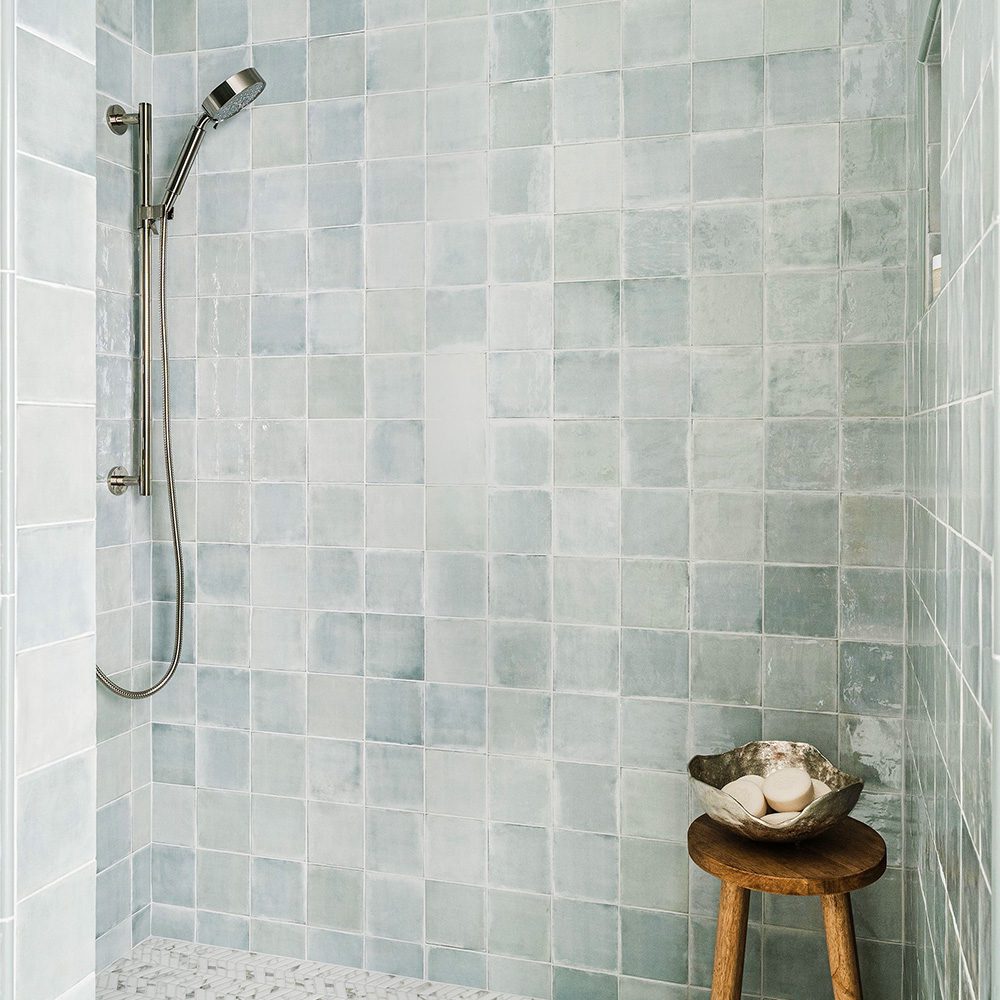
A shower curb can become a significant trip hazard as mobility changes. A zero-threshold shower, also commonly called a curbless shower, creates a seamless transition from the bathroom floor into the shower, making it easier to enter and exit whether you’re walking or using a walker or wheelchair.
Achieving a true zero-threshold shower may require significant structural and subfloor modifications. In some homes, the floor system can be recessed to accommodate the required slope and drainage. On a concrete slab, achieving the necessary elevation may require concrete slab modification. While this can add considerable cost and complexity to a renovation, it’s an important detail to plan for early in the design process.
Grab Bars That Look Like Design Details
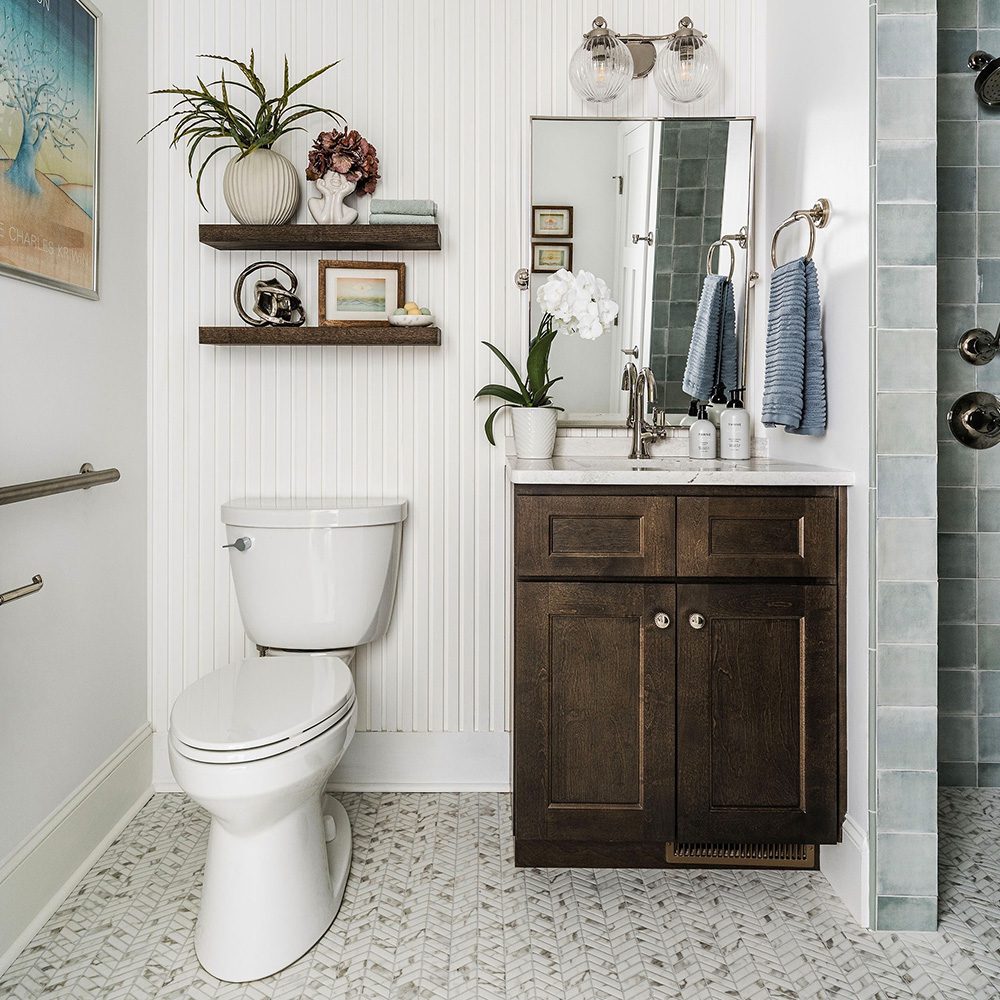
Grab bars provide valuable stability in one of the home’s most slip-prone spaces, but accessibility doesn’t mean settling for institutional-looking hardware. Today’s designer grab bars are available in finishes and styles that coordinate with bathroom fixtures. Some can even double as towel bars, allowing an important safety feature to become part of the overall design.
Proper installation is just as important as the grab bar itself. Plan for structural backing or blocking so grab bars can be securely fastened to the wall structure—skip the wall anchors.
A Vanity Designed for Independence
The bathroom vanity is an area where small design decisions can make a meaningful difference. Ergonomic cabinet hardware, such as larger pulls that are easy to grasp, can be more comfortable to use than small knobs or hardware that requires a tight grip or significant dexterity.
We consider the shape, size and placement of hardware so everyday tasks—opening a drawer, reaching for toiletries or accessing towels—require less effort.
Counter height can also be adjusted to how the bathroom will be used, including providing comfortable access from a seated position when appropriate.
Mirrors Designed for More Than Standing
A mirror doesn’t have to be designed solely around standing height. Tilt-adjustable mirrors provide visibility from multiple positions, making them particularly useful in an accessible bathroom.
Whether you’re standing at the vanity, sitting on a stool or using a wheelchair, thoughtful mirror placement can make everyday routines easier while still creating a beautiful focal point in the room.
Lighting and Electrical Placement
Good lighting becomes increasingly important when navigating a bathroom safely. We layer ambient, task and accent lighting to minimize shadows and improve visibility throughout the space.
The placement of electrical controls deserves consideration, too. Appropriately positioned light switches, dimmers and outlets can make everyday tasks easier from a seated position and reduce unnecessary reaching.
Flooring That Balances Beauty and Safety
A beautiful bathroom shouldn’t require choosing between style and safety. Polished surfaces and loose rugs can become slippery, particularly around water. We recommend textured or slip-resistant tile with appropriate traction while maintaining the sophisticated look and feel of a thoughtfully designed bathroom.
Accessibility That Looks Like Good Design
The most successful aging-in-place bathrooms don’t announce their accessibility features. Instead, thoughtful details are integrated into the design from the beginning- creating a space that’s comfortable and intuitive today while allowing it to adapt as needs change.
Whether you’re planning a bathroom renovation now or preparing your home for the future, designing with accessibility in mind can be one of the most valuable investments you make in your home.
Any content, resident submissions, guest columns, advertisements, and advertorials are not necessarily endorsed by or represent the views of Best Version Media LLC (BVM) or any municipality, homeowners associations, businesses, or organizations that this publication serves. BVM is not responsible for the reliability, suitability, or timeliness of any content submitted, inclusive of materials generated or composed through artificial intelligence (AI). All content submitted is done so at the sole discretion of the submitting party.