
Acupuncture has been practiced for thousands of years, yet many people are still curious—or even skeptical—about how it works.
Why can a tiny needle affect my health? What actually happens after the needle goes in? Does it hurt? Is it safe? Can I receive acupuncture while seeing a physiotherapist or chiropractor? And if I feel healthy, why would I need acupuncture at all?
These are all great questions.
At Bridgwater Acupuncture & Massage, we believe that understanding a treatment is often the first step toward feeling comfortable enough to try it. In this two-part article, we will answer 10 of the questions we hear most often.
1. Why can acupuncture help with health problems?
Good acupuncture begins long before a needle is inserted.
In Traditional Chinese Medicine (TCM), practitioners first assess the individual through the Four Diagnostic Methods: observation, listening and smelling, questioning, and palpation—including pulse examination.
We are not simply looking at where you hurt. We are trying to understand the overall pattern behind your symptoms.
From there, effective treatment depends on three important things: accurate assessment, the right combination of acupuncture points, and precise needling technique.
Two people may come in with the same complaint but receive different treatments because the underlying patterns may be different. The location of the points, their combination, the depth and angle of insertion, and the way the needles are stimulated can all influence the treatment.
In other words, acupuncture is not simply “putting needles where it hurts.”
The skill lies in knowing where to treat, why to treat there, and how to stimulate each point appropriately.
2. What happens after the needles are inserted?
From the TCM perspective, acupuncture is used to regulate Qi and Blood, balance Yin and Yang, and promote healthy flow through the meridian system.
Think of the body as an interconnected network.
When something becomes deficient, excessive, stagnant, or unbalanced, symptoms may begin to appear.
Acupuncture treatment is designed to help the body reduce excess where there is too much, support deficiency where there is too little, and restore smoother circulation where there is stagnation.
In Traditional Chinese Medicine, there is an important principle: reduce what is excessive and support what is deficient.
Modern research has also investigated acupuncture’s effects on the nervous system, local circulation, connective tissues, pain signalling, and the body’s own regulatory mechanisms.
Traditional and modern medicine may use different language to describe these processes, but the goal of acupuncture is clear: to help the body move toward better balance and function.
3. How can acupuncture target a particular organ?
In TCM, the organs are understood as parts of interconnected functional systems rather than isolated structures.
Based on a patient’s symptoms and diagnostic pattern, an acupuncturist selects combinations of points associated with particular meridians and physiological functions.
For example, a treatment intended to support digestion may use a completely different combination of points from one designed for sleep, stress, menstrual health, or respiratory concerns.
Through carefully selected acupuncture points and appropriate stimulation, treatment is designed to influence the body’s regulatory systems and support healthier function of the related organ systems.
This is another reason why proper diagnosis, point selection, and needling technique are so important.
4. Why would a healthy person get acupuncture?
Because acupuncture is not only about treating problems after they appear.
One of the traditional principles of Chinese medicine is preventive care—supporting health before illness becomes established.
Many people use acupuncture as part of their wellness routine to support relaxation, sleep, recovery, energy, digestion, stress management, and overall well-being.
Think about your car. You do not wait until the engine completely breaks down before maintaining it.
Your body deserves preventive care too.
Our goal is not simply to help you become “not sick.” We want to help you maintain the best state of health your body can achieve, strengthen resilience, and reduce the chance that small imbalances develop into bigger problems.
5. Does acupuncture hurt?
This is probably the most common question we hear!
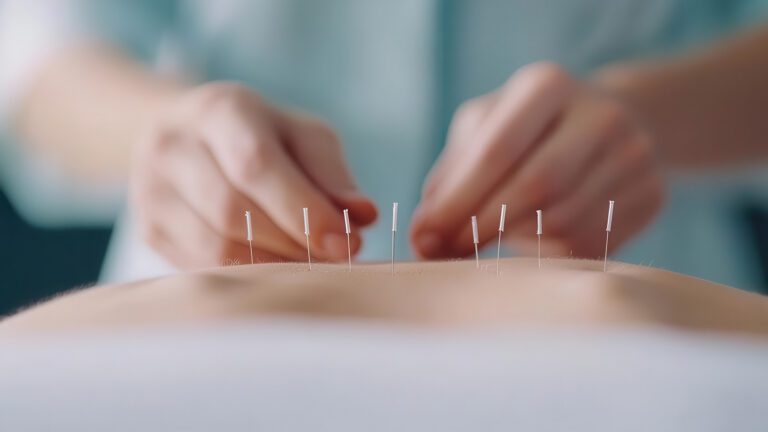
Acupuncture needles are extremely thin. Some commonly used needles are approximately 0.18 mm in diameter—about as thin as a human hair.
Most patients do not describe acupuncture as painful.
You may occasionally feel a very quick pinch as the needle enters the skin, often lasting only a fraction of a second.
Afterward, you may notice sensations such as heaviness, warmth, tingling, pressure, or a dull ache around certain points. In TCM, these sensations can be associated with the arrival of De Qi, or the therapeutic needle sensation.
Many first-time patients are surprised by how comfortable acupuncture actually is.
In fact, some become so relaxed during treatment that they fall asleep.
Stay tuned for the December issue when we answer the rest of our top ten questions about acupuncture.
At Bridgwater Acupuncture & Massage, our team provides acupuncture, Registered Massage Therapy, cupping, Chinese herbal tea, moxibustion, electroacupuncture, and integrated treatment options for our community.
Come in, talk with us, experience it for yourself—and let your body give you the answer you’ve been looking for.
Any content, resident submissions, guest columns, advertisements, and advertorials are not necessarily endorsed by or represent the views of Best Version Media LLC (BVM) or any municipality, homeowners associations, businesses, or organizations that this publication serves. BVM is not responsible for the reliability, suitability, or timeliness of any content submitted, inclusive of materials generated or composed through artificial intelligence (AI). All content submitted is done so at the sole discretion of the submitting party.