The school year brings a return to routines, but it also brings something else for both teachers and students: a lot of carrying, sitting, bending, and time spent in positions that aren’t always very friendly to the back and neck.
Students may be hauling backpacks filled with books, laptops, water bottles, and sports gear. Teachers have their own version, with bags stuffed with lesson materials, laptops, papers, books, and supplies that travel between classrooms, home, meetings, and after-school activities. Add hours spent working at a computer or sitting through meetings and professional development, and those everyday habits can begin to take a toll.
Fortunately, a few small adjustments can make a big difference.
Lighten the Load
Whether you’re carrying a backpack, tote, or work bag, start by taking a look at what you’re actually carrying. Remove items you don’t need every day, and avoid letting papers, books, and supplies accumulate throughout the week.
For backpacks, use both shoulder straps rather than slinging the bag over one shoulder. The straps should be adjusted so the backpack sits close to and high on the body instead of hanging low. When possible, choose bags with padded straps and multiple compartments to help distribute weight more evenly.
Teachers who carry materials between classrooms or buildings should also avoid repeatedly loading one side of the body. A backpack, rolling bag, or multiple smaller trips may be a better option than trying to carry everything at once.
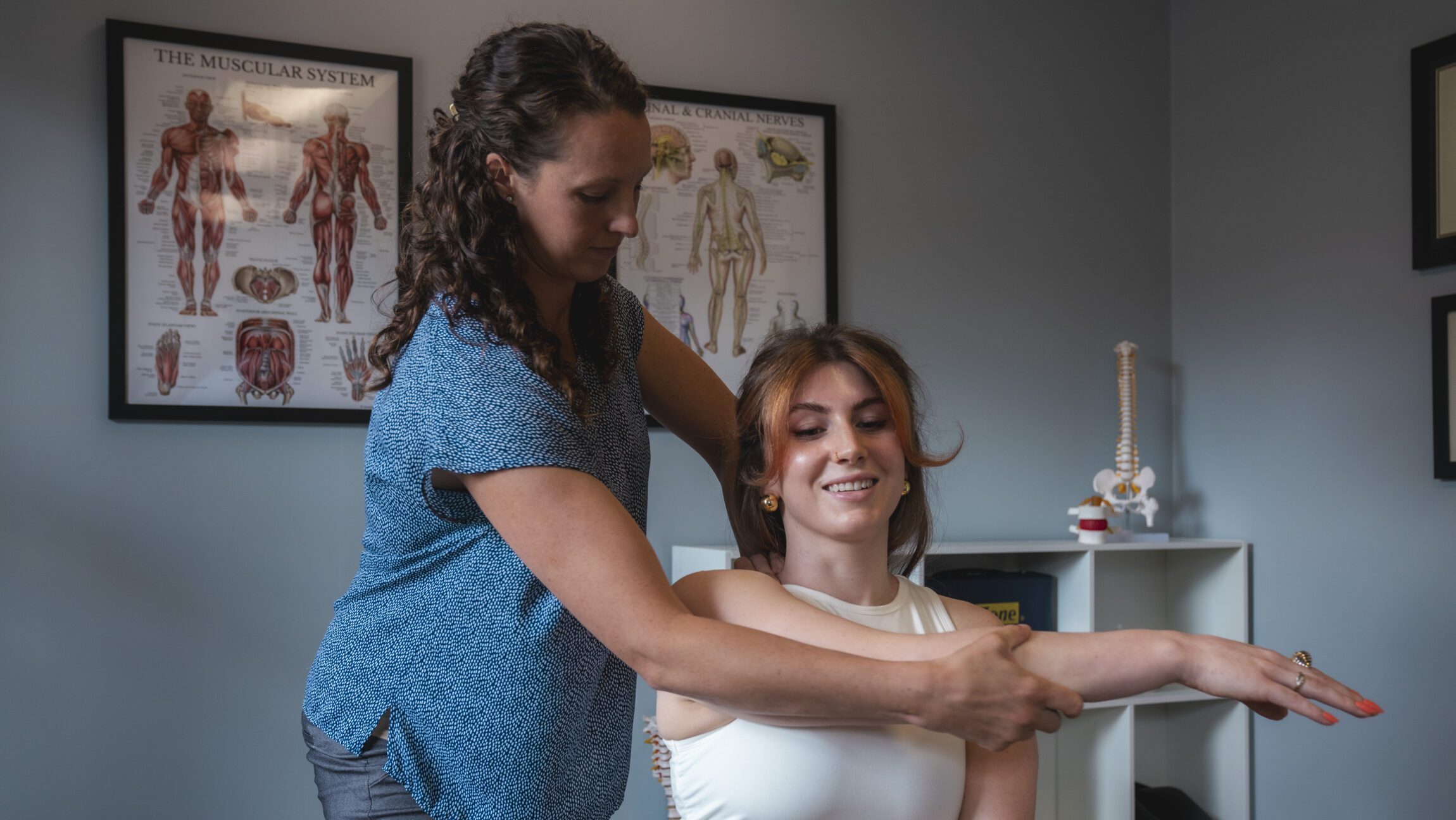
Submitted photo
Rethink How You Sit
School furniture isn’t designed for every body or for sitting comfortably for hours at a time. Whether you’re working at a desk, attending a meeting, tutoring at a library table, or listening to a presentation, try to keep both feet supported and sit feeling your “sits” bones – which will prevent your spine from rounding forward.
If your feet don’t comfortably reach the floor, a small footrest can help. A rolled towel or small lumbar cushion placed behind the lower back can also provide additional support in chairs that offer very little.
Looking downward for long periods at a computer or laptop creates a whole new issue for your neck and upper back. Whenever possible, raise the screen closer to eye level and bring your work toward you rather than continually bending your neck toward your work.
Movement Matters
There is no single “perfect” posture that you need to maintain all day. In fact, one of the best things you can do for your back is simply change positions regularly.
Teachers naturally spend portions of the day moving around the classroom, but that movement doesn’t always mean the body is in a comfortable position. Think about how often teachers bend over a student’s desk to answer a question, look at a paper, provide one-on-one support, or work alongside a student. Doing this repeatedly throughout the day can put added stress on the lower back and neck, particularly when you stay bent forward for several minutes at a time.
Instead, try lowering yourself closer to the student’s level. Pull up a chair when you’re going to be working with a student for more than a few moments; kneel or squat when appropriate. Changing it up is key! It is also helpful to alternate which side of a student you stand on rather than repeatedly twisting or leaning in the same direction.
Planning periods, data analysis, meetings, and professional development can also mean unexpectedly long stretches of sitting. Students experience the same thing during lessons and homework.
Use natural transitions as reminders to move. Stand up between tasks, walk for a few minutes, gently stretch, or change your position. Even brief movement breaks throughout the day can help reduce the stiffness that comes with remaining in one position too long.
Be Mindful of the Little Things
Back strain doesn’t always come from one heavy lift. It can build gradually from repeated habits such as twisting while reaching into a bag, carrying everything on the same shoulder, bending over a student’s desk, looking down at a laptop, or spending an evening grading or doing homework from the couch.
Pay attention to how your body feels throughout the day. If you notice yourself constantly shifting because you’re uncomfortable, developing recurring neck or back soreness, or feeling pain that isn’t improving, don’t simply accept it as part of a busy school year.
Teachers and students already carry plenty, physically and mentally. Taking a few minutes to lighten the load, improve your workspace, move throughout the day, and pay attention to your body’s signals can help make the school year a little easier on your back.
Any content, resident submissions, guest columns, advertisements, and advertorials are not necessarily endorsed by or represent the views of Best Version Media LLC (BVM) or any municipality, homeowners associations, businesses, or organizations that this publication serves. BVM is not responsible for the reliability, suitability, or timeliness of any content submitted, inclusive of materials generated or composed through artificial intelligence (AI). All content submitted is done so at the sole discretion of the submitting party.