
If you’ve spent any time on social media lately, you’ve probably heard about cortisol.
“Cortisol face.”
“Cortisol belly.”
“Lower your cortisol.”
“Your cortisol is ruining your hormones.”
Like most health trends, there’s a little truth mixed in with a lot of oversimplification.
Cortisol absolutely matters, but it isn’t the enemy. In fact, you need it. Cortisol is an essential hormone that helps your body respond to stress, maintain blood sugar and blood pressure, regulate metabolism, support immune function and influence your sleep-wake cycle.
What Is Cortisol?
Cortisol is a steroid hormone produced by your adrenal glands, which sit above your kidneys. It is often called the “stress hormone,” but that description doesn’t tell the whole story.
Your body naturally adjusts cortisol throughout the day. Levels are generally higher around the time you wake up, helping you feel alert and energized, and gradually decline throughout the day, reaching lower levels in the evening and at night. This means when cortisol is released can be just as important as how much is released. This is why blood draws don’t show the entire picture. Tests looking at diurnal patter with saliva are much more useful.
So, Where Does Stress Come In?
The problem isn’t that your body responds to stress. It can become an issue when you are repeatedly exposed to stress without enough opportunity for recovery.
Modern stressors can include work deadlines, poor sleep, family responsibilities, illness, financial concerns, relationship stress and overtraining. Over time, chronic stress can contribute to problems with sleep, mood, appetite, energy, blood sugar regulation and overall well-being.
But this does not mean every symptom is caused by cortisol.

Is Cortisol Causing All of Your Symptoms?
Probably not. Fatigue, difficulty losing weight, poor sleep, anxiety, cravings, brain fog and mood changes can have many different causes.
These symptoms alone cannot tell us that your cortisol is too high or too low. Cortisol also changes throughout the day, and the meaning of a cortisol result depends on the type of test, timing of the sample and your overall clinical picture.
If you consistently don’t feel like yourself, it is worth looking at the whole picture, including sleep, nutrition, medications, thyroid function, reproductive hormones, blood sugar, mental health, activity level and other medical conditions.
What About “Cortisol Belly” or “Cortisol Face”?
You may have seen claims that cortisol directly causes belly fat, facial puffiness or difficulty losing weight. The reality is more complicated.
Chronic stress can influence appetite, food choices, sleep, physical activity, insulin sensitivity and other metabolic processes. Poor sleep and ongoing stress can also make healthy weight management more difficult.
However, abdominal weight gain or facial changes do not automatically mean you have a cortisol problem. Genetics, nutrition, activity, sleep, medications, age, reproductive hormones and overall metabolic health all play a role.
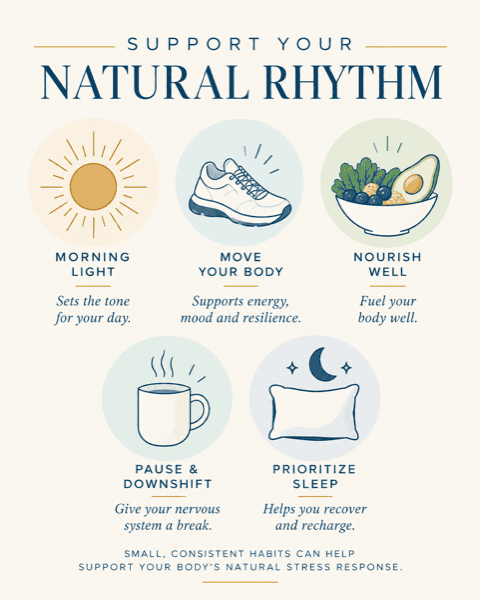
5 Ways to Support Healthy Cortisol Rhythms
You don’t need an elaborate “cortisol reset.” Start with the basics:
1. Get morning light.
Spending time outdoors soon after waking (within 30 minutes). Consider a happy light in the winter.
2. Move your body regularly.
Walking, strength training, yoga, cycling and other forms of movement can support mood, sleep, metabolic health and stress resilience. Pay attention to how you feel after exercise. If you are already exhausted that’s a sign to cut back or remove cardio.
3. Eat balanced, consistent meals.
Build meals around protein, fiber-rich carbohydrates, healthy fats, fruits and vegetables. Overly restrictive dieting or prolonged fasting can be harmful.
4. Create opportunities to downshift.
Your nervous system needs both activation and recovery. Slow breathing, meditation, yoga, walking, journaling, prayer or time in nature can help create a transition between “go mode” and rest.
5. Protect your sleep.
Keep your sleep and wake times relatively consistent, create a dark and comfortable sleep environment, limit stimulating activities before bed and give yourself enough time to sleep.
The Takeaway
Cortisol is an essential hormone that helps you wake up, respond to challenges, maintain blood pressure and blood sugar, regulate metabolism and support your body’s response to stress.
The goal isn’t to “kill your cortisol.” The goal is to support a body that can respond to stress when it needs to and return to a state of rest when the stress has passed.
Any content, resident submissions, guest columns, advertisements, and advertorials are not necessarily endorsed by or represent the views of Best Version Media LLC (BVM) or any municipality, homeowners associations, businesses, or organizations that this publication serves. BVM is not responsible for the reliability, suitability, or timeliness of any content submitted, inclusive of materials generated or composed through artificial intelligence (AI). All content submitted is done so at the sole discretion of the submitting party.