“I’ve asked my neighbor three times to cut down that dead tree, and they keep refusing. If it falls on my house, their insurance is going to pay for it… right?”
Not necessarily.
This is a question I hear more often than you might think. Maybe there’s a large, dead tree sitting just a few feet from your property line. You’ve mentioned it to your neighbor. You’ve asked them to have it removed. They don’t seem concerned.
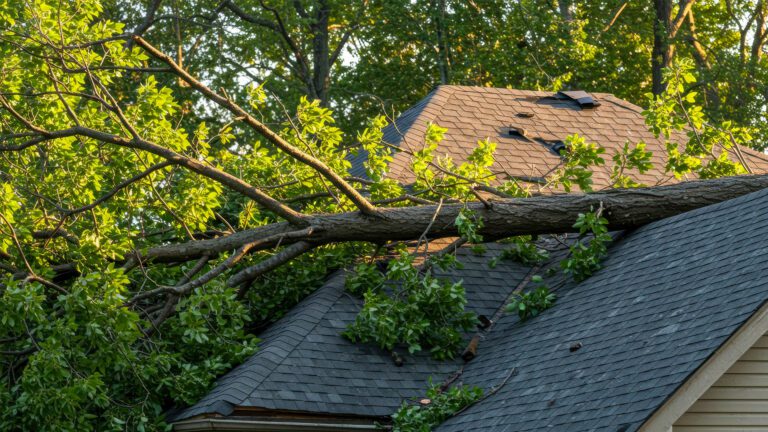
Then one night, a strong wind comes through and that tree ends up on your roof.
So who pays?
Your neighbor’s tree doesn’t necessarily mean your neighbor’s insurance.
In most situations, your homeowners insurance would cover the damage to your home, even if the tree belonged to your neighbor.
If the tree fell because of a covered event such as wind, your policy would generally respond to the resulting damage to your home, subject to your deductible, policy limits and the specific terms of your policy.
And this is the part that surprises a lot of homeowners:
The fact that the tree belonged to your neighbor doesn’t automatically make your neighbor responsible for the damage.
But what if you warned them?
Now we’re getting into the interesting part.
If your neighbor knew—or reasonably should have known—that a tree was dead, diseased, or dangerously unstable and failed to address the problem, there may be circumstances where they could be held legally responsible for the resulting damage.
If that happens, your insurance company may pursue the responsible party for reimbursement through a process called subrogation.
But don’t assume that because you warned your neighbor about the tree, their insurance company automatically becomes responsible for your claim. Liability depends on the circumstances and applicable law.
What about removing the tree?
This is another part of the situation that homeowners often misunderstand.
If the fallen tree damages an insured structure, such as your house or garage, your homeowners policy may provide coverage for removing the tree, subject to the policy’s applicable limits.
But if the tree simply falls into your yard and doesn’t damage an insured structure, don’t automatically assume your policy will pay to remove it.
So what should you do if you have a dead tree next door?
If you’re genuinely concerned about a dangerous tree on your neighbor’s property, document the situation.
Take photos. Keep copies of written communications with your neighbor. If you’ve notified them about the condition of the tree, keep a record of that conversation.
That documentation could become important if the tree eventually causes damage and questions arise about who knew what—and when.
The bottom line
Your neighbor owning the tree doesn’t automatically mean their insurance will pay when it falls on your house.
In many cases, your homeowners policy is where the claim starts.
But whether your neighbor could ultimately be responsible can depend on the condition of the tree, what they knew about it, whether they had reason to know it posed a danger, and the circumstances surrounding the loss.
Don’t wait until the tree is through your roof to find out what your homeowners policy covers.
Give The Batalis Agency a call and let us review your homeowners policy with you before the next storm hits. We’ll help you understand your coverage, your deductible, and the potential gaps you may not know are there.
The best time to review your coverage is before you need it.
The Batalis Agency | 2396 S Cleveland Ave | Saint Joseph, MI 49085
(269) 983-0170 | Batalisagency.com
Any content, resident submissions, guest columns, advertisements, and advertorials are not necessarily endorsed by or represent the views of Best Version Media LLC (BVM) or any municipality, homeowners associations, businesses, or organizations that this publication serves. BVM is not responsible for the reliability, suitability, or timeliness of any content submitted, inclusive of materials generated or composed through artificial intelligence (AI). All content submitted is done so at the sole discretion of the submitting party.