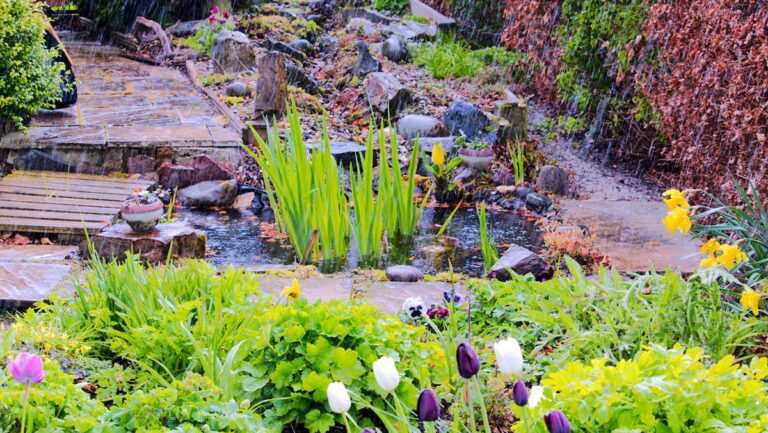
In many residential landscapes, heavy rainfall creates immediate, frustrating challenges. Water pools near house foundations, washes away topsoil, and leaves mud patches, further contributing to erosion and drainage issues. With El Niño in our Bay Area forecast, a dry creek bed can offer an environmentally conscious solution for channeling stormwater runoff. A well-planned dry creek bed recreates the look of natural seasonal streams and pathways carved by mountain runoff, directing water away from structures while improving the aesthetics and function of your garden landscape.
The Science of Functional Design
A dry creek bed is much more than a trench filled with stone. At its core, it operates as a passive bio-retention system. When properly designed, it slows surface runoff, allowing stormwater to gradually infiltrate into your local water table and aquifer rather than rush into municipal storm drains laden with sediment.
Building a functional dry creek bed requires careful design and layout before digging. Start by observing your yard during or immediately following a significant storm to identify low spots, natural slopes, or areas prone to puddling. Working with gravity ensures the dry creek bed efficiently channels water away from problem areas.
A successful dry creek bed should intercept flow and lead water toward a drainage basin, rain garden, or bioswale. Mark gentle, sweeping bends with a garden hose to get a clear sense of scale before you displace native soil. Natural streams curve fluidly around root systems, rock outcroppings, and shifts in topography. So, avoid straight paths, as meandering lines look more organic and allow water to permeate slowly in your landscape.
Layer Materials for Longevity and Realism
Building a sustainable dry creek bed requires a deliberate approach to material selection and layering. Skimping on foundational steps will eventually cause rocks to sink into underlying soil, possibly allowing weeds to choke out the feature within a few seasons.
The foundation begins with excavation. Most dry creek beds are a foot deep with gently sloped sides that mimic natural streambanks. Dig a channel roughly six to twelve inches deep with side banks sloped at a gentle forty-five-degree angle. Next, cover the bare trench with heavy-duty woven geotextile landscape fabric. This permeable barrier allows water to soak through while keeping soil from rising and locking stone in place.
Stone selection and placement:
- Structural Anchors: Anchor the bank curves with large boulders. Burying the bottom third of these boulders into the soil will make them appear as if they have been anchored there for decades.
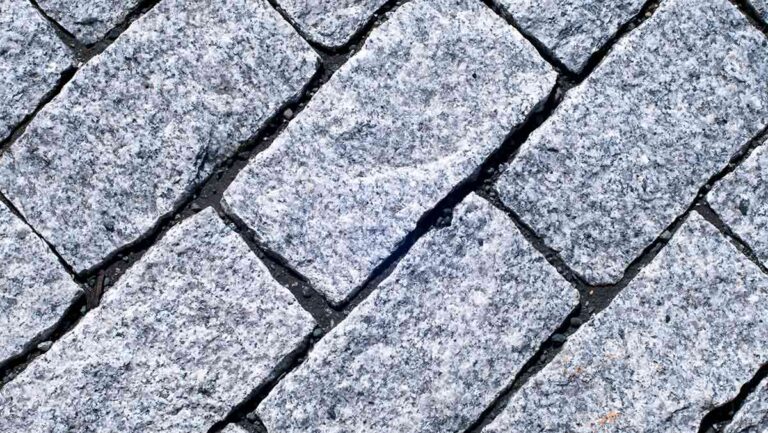
- Flow Channels: Line the bottom of the trench with a layer of crushed drain rock, then top it with smooth, round water-worn river stones.
- Textural Contrast: Scatter small pea gravel and medium pebbles down the central core of the trench, placing larger cobbles toward the banks. This mimics natural fluid dynamics, where fast-moving water pushes heavier debris toward the edges.
Integrate with Natives Plants
A dry creek bed should feel integrated into your overall landscape rather than artificially dropped on top of it. Planting native species, drought-tolerant perennials, and ornamental grasses along the outer banks will soften the rock edges and tie the feature back into your garden. Over time, as plants mature and drape over the stone shoulders, the transformation becomes an organic and functional part of your landscape —turning a problematic drainage zone into an inviting natural sanctuary.
LYNGSØ, an employee-owned company, is the exclusive garden materials retailer providing landscape gardening articles in Atherton Living. Explore landscaping resources at lyngsogarden.com.
Any content, resident submissions, guest columns, advertisements, and advertorials are not necessarily endorsed by or represent the views of Best Version Media LLC (BVM) or any municipality, homeowners associations, businesses, or organizations that this publication serves. BVM is not responsible for the reliability, suitability, or timeliness of any content submitted, inclusive of materials generated or composed through artificial intelligence (AI). All content submitted is done so at the sole discretion of the submitting party.