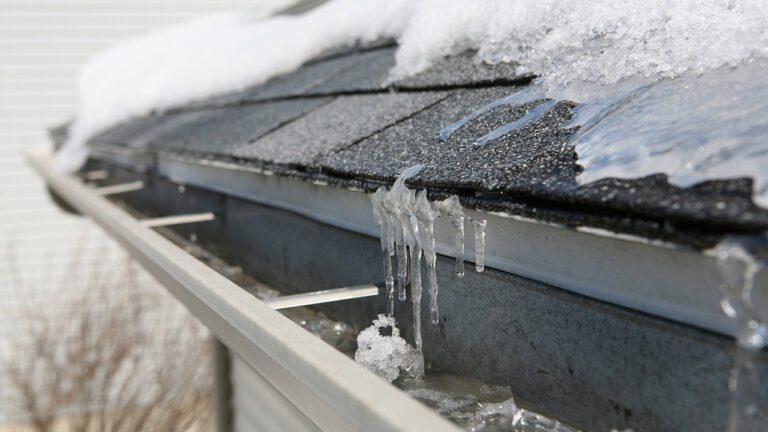
Snow hides the damage that leads to winter leaks. Here’s what to check while you still can.
Once the first real snow sticks, your roof disappears under a white blanket, and so do its warning signs. Missing shingles, cracked pipe boots, and rusted nails can’t be seen under snow, and an icy roof isn’t safe for anyone to walk on, even a professional.
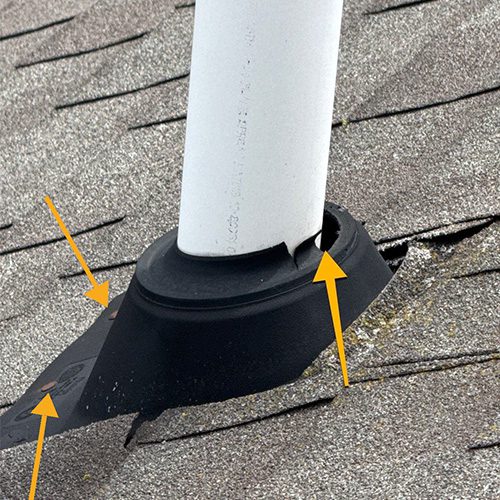
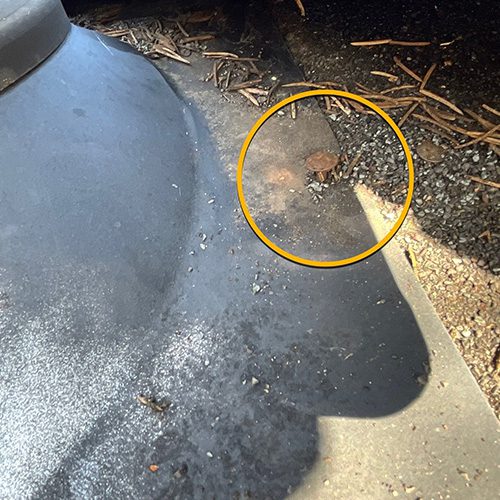
The photos above come from one of our recent inspections. The rubber neck of this pipe boot had cracked from years of sun, and the nails beside it had rusted loose. Each one lets water run straight down into the attic. You won’t see it from your living room, but an attic check often will: look for daylight around the vent pipe and damp or stained insulation below it.
The tricky part is timing. That water soaks into the roof deck and insulation first, so it can take weeks or even months to show up as a stain. By the time you see the stain, the damage above is often worse than it looks. Caught in the fall, it’s a quick, simple repair.
Why Fall Is the Time to Inspect
Snow is the first reason: once it covers your roof, inspections often have to wait for a thaw. Warmth is the second. Asphalt shingles seal to each other with an adhesive strip that bonds best in sunshine and temperatures above 40°F. A shingle repaired in the fall seals down tight; one repaired in the midst of winter temperatures may flap loose in the first big wind.
The 15-Minute Driveway Check
Grab binoculars and walk around the house. Look for:
- Missing, curled, cracked, or lifted shingles, especially along the edges and ridge.
- Granules in the downspouts or bald patches on the roof, signs your shingles are wearing out.
- Cracked pipe boots, rusted nails, and loose flashing around vent pipes and the chimney.
- Gutters full of leaves, which freeze solid and help ice dams form. Make sure downspouts carry water 4–6 feet from the house.
- Branches over the roof. Snow and ice can more than double their weight. Trim them back to about 10 feet.
Don’t Forget the Attic
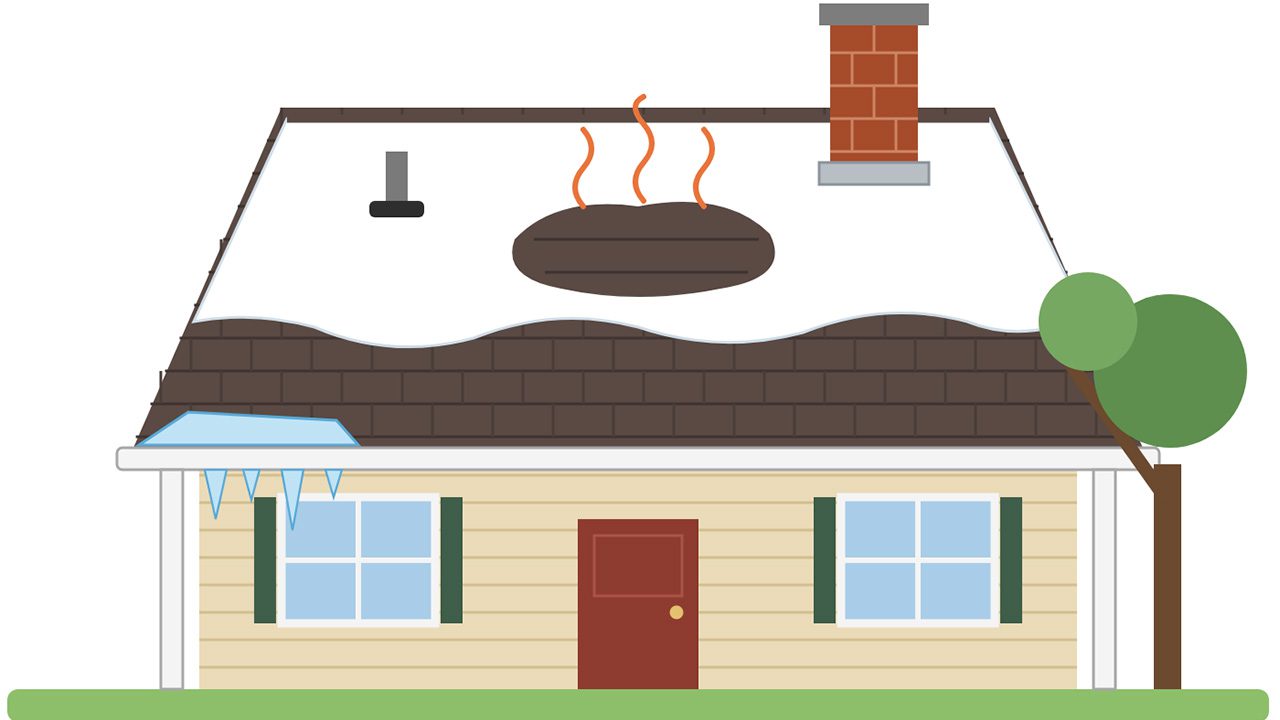
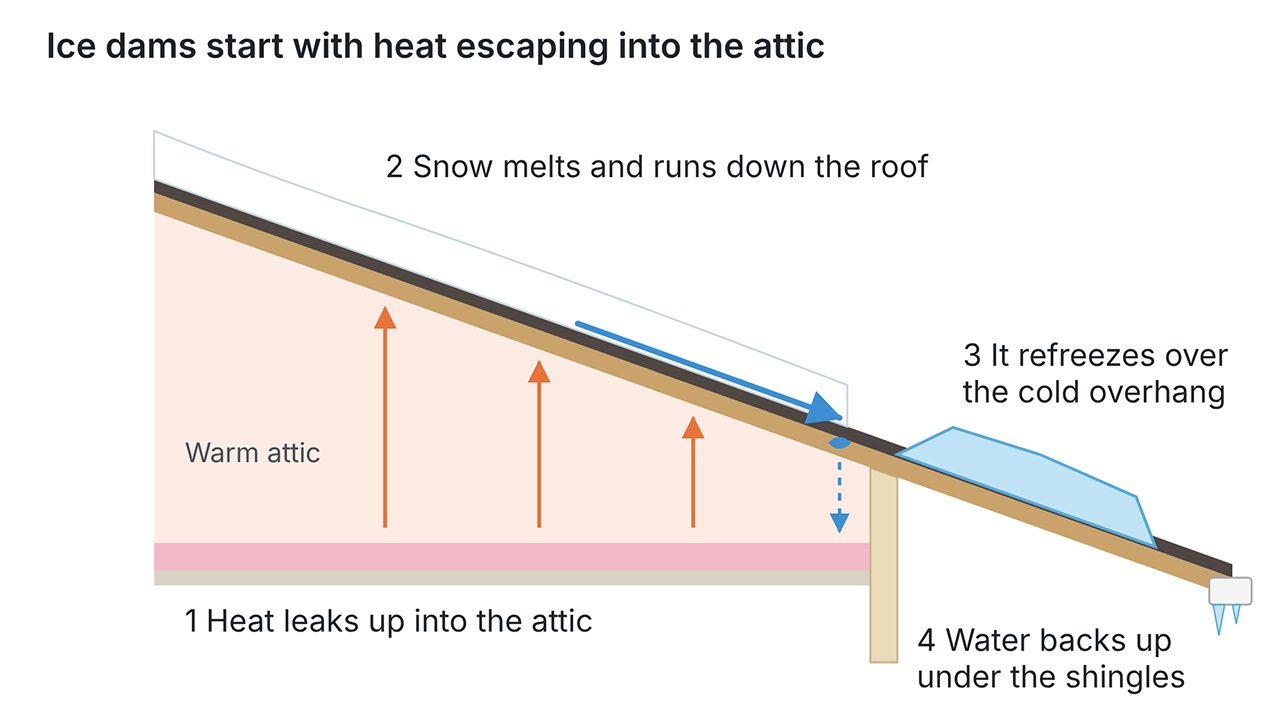
Many winter leaks start inside the house. When warm air leaks into the attic, it melts the snow on your roof from underneath. That water runs to the cold edge and refreezes into an ice dam, and the meltwater behind it backs up under the shingles.
Take a flashlight into the attic. If the insulation is level with or below the tops of the floor joists, you probably need more. Make sure the vents along the eaves aren’t buried, so cold air can flow through.
Ice Dam Tip
After a big snowfall, use a long-handled roof rake from the ground to pull snow off at least the first 3–4 feet above your gutters. Less snow at the edge means less meltwater to refreeze.
Whatever you find, please stay off the roof; it isn’t worth the risk. After seven years on Plymouth-area roofs, I’ve learned that most big repairs started as small problems nobody had a reason to look for. A professional inspection this fall, while your roof is still clear, can save you a lot of stress in January.
Should You Schedule an Inspection?
You’re probably in good shape if your roof is under 15 years old and the driveway check turned up nothing. Book an inspection if you spotted any warning signs, you’ve had ice dams or ceiling stains, or your roof is 15 years or older.
Storm Guard of Plymouth has spent seven years helping Plymouth-area homeowners protect their homes. Call today to schedule an inspection of your roof, attic insulation, and ventilation in one visit.
Any content, resident submissions, guest columns, advertisements, and advertorials are not necessarily endorsed by or represent the views of Best Version Media LLC (BVM) or any municipality, homeowners associations, businesses, or organizations that this publication serves. BVM is not responsible for the reliability, suitability, or timeliness of any content submitted, inclusive of materials generated or composed through artificial intelligence (AI). All content submitted is done so at the sole discretion of the submitting party.