When an older adult moves into assisted living, experiences a long-term illness or begins needing help with everyday tasks, families are often faced with a long list of difficult decisions. Where will Mom or Dad live? What kind of care will they need? How will daily routines change?
And then there is another question—one that can be deeply emotional:
What happens to their pet?
For someone who has shared years with a beloved dog or cat, being told they can no longer keep that companion can feel like losing a member of the family at the exact moment when so much else in life is already changing.
Whenever it is safely and practically possible, preserving that relationship deserves to be part of the conversation.
The Benefits Go Beyond Companionship
Research continues to demonstrate just how important pets can be in the lives of older adults. According to the University of Michigan’s 2026 National Poll on Healthy Aging, 55% of Americans age 50 and older have a pet. Among those pet owners, 83% said their animal gives them a sense of purpose, 71% said their pet helps them enjoy life and 70% said their pet helps connect them with other people. Nearly two-thirds said their pets help reduce stress.
Those benefits can become particularly meaningful later in life.
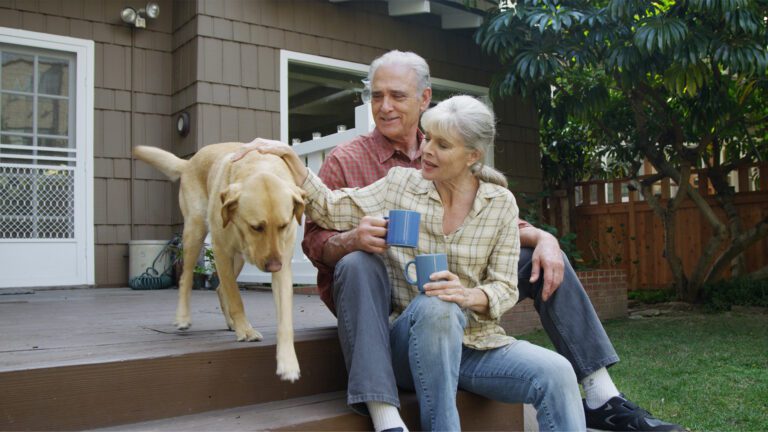
A dog waiting by the door in the morning provides a reason to get up and begin the day. A cat curled up beside someone in the evening provides comfort and companionship. Feeding, grooming and interacting with an animal can also provide structure to days that may look very different after retirement, the loss of a spouse, declining health or a move away from a longtime home.
In the same national poll, 44% of older pet owners said their animals help them maintain a routine, while another 44% said pets help them remain physically active. More than one-third said their pet helps them cope with physical or emotional symptoms.
The Centers for Disease Control and Prevention also notes that pets can provide opportunities for exercise, outdoor activity and socialization, while companionship from animals can help with feelings of loneliness.
For seniors, those everyday benefits matter. Regular physical activity is associated with better sleep and brain, heart and bone health, and can help older adults maintain independence longer.
When Loving a Pet Becomes Harder
Of course, loving an animal and being physically able to provide all of its care are two different things.
A senior recovering from surgery may not be able to walk a dog several times a day. Someone with limited mobility may struggle with carrying bags of food or litter. Transportation to veterinary appointments may become difficult, and the cost of food, medication, grooming and veterinary care can strain a fixed income.
The latest National Poll on Healthy Aging found that 31% of pet owners age 50 and older said having a pet strains their budget. Among older adults without pets, 7% said they were not healthy enough to care for one, while 6% cited housing restrictions.
But needing help caring for an animal does not necessarily mean the relationship between a senior and a beloved pet has to end.
Sometimes, the answer may simply be shared care.
Family members can help with walks, veterinary appointments or trips to the groomer. Neighbors may be willing to assist with feeding or exercise. Professional dog walkers, mobile groomers, pet sitters and veterinary services can fill other gaps. Families can also plan ahead for temporary pet care during hospital stays or rehabilitation.
When choosing senior housing, asking about pet policies early can be just as important as asking about meals, activities and transportation. If keeping a pet is important to Mom or Dad, that preference deserves consideration when evaluating possible communities.
Keeping Families Together
There will be circumstances when keeping a pet with its owner simply is not safe or possible. A senior’s health and safety—and the animal’s welfare—must remain priorities. But separation does not always have to mean losing the relationship completely.
If a family member assumes primary care of the pet, regular visits may allow that bond to continue. Photos, video calls and outings can help keep the animal part of the senior’s life. Facilities can also support residents through pet-friendly policies, visiting animals and therapy programs when personal pet ownership isn’t possible.
Most importantly, families can avoid treating the animal as just another item on the moving checklist.
For many older adults, that dog sleeping beside the recliner or cat waiting in the window represents years of routine, companionship, comfort and unconditional affection. During a period of life when independence may be changing and familiar surroundings may be disappearing, maintaining that connection can provide something remarkably important: continuity.
Growing older may mean accepting help with some of life’s everyday responsibilities. It shouldn’t automatically mean saying goodbye to a best friend.
Any content, resident submissions, guest columns, advertisements, and advertorials are not necessarily endorsed by or represent the views of Best Version Media LLC (BVM) or any municipality, homeowners associations, businesses, or organizations that this publication serves. BVM is not responsible for the reliability, suitability, or timeliness of any content submitted, inclusive of materials generated or composed through artificial intelligence (AI). All content submitted is done so at the sole discretion of the submitting party.