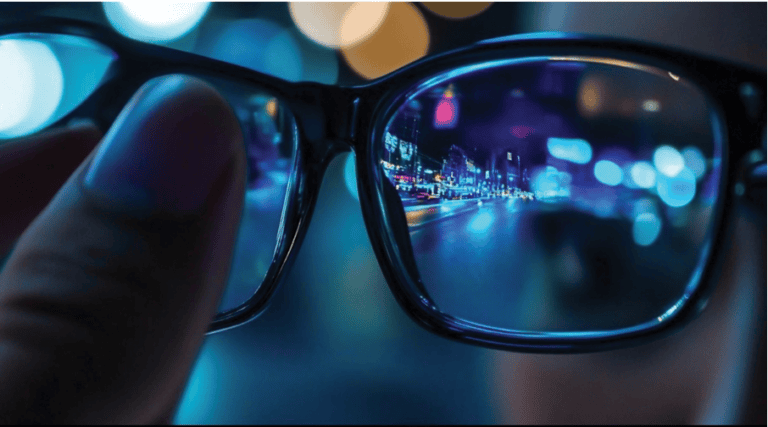
Have you ever been driving at night and thought, “Were headlights always this bright?” You’re definitely not alone.
It’s something I hear quite often. People tell me they don’t enjoy driving after dark as much as they used to. Headlights seem brighter, glare is more distracting, and sometimes things just don’t look as clear as they once did.
And now that we’ve turned the clocks back, many of us are suddenly finding ourselves driving home in the dark again. So, what’s going on?
Why Does Nighttime Vision Change?
As we get older, our eyes change. That’s just part of life. But what surprises a lot of people is that those changes can become more noticeable at night, even when they feel like they’re seeing perfectly well during the day.
Maybe it takes your eyes a little longer to adjust when you walk into a dark room. Or perhaps the headlights coming toward you seem brighter than you remember.
Sometimes it’s simply a change in your prescription. Other times, it could be something like cataracts or another change in your eye health.
That’s why it’s worth mentioning these things during your eye exam. Even if you think your vision is fine, those little changes can tell your eye doctor quite a bit.
Let’s Talk About Your Glasses
Here’s something people don’t always realize. Your glasses can be perfectly comfortable during the day, but that doesn’t necessarily mean you’re getting your clearest vision at night.
Even a small change in your prescription can become more noticeable when there’s less light.
And here’s another thing worth knowing. Sometimes people assume they need a stronger prescription when the real issue might be something entirely different. It could be the condition of their lenses, how their glasses fit, or even a change in their eye health. That’s why it’s important to look at the whole picture rather than automatically assuming new lenses with a stronger prescription are the answer.
And then there’s something I talk about quite a bit: antireflective coatings.
You know those annoying reflections you sometimes see in your lenses? Antireflective coatings help reduce them. That means less light bouncing off the surfaces of your glasses and more light passing through to your eyes.
Now, they’re not going to make every bright headlight disappear, but they can help reduce distracting reflections, especially after dark.
And while we’re talking about lenses, when was the last time you really looked at yours?
I’m always surprised by how many people don’t notice the scratches or buildup on their lenses until someone points them out. Smudges, scratches, and worn coatings can all affect how clearly you see, and those imperfections can become especially noticeable at night.
Sometimes a good cleaning is all that’s needed. Other times, it’s worth having your lenses looked at.
And here’s a little reminder: Your windshield deserves a good cleaning, too!
Don’t Just Put Up With It
One thing I always tell people is to pay attention to the little things that change.
Maybe you’re having a harder time reading street signs after dark. Maybe the glare from headlights is becoming more distracting. Or maybe you’ve simply started avoiding nighttime driving because it doesn’t feel as comfortable as it used to. Don’t assume that’s just something you have to accept as you get older.
Talk to your eye doctor about what you’re experiencing. And have a conversation with your optician about your glasses. Are your lenses in good condition? Is your prescription current? Are there lens options that might help?
Sometimes the answer is as simple as updating your glasses. Other times, your eye doctor may identify something that needs attention. The important thing is knowing that you have options.
Because seeing well isn’t just about being able to read the smallest line on an eye chart. It’s about feeling comfortable and confident in the things you do every day.
Even after the sun goes down.
Any content, resident submissions, guest columns, advertisements, and advertorials are not necessarily endorsed by or represent the views of Best Version Media LLC (BVM) or any municipality, homeowners associations, businesses, or organizations that this publication serves. BVM is not responsible for the reliability, suitability, or timeliness of any content submitted, inclusive of materials generated or composed through artificial intelligence (AI). All content submitted is done so at the sole discretion of the submitting party.