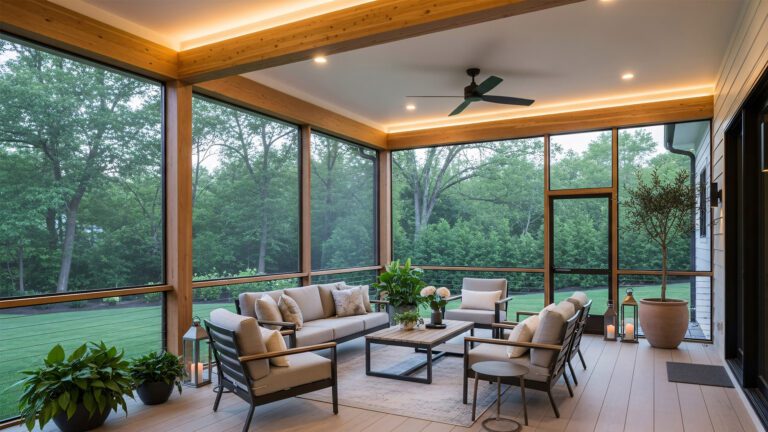
Building a new deck is an exciting investment. For many homeowners, it’s the beginning of creating an outdoor space where they can entertain family and friends, relax after a long day, and make memories for years to come. Yet after more than 50 years in the industry, we’ve noticed something interesting. When homeowners look back on their project, their biggest regrets usually aren’t about the decking color they chose or whether they selected black or white railings.
Instead, their regrets tend to be the things they didn’t include, didn’t plan for, or didn’t think about until after construction was complete. The good news is that many of these regrets are completely avoidable with a little forethought. If you’re considering a new deck, here are five of the most common things homeowners wish they had done differently.
1. Building Too Small
This is by far the most common regret we hear.
When planning a new deck, many homeowners naturally focus on budget. To keep costs down, they often reduce the size of the deck to what seems “good enough” on paper. The problem is that outdoor living spaces have a way of becoming more important than people expect.
Once the deck is complete, families begin using it regularly. They host holidays, birthday parties, barbecues, and neighborhood gatherings. They purchase larger outdoor furniture. They add dining tables, lounge seating, grills, and planters. Suddenly, the deck that seemed perfectly sized
during the design phase begins to feel cramped.
This doesn’t mean every deck should be oversized. Rather, homeowners should think carefully about how they plan to use the space not only today, but five or ten years from now. It’s often far easier and more cost-effective to build the right size from the beginning than to expand the deck later.
2. Not Planning for Shade
A beautiful deck isn’t very enjoyable if it’s too hot to use.
Many homeowners focus on the deck itself while overlooking one important reality: summer sun can make certain areas uncomfortable during the hottest parts of the day. We frequently meet homeowners who tell us they love their deck in the morning or evening but avoid it during the afternoon because of direct sunlight.
This is one reason we’re seeing a growing interest in pergolas, covered roofs, pavilions, and louvered roof systems. These features help create comfortable outdoor spaces that can be enjoyed throughout the day and during a wider range of weather conditions.
Even if a covered structure isn’t in the current budget, it’s worth considering whether one may be added in the future. Planning for it during the design phase can make future additions much easier and more cost-effective.
3. Forgetting About Lighting
Many homeowners don’t think much about lighting until after the deck is complete.
During the day, a deck naturally receives plenty of sunlight. But once the sun goes down, the outdoor space changes dramatically. Areas that felt welcoming and functional during the day can become dark and underutilized at night.
Well-designed lighting serves two important purposes. First, it improves safety by illuminating stairs, transitions, and walking surfaces. Second, it enhances the overall atmosphere of the space. Post cap lights, stair riser lights, accent lighting, and subtle landscape lighting can transform an ordinary deck into a warm and inviting evening retreat.
Homeowners are often surprised by how much value lighting adds to their outdoor living experience. Many tell us they wish they had incorporated it from the beginning rather than adding it after construction was completed.
4. Choosing Features Based on Price Alone
It’s natural to compare prices when making any significant investment. However, one of the biggest regrets homeowners express is focusing too heavily on upfront cost rather than long-term value.
This can apply to decking materials, railings, framing systems, and other components. While lower-cost options may reduce the initial investment, they don’t always provide the same durability, appearance, or long-term performance.
Many homeowners eventually find themselves wishing they had selected the product they truly wanted instead of settling for something less expensive. The difference in monthly cost over the life of the project is often relatively small, while the difference in enjoyment can be significant.
The goal isn’t to spend more money. It’s to make informed decisions based on how long you plan to stay in the home and how you want the space to perform over time.
5. Focusing on the Deck Instead of the Entire Backyard
Perhaps the most significant regret of all is treating the deck as a standalone project rather than part of a larger outdoor living plan.
Many homeowners begin by designing a deck and only later start thinking about patios, fire features, landscaping, privacy screens, outdoor kitchens, or covered seating areas. As a result, future additions don’t always integrate as seamlessly as they could have.
The most successful outdoor living spaces are often designed with the entire backyard in mind. Even if projects are completed in phases, having a long-term vision helps ensure that each improvement supports the next. Decks connect naturally to patios. Stairs lead to gathering spaces. Lighting, landscaping, and outdoor features work together to create a cohesive environment.
When homeowners step back and consider the bigger picture, they often end up with a backyard that feels more intentional, more functional, and more enjoyable.
Building a deck is a significant investment, and most homeowners are thrilled with the results. However, the decisions made during the planning stage can have a lasting impact on how the space functions for years to come.
If there’s one lesson we consistently hear from homeowners after their projects are complete, it’s this: think beyond the deck itself. Consider how you’ll use the space, how your needs may change over time, and how your backyard can evolve into a complete outdoor living environment.
A little extra planning today can help ensure that years from now, your only regret is not building it sooner.
Any content, resident submissions, guest columns, advertisements, and advertorials are not necessarily endorsed by or represent the views of Best Version Media LLC (BVM) or any municipality, homeowners associations, businesses, or organizations that this publication serves. BVM is not responsible for the reliability, suitability, or timeliness of any content submitted, inclusive of materials generated or composed through artificial intelligence (AI). All content submitted is done so at the sole discretion of the submitting party.