
Most conversations about private aviation start and end with cost. But that misses what it can mean for a balance sheet and for a leader’s calendar. It’s not simply an expense to justify. It’s a business decision with real financial and operational considerations.
The money
In July 2025, Congress passed the One Big Beautiful Bill Act, restoring 100 percent bonus depreciation for qualifying property. For qualifying aircraft and eligible fractional or co-ownership interests, this can allow the applicable depreciable basis to be deducted in the year the property is placed in service, subject to the relevant requirements.
That permanence matters. Under the prior law, bonus depreciation was scheduled to phase down. The change makes the tax treatment a more durable consideration for businesses evaluating capital investment.
Section 179 limits also expanded, providing another potential path for qualifying businesses.
This is tax policy designed to encourage capital investment. It is not a substitute for tax advice. Eligibility depends on factors including business use, timing, and the specific structure of the investment, so businesses should work with a qualified tax advisor.
The important point is that the upfront cost and after-tax cost are different numbers. Both deserve to be understood.

The time
The financial case is one consideration. The time case is the one that plays out every week.
A 90-minute commercial flight rarely costs 90 minutes once you add the drive, security, boarding, taxiing, and the trip from the destination airport to the meeting. A single hour-long meeting can consume an entire day. That cost may not appear on a P&L, but it is visible on the calendar.
Consider a leader traveling from Milwaukee to Nashville to Kansas City and home by six. The value of private aviation is not the airplane itself. It’s what an unbroken day allows a leader to accomplish.
Video conferencing has absorbed much of the routine travel, and for status updates, that can be the right outcome. But some conversations, such as a key hire or a new partnership, still carry more weight in person. The question then is not simply whether to make the trip. It’s whether the trip itself becomes the obstacle.
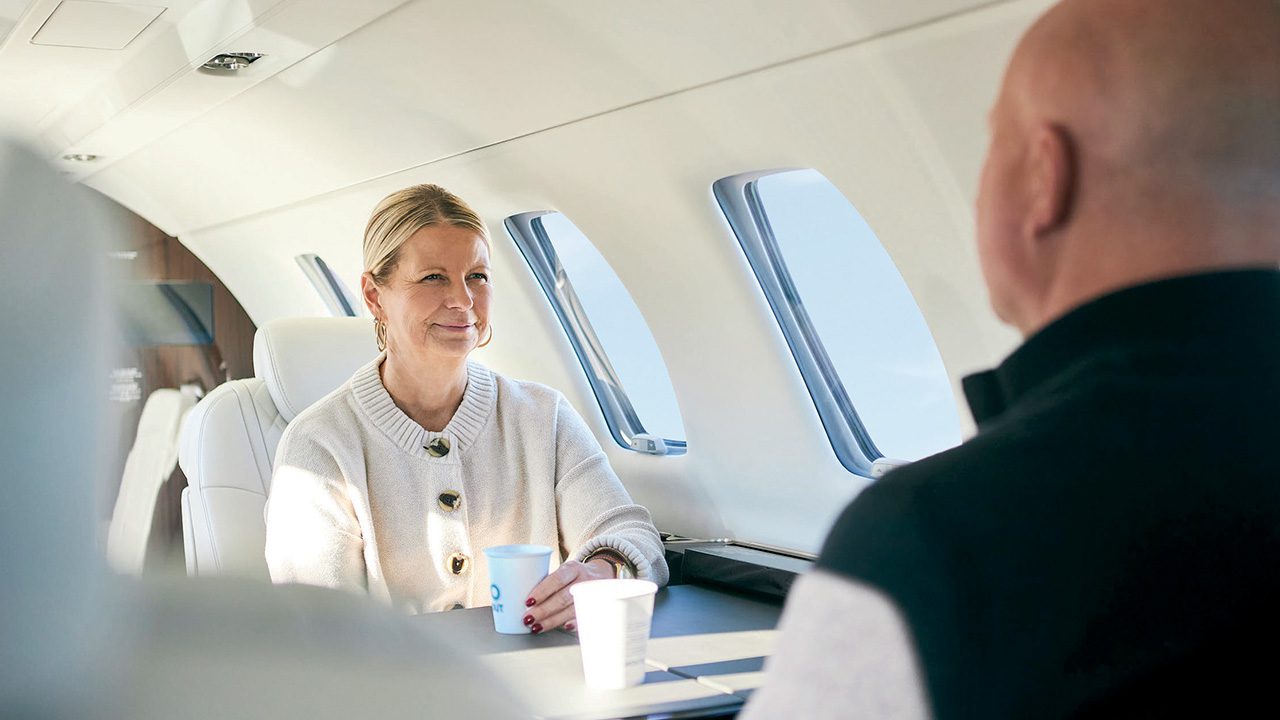
Two sides of the same decision
These are not two arguments. They are two ways of measuring what a business gets back from how its leaders move.
One is easier to count. An advisor can run the depreciation math and calculate the potential tax impact.
The other rarely gets counted at all. No one invoices a company for the hours its CEO spends in terminals. That time simply comes out of the calendar, week after week.
Both belong in the conversation. Before a business decides what private aviation costs, it should understand what the investment means for both its balance sheet and its time.
Any content, resident submissions, guest columns, advertisements, and advertorials are not necessarily endorsed by or represent the views of Best Version Media LLC (BVM) or any municipality, homeowners associations, businesses, or organizations that this publication serves. BVM is not responsible for the reliability, suitability, or timeliness of any content submitted, inclusive of materials generated or composed through artificial intelligence (AI). All content submitted is done so at the sole discretion of the submitting party.