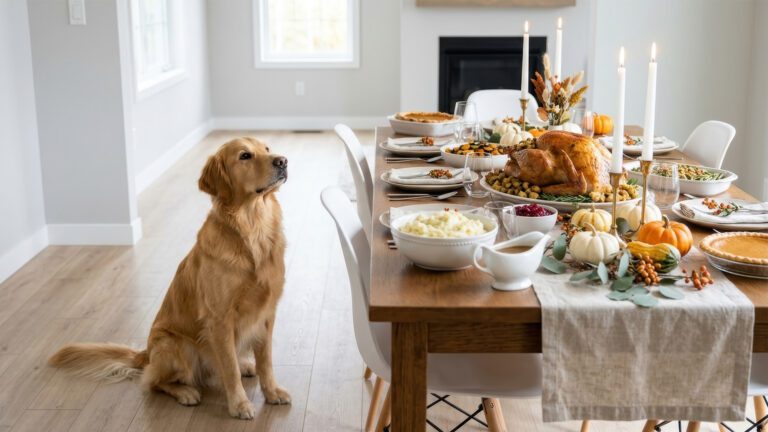
Thanksgiving has a way of bringing everyone into the kitchen, including the dog who knows exactly where the turkey is. With guests coming and going, food on every counter and leftovers waiting to be packed away, even a careful pet owner can lose track of what has landed within reach.
The simplest plan is to feed your pet its usual food. A holiday meal may look inviting, but the rich dishes we enjoy can upset an animal’s stomach. Fatty foods may also trigger pancreatitis, a painful condition that needs veterinary care. A guest slipping the dog a little turkey skin may mean well, but several “little” treats over the course of the day can add up.
If you want your dog or cat to have a taste of Thanksgiving, set aside a small amount of plain, fully cooked, boneless turkey before adding butter, gravy or seasoning. Keep it a treat, rather than a second dinner. Never offer turkey bones. Cooked poultry bones can splinter and injure a pet’s mouth or digestive tract.
Some familiar holiday ingredients deserve special attention. Onions and garlic can be harmful to pets, including when they are mixed into stuffing or other dishes. Raisins sometimes appear in baked goods, and chocolate and desserts made with xylitol also pose serious risks. It is safest to keep pets away from the dessert table and ask guests to leave all people food to you.
The trash can is another tempting stop. Once dinner is over, put bones, foil, food scraps and packaging in a container your pet cannot open. Clear plates promptly, especially if children or guests are eating in different rooms. A dog does not need much time alone with a plate to find the part of Thanksgiving dinner it should have skipped.
Food is only half the holiday plan. A house full of visitors can be stressful for an animal that prefers a quiet routine. Give your pet a comfortable place to retreat, with water and a familiar bed. If guests will be opening the front door throughout the afternoon, make sure your pet is secure before the doorbell starts ringing. Ask visitors to let the animal approach them when it feels comfortable.
Before the holiday, save your veterinarian’s number in your phone. If your pet eats something potentially harmful, call promptly and tell the veterinary team what was eaten, approximately how much and when. Do not wait for symptoms to appear after a known exposure to a toxic food, and do not try to make your pet vomit unless a veterinarian directs you to do so. Pedernales Veterinary Center asks clients experiencing a veterinary emergency to call (830) 997-9889 and follow the recorded instructions.
Thanksgiving should be a good day for the whole household. A few minutes spent planning your pet’s meal, managing the scraps and preparing for guests can help keep the holiday focused on family instead of an unexpected trip to the veterinarian.
Any content, resident submissions, guest columns, advertisements, and advertorials are not necessarily endorsed by or represent the views of Best Version Media LLC (BVM) or any municipality, homeowners associations, businesses, or organizations that this publication serves. BVM is not responsible for the reliability, suitability, or timeliness of any content submitted, inclusive of materials generated or composed through artificial intelligence (AI). All content submitted is done so at the sole discretion of the submitting party.