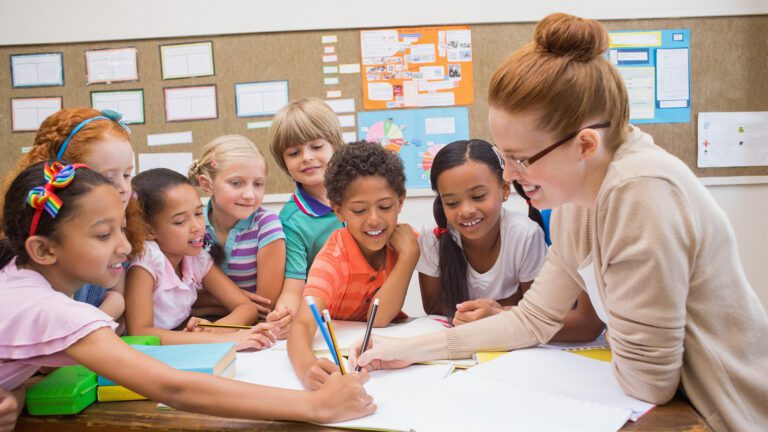
What is the magic of a great school?
I think it begins with something both simple and profound: relationships.
Children do better when the adults around them really know them. Not just their reading level or math ability, but what makes them curious, what frustrates them, what gives them confidence, and when they need encouragement to try something difficult.
Learning happens in relationships. When children feel safe, valued, and connected, they are more willing to ask questions, take intellectual risks, make mistakes, try again, and stretch beyond what they thought they could do.
That is why a strong school community is about more than what happens in the classroom.
Of course, children need an excellent education. They need teachers who understand how children develop, a curriculum that challenges and inspires them, and opportunities to discover their interests and strengths.
But they also need something harder to measure: a sense of belonging.
They need teachers who notice when they are struggling and recognize when they are ready for a challenge. They need peers who celebrate their successes and help them through difficult moments. They need adults who see both who they are today and who they can become.
This is one of the things that makes Kalamazoo Country Day School special. With most classes having fewer than fifteen students, teachers can know their students well. They notice who needs encouragement, who is ready for a greater challenge, and when a child who once needed support is ready to offer it to someone else.
In a small community, relationships extend beyond a single classroom. Children are known across grade levels. They have opportunities to lead, contribute, collaborate, and discover that they have something important to offer.
Research supports what educators have seen for years: relationships are part of the foundation for learning. Positive teacher-student relationships support engagement, motivation, academic growth, belonging, positive behavior, and overall well-being.
Social and emotional skills also shape how children learn and navigate challenges. Self-awareness, empathy, responsible decision-making, and healthy relationships help children manage emotions, work through conflict, collaborate, and stay engaged when learning gets difficult.
A comprehensive meta-analysis by Cipriano et al. (2023), published in Child Development, examined universal school-based social and emotional learning interventions and found benefits in social-emotional skills, behavior, and academic achievement.
We don’t have to choose between academic excellence and the development of the whole child. Strong relationships and social and emotional growth reinforce one another.
Over time, you see what that looks like:
- The child who once needed a helping hand begins offering one.
- The student afraid to make a mistake learns that mistakes are part of learning.
- The quiet child discovers that their voice matters.
- The curious kindergartener becomes a thoughtful, capable eighth grader.
That is what happens when a community gives children both roots and room to grow.
Perhaps that is the real magic of a great school. It isn’t simply what children learn. It is who they become when people know them, believe in them, challenge them, and care about them.
At Kalamazoo Country Day School, we believe children thrive where every child is known, seen, heard, valued, and cared for. We invite you to experience our community.
Call 269-329-0116 to schedule a tour. We’d love to show you what makes our community special.
Cipriano, C., et al. (2023). The State of Evidence for Social and Emotional Learning: A Contemporary Meta-Analysis of Universal School-Based SEL Interventions. Child Development.
Any content, resident submissions, guest columns, advertisements, and advertorials are not necessarily endorsed by or represent the views of Best Version Media LLC (BVM) or any municipality, homeowners associations, businesses, or organizations that this publication serves. BVM is not responsible for the reliability, suitability, or timeliness of any content submitted, inclusive of materials generated or composed through artificial intelligence (AI). All content submitted is done so at the sole discretion of the submitting party.