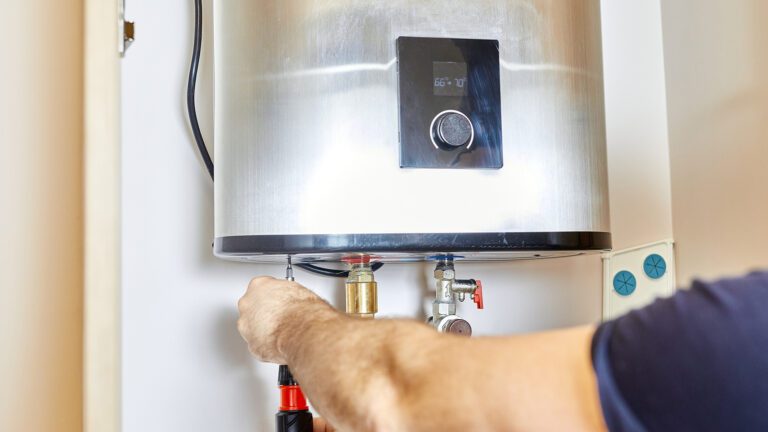
Tankless water heaters are engineered to provide reliable, on-demand hot water, but they are not maintenance-free. One of the most important services a tankless system can receive is an annual flush and descaling, combined with a thorough visual inspection of the components inside the unit.
The primary reason for routine service is mineral buildup. As water passes through the heat exchanger, minerals such as calcium and magnesium can accumulate on the internal surfaces. This is particularly common in areas with hard water. Over time, scale can restrict water flow, reduce heat-transfer efficiency and cause the unit to work harder to maintain the desired water temperature.
During a professional flush, the technician isolates the water heater from the home’s plumbing system and circulates an appropriate descaling solution through the heat exchanger. The solution helps break down mineral deposits that have accumulated inside the system. The heat exchanger is then thoroughly flushed with clean water before the unit is returned to normal operation.
The flushing process is important, but it is only one part of proper annual maintenance.
A qualified technician should also perform a visual inspection beneath the cover of the water heater. With the appropriate safety procedures followed, the technician can inspect accessible components for signs of corrosion, leaking, mineral accumulation, damaged wiring, loose connections, debris or other conditions that could affect the unit’s operation.
The inspection should also include the water inlet filter, plumbing connections and venting system, where applicable. The technician can check for blockages, deterioration or other abnormalities and verify that the system is operating as intended.
This preventive approach is important because tankless water heaters contain several components that work together to deliver hot water. Problems with water flow, ignition, combustion, electrical connections or heat transfer can affect the performance of the entire system. Identifying a developing problem during routine maintenance is generally preferable to discovering it when the household suddenly has no hot water.
Water quality also matters.
The appropriate maintenance interval depends on the manufacturer’s recommendations and the conditions in which the water heater operates. Homes with hard water may require more frequent descaling because mineral deposits can accumulate more quickly. A water treatment system may also affect the maintenance requirements.
Homeowners should consult the manufacturer’s maintenance schedule for their specific model and have service performed by a qualified professional familiar with tankless water heaters.
An annual tankless water heater service should not be viewed simply as a cleaning. It is preventive maintenance that combines descaling with a detailed inspection of the system. Keeping the heat exchanger clean and identifying potential issues early can help maintain efficient operation, protect the equipment and extend the useful life of the water heater.
A tankless water heater may be compact and tucked away in a garage, utility room or exterior wall, but it is still a complex piece of equipment. Giving it a professional checkup once a year is one of the simplest ways homeowners can stay ahead of avoidable problems and keep the hot water flowing when they need it.
Any content, resident submissions, guest columns, advertisements, and advertorials are not necessarily endorsed by or represent the views of Best Version Media LLC (BVM) or any municipality, homeowners associations, businesses, or organizations that this publication serves. BVM is not responsible for the reliability, suitability, or timeliness of any content submitted, inclusive of materials generated or composed through artificial intelligence (AI). All content submitted is done so at the sole discretion of the submitting party.