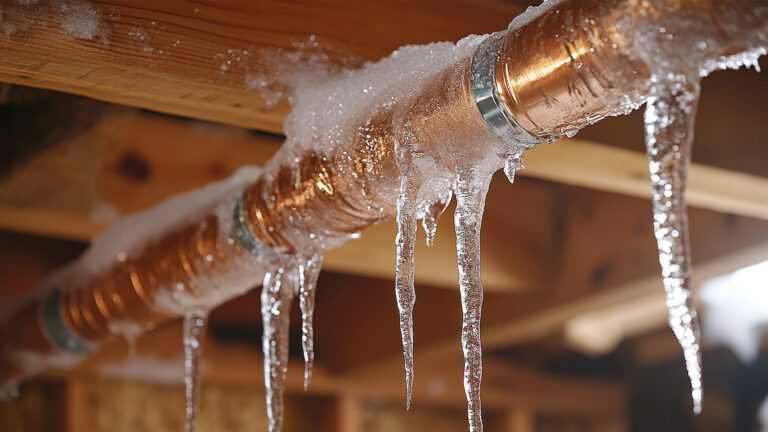
As temperatures drop, one of the most common, and most preventable, winter emergencies homeowners face is a frozen or burst pipe. A single freeze event can cause thousands of dollars in water damage, but a little preparation now can save you a major headache later. Here’s what every homeowner in our area should know.
Why Pipes Freeze
Water expands as it freezes, and that expansion puts tremendous pressure on pipe walls. Pipes located in unheated or poorly insulated areas, such as crawl spaces, attics, garages, and exterior walls, are most at risk. Even a short cold snap can be enough to cause a rupture if pipes aren’t protected.
Steps to Protect Your Pipes
- Insulate exposed pipes. Foam pipe sleeves are inexpensive and easy to install on pipes in basements, crawl spaces, and garages. Focus on any pipe that runs along an exterior wall or through an unheated space.
- Seal air leaks. Cold air seeping through cracks near where pipes enter your home, around dryer vents, cable lines, or foundation gaps, can drop the temperature enough to cause freezing. Caulk or spray foam these gaps before the first hard freeze.
- Disconnect and drain outdoor hoses. Leaving a hose attached to an outdoor spigot can trap water in the line, leading to freezing that backs up into your interior pipes. Disconnect hoses, drain them fully, and consider installing an insulated faucet cover.
- Keep a trickle running during extreme cold. On the coldest nights, letting faucets connected to vulnerable pipes drip slightly relieves pressure buildup and keeps water moving, which helps prevent freezing.
- Maintain consistent indoor heat. Don’t drop your thermostat too low overnight, even when you’re away. Keeping your home at a steady 55°F or higher helps protect pipes inside walls and unconditioned spaces.
- Open cabinet doors. For sinks located on exterior walls, opening the cabinet doors underneath allows warm household air to circulate around the pipes.
If a Pipe Does Freeze
Shut off the main water valve immediately if you suspect a freeze, and call a licensed plumber before attempting to thaw it yourself. Using an open flame or improper heating method can damage pipes or create a fire hazard.
The Bottom Line
Winterizing your plumbing takes just a few hours of preparation but can prevent one of the most damaging and expensive emergencies a homeowner can face. If you’re unsure whether your home is properly protected, a professional inspection before the cold season hits is a smart investment.
Chris Mead is a licensed plumbing contractor with BlueFrog Plumbing + Drain of Columbus, serving the Harris County area. For questions or to schedule a winter plumbing inspection, contact BlueFrog Plumbing + Drain of Columbus.
Any content, resident submissions, guest columns, advertisements, and advertorials are not necessarily endorsed by or represent the views of Best Version Media LLC (BVM) or any municipality, homeowners associations, businesses, or organizations that this publication serves. BVM is not responsible for the reliability, suitability, or timeliness of any content submitted, inclusive of materials generated or composed through artificial intelligence (AI). All content submitted is done so at the sole discretion of the submitting party.