Ohio homeowners know that severe weather can arrive quickly. High winds, heavy rain, lightning, ice, and snow can all put significant stress on trees and their branches. After a major storm, it’s important to know what to look for and, more importantly, what not to do. At Expert Tree Solutions, we help homeowners safely assess and address storm-damaged trees throughout Ohio. Taking the right steps after a storm can help prevent additional property damage and reduce safety risks.
Start With Safety
The first step after a storm is to stay away from potentially dangerous trees until they can be properly evaluated. A damaged tree can be unpredictable. Large branches may still be suspended overhead, and trees that have shifted or lost major limbs may be unstable.
Stay clear of trees that have:
- Large broken or hanging branches
- Split or cracked trunks
- Exposed or damaged roots
- Significant leaning
- Branches resting on structures
- Damage near power lines. If power lines are involved, do not approach the area or attempt to remove the tree yourself. Contact the appropriate utility company and allow trained professionals to address the situation.
Look for Hidden Damage
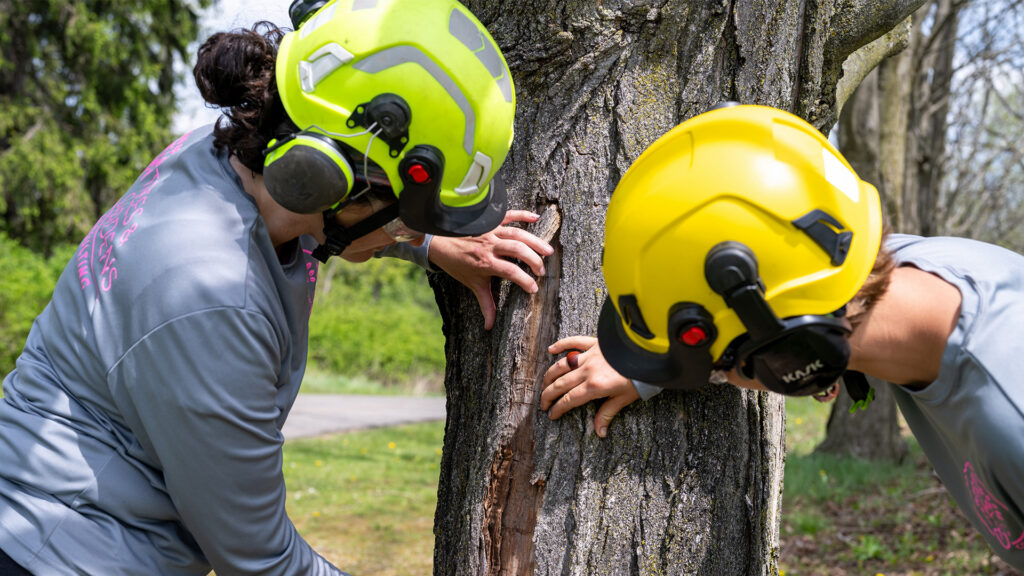
Not all storm damage is immediately obvious. A tree may look relatively normal from the ground while having serious damage higher in the canopy or within major branches. After a storm, look for:
- Broken branches
- Missing sections of the canopy
- Cracks where branches connect to the trunk
- Split or damaged trunks
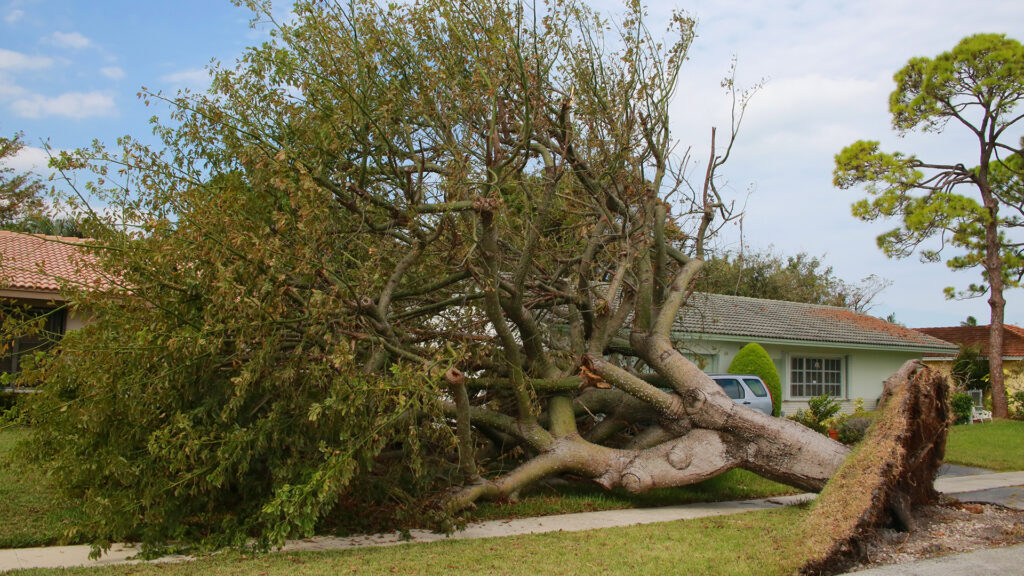
- Uprooted or lifted roots
- New leaning
- Bark stripped from major limbs
- Branches hanging in the canopy
Even smaller cracks can become larger failures during the next storm.
Don’t Try to Remove Large Branches Yourself
One of the most common mistakes homeowners make after a storm is attempting to remove large broken branches on their own. Storm-damaged limbs can be under significant tension. Cutting the wrong section can cause a branch to move unexpectedly, creating a serious risk of injury or additional property damage. Chainsaws and ladders also create additional hazards when working around unstable trees. For larger branches, trees that are leaning, or damage involving your home or other structures, professional tree service is the safest option.
Can a Storm-Damaged Tree Be Saved?
Not every damaged tree needs to be removed. Depending on the type and severity of the damage, professional pruning may be enough to remove broken limbs and restore the tree’s structure. Trees may be candidates for preservation when:
- The trunk remains structurally sound
- Damage is limited to smaller branches
- Major roots remain stable
- The tree has healthy remaining growth
Proper pruning can address the damaged areas. However, if the trunk has suffered extensive splitting, the root system has been severely compromised, or the tree has become unstable, removal may be the safest option.
Why Prompt Storm Cleanup Matters
Storm damage can create additional problems if it isn’t addressed. Broken limbs can fall later, damaged trees can become unstable, and exposed wood can provide opportunities for insects and decay. Prompt professional evaluation allows homeowners to identify potential hazards before they turn into bigger problems.
Storm cleanup can also help protect:
- Your home
- Vehicles
- Fences
- Landscaping
- Driveways
- Outdoor living areas
What About Trees That Fell on My House?
If a tree or large branch has fallen onto your home, your first priority should be everyone’s safety. If there is structural damage, leave the area if necessary and contact the appropriate emergency or utility services. Once the situation is safe, a professional tree company can help with tree removal and cleanup. If you have homeowners’ insurance, it’s also a good idea to document the damage with photographs and contact your insurance company to determine what steps they require before cleanup begins.
Don’t Forget About the Trees That Didn’t Fall
After a major storm, homeowners often focus on trees that have already fallen. However, trees that are still standing may have suffered significant structural damage. A tree with a large broken limb, cracked trunk, or damaged roots may remain standing for days, weeks, or even months before failing. That’s why a professional inspection after significant storm damage can be valuable—even if the tree doesn’t appear to be an immediate problem.
Preparing Your Trees Before the Next Storm
The best time to address tree hazards is before severe weather arrives.
Routine tree maintenance can help identify and address:
- Dead branches
- Weak branch attachments
- Overgrown limbs
- Structural defects
- Trees growing too close to buildings
- Potentially hazardous trees.
Regular pruning and professional tree evaluations can reduce potential hazards and help your trees better withstand Ohio’s unpredictable weather.
Expert Tree Solutions Is Here When You Need Us
Storm damage can be stressful, especially when a large tree or branch has fallen near your home. Having a professional team that you can call can make the cleanup process easier and safer. At Expert Tree Solutions, we provide professional tree removal, trimming, storm cleanup, and tree care services to help Ohio homeowners protect their properties. If your trees have been damaged by a recent storm, or you want to make sure they’re prepared for the next one, contact Expert Tree Solutions today to schedule an evaluation!
Any content, resident submissions, guest columns, advertisements, and advertorials are not necessarily endorsed by or represent the views of Best Version Media LLC (BVM) or any municipality, homeowners associations, businesses, or organizations that this publication serves. BVM is not responsible for the reliability, suitability, or timeliness of any content submitted, inclusive of materials generated or composed through artificial intelligence (AI). All content submitted is done so at the sole discretion of the submitting party.