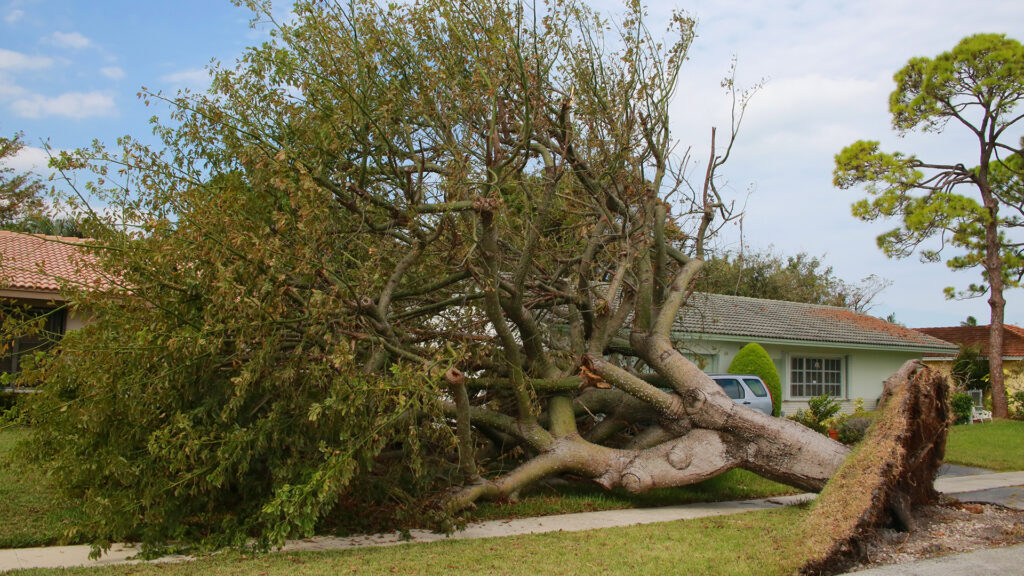
It sounds like a simple question: Is my tree hazardous? Unfortunately, in arboriculture, that is a surprisingly loaded question. A large tree beside a house may look frightening simply because of its size. A hollow trunk may convince a homeowner that a tree is about to fall. Mushrooms growing at the base can cause immediate alarm. Meanwhile, a smaller tree with a less obvious structural defect may receive very little attention. None of those observations, by themselves, tell us the actual level of risk. Trees are living structures. They move in the wind, respond to injury, grow around defects, and change over time. And any tree large enough to strike a person, house, vehicle, or other valuable target has the potential to cause harm.
That doesn’t automatically make it hazardous. What does “risk” actually mean? In professional tree risk assessment, we don’t simply ask, “Could this tree fail?” Almost anything could fail under the right circumstances. Instead, we consider several questions: How likely is the tree, or a particular part of it, to fail? If it fails, how likely is it to strike something? And if it does, how serious would the consequences be? Consider the same mature oak growing in two different places. One stands at the edge of a field where people rarely go. The other extends over a frequently occupied home. The tree may have exactly the same structural condition in both situations, but the risk isn’t necessarily the same because the targets and potential consequences are different. This is why the word risk needs context. The goal of a professional tree risk assessment isn’t to eliminate every tree that could theoretically fail. If that were the standard, we wouldn’t have many mature trees left. The goal is to understand the tree well enough to make reasonable decisions about managing its risk while preserving its benefits whenever possible. Who is evaluating your tree?
This is where terminology can become confusing for homeowners. Someone may work professionally as an arborist, but the word itself doesn’t tell you what certifications or specialized qualifications that person holds. An ISA Certified Arborist® has met eligibility requirements involving arboricultural experience and/or education and passed a comprehensive examination covering the practice of arboriculture. Some arborists pursue additional qualifications. The ISA Tree Risk Assessment Qualification, or TRAQ, provides specialized training in a standardized and systematic approach to tree risk assessment. TRAQ-qualified arborists are trained to evaluate defects, tree mechanics, site conditions, targets, likelihood of failure, and potential consequences.
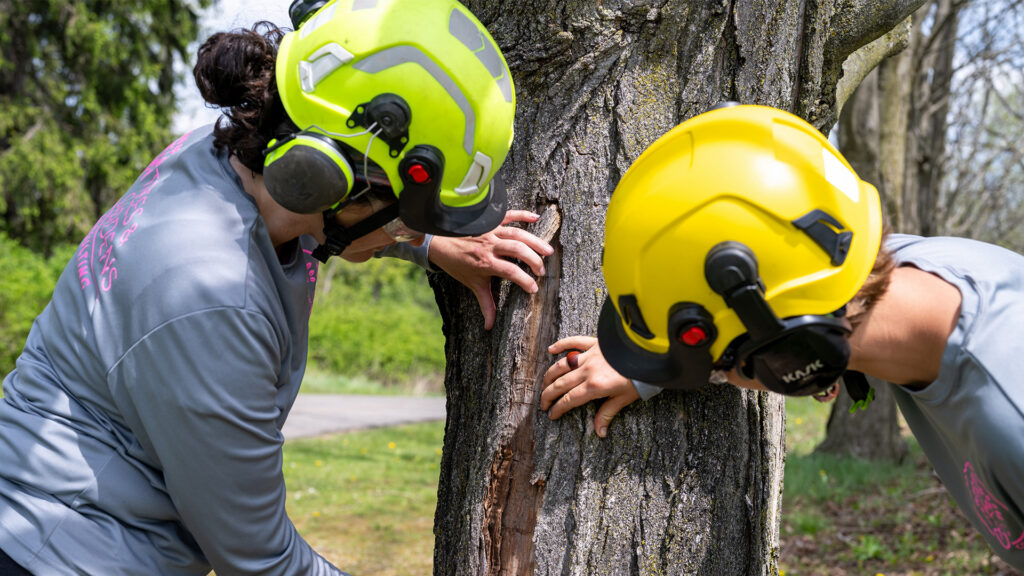
The ISA Board Certified Master Arborist® credential is the highest level of certification offered by the International Society of Arboriculture and requires additional experience, education, and/or related credentials as well as passing an advanced examination. These distinctions matter when you’re making a decision about a tree that may have taken 75, 100, or even 200 years to grow. A hollow tree isn’t automatically a dangerous tree. This is one of the biggest misconceptions I encounter. Trees don’t heal wounds the way people do. Instead, they respond to injury by compartmentalizing damaged tissue and continuing to produce new wood. As a result, a tree can contain internal decay or even a substantial cavity while continuing to produce structurally important wood around it. That doesn’t mean cavities should be ignored. It means “the tree is hollow” isn’t enough information to determine whether it should be removed. I want to know where the decay is located. How much sound wood remains? Are the structural roots involved? Is the defect associated with a particular type of decay? What loads are being placed on that area of the tree? Is the condition changing? Sometimes a visual assessment provides enough information. Sometimes I want to look deeper.
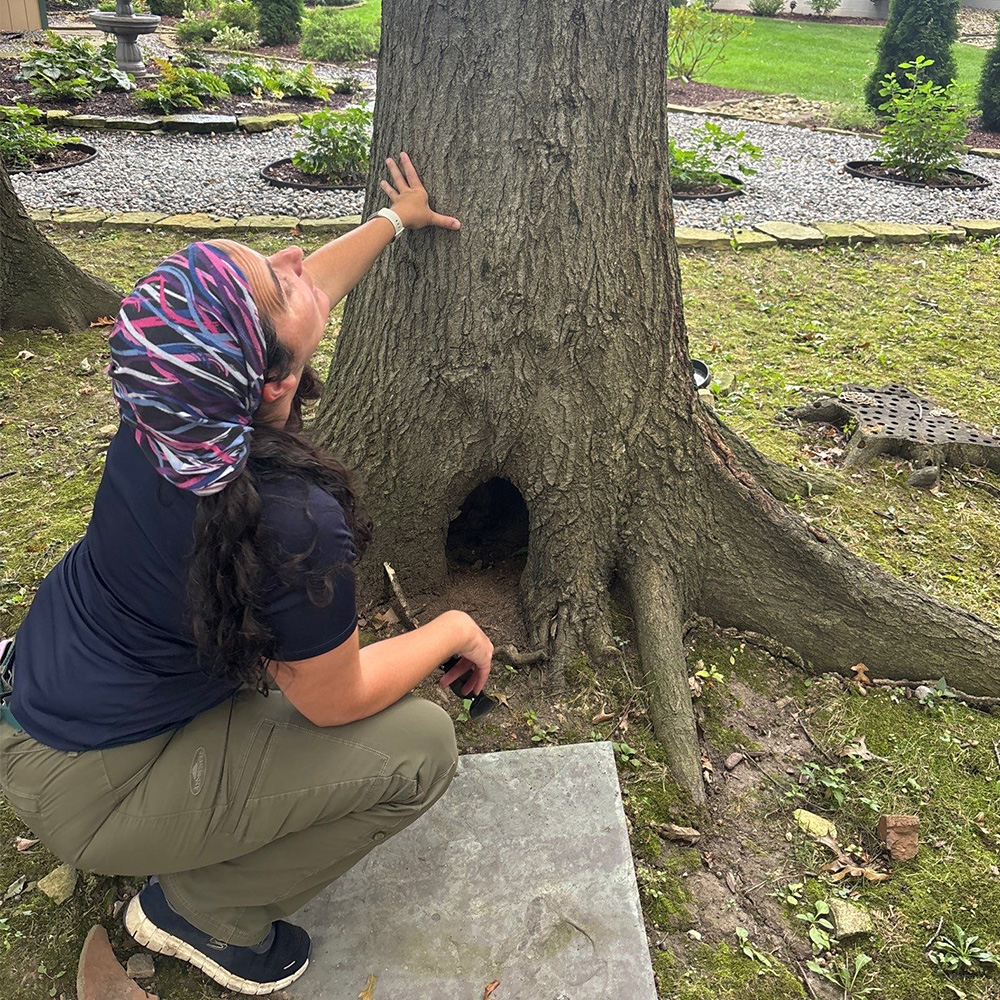
Looking inside a tree
One of the diagnostic instruments I use at Trees & Gardens Consulting is an IML Resistograph. Despite the impressive name, the basic concept is fairly easy to understand. The instrument advances a very fine drilling needle through the wood while measuring the resistance encountered along its path. The resulting graph provides information about changes in the wood internally. Sound wood, deteriorated wood, and open cavities produce different resistance patterns. By strategically testing a trunk, structural root, or other area of concern, I can gather additional information about conditions that aren’t visible from the outside. The Resistograph doesn’t make the decision for me. It is another piece of evidence that has to be interpreted alongside tree biology, species, defects, site conditions, and the results of the visual assessment. Sometimes the most useful thing it tells us is that there is more sound wood remaining than the outside of the tree might suggest. Advanced diagnostics aren’t valuable because they give us more reasons to remove trees. They’re valuable because they give us better information. What about mushrooms? Fungal fruiting bodies on a tree deserve attention, particularly when they occur on the trunk, root flare, or structural roots. But a mushroom isn’t a diagnosis, either.
There are many different decay organisms associated with trees, and they don’t all behave the same way. Some decay different portions of the wood. Some are more structurally significant than others. Some conditions primarily affect tree health rather than immediately indicating a structural problem. Identification matters. Location matters. Tree species matters. And the amount and distribution of remaining sound wood matter. The same principle applies to insects and diseases. Many common tree pests can be managed, and some serious diseases have effective treatment or management options when they are identified early enough. A diagnosis should come before a treatment recommendation. Sometimes the treatment is the problem. Ironically, some of the damage I encounter in mature trees wasn’t caused by an insect, disease, or storm. It was caused by previous attempts to “fix” the tree. Excessive thinning, lion’s-tailing, tipping branches, and unnecessarily removing large live limbs can create long- term structural and biological problems. Trees need leaves. Their leaves manufacture the carbohydrates that support growth, defense, and normal biological processes.
Branches also aren’t randomly arranged pieces of wood. Their size and distribution are part of the mechanical structure of the tree. Removing large amounts of live canopy changes that system while creating wounds the tree must compartmentalize. Large pruning wounds may remain biologically and structurally significant for the rest of the tree’s life. Good pruning should therefore have a specific objective. “It’s getting really big, so let’s thin it out” isn’t, by itself, a good pruning objective. And topping a mature tree to make it smaller can create exactly the kinds of structural problems homeowners were hoping to prevent. The best tree care is surprisingly boring. After talking about decay fungi, tree biomechanics, and specialized diagnostic equipment, homeowners are sometimes surprised when I tell them that two of the best things they can do for their trees are remarkably simple: Water them and mulch them properly. Drought stress is common in our landscape trees, particularly when they are growing in compacted or disturbed soils. Supplemental watering during dry periods can make a tremendous difference.
A broad layer of organic mulch can moderate soil temperature, conserve moisture, add organic matter, and protect the root zone from lawn equipment. But mulch belongs over the root zone — not piled against the trunk. The base of a tree should widen naturally as it enters the soil. If the trunk disappears straight into a mound of mulch like a telephone pole, pull the mulch back and find the root flare. Sometimes sophisticated tree care really does start with something that simple.
So, is your tree hazardous?
Maybe. But its size doesn’t answer the question. Neither does a hollow. Neither does a mushroom. Neither does a dead branch. And neither does the fact that your neighbor lost a tree during the last storm. A meaningful tree assessment considers the tree, its defects, its biology, its environment and the people and property around it. That’s also an important distinction between an estimate for tree work and an independent arboricultural consultation. When I perform a consultation or tree risk assessment, the professional opinion is the service. Sometimes my recommendation is pruning. Sometimes it’s treatment. Sometimes additional diagnostic testing or periodic monitoring makes sense. And yes, sometimes a tree presents enough risk that removal is the reasonable recommendation. But sometimes my recommendation is much simpler: Leave the tree alone. For a mature tree that has taken generations to grow, knowing when not to intervene can be every bit as important as knowing when to act.
Tina L. Graver, M.S., BCMA, TRAQ, CUFP, CTSP is the owner of Trees & Gardens Consulting, LLC, providing science-based arboricultural consulting, tree risk assessment, plant health care, and advanced tree diagnostics throughout Northeast Ohio.
Owner – Trees and Gardens Consulting
Board Certified Master Arborist
Tree Risk Assessment Qualified
Certified Treecare Safety Professional
call/text: 440-289-7993
Any content, resident submissions, guest columns, advertisements, and advertorials are not necessarily endorsed by or represent the views of Best Version Media LLC (BVM) or any municipality, homeowners associations, businesses, or organizations that this publication serves. BVM is not responsible for the reliability, suitability, or timeliness of any content submitted, inclusive of materials generated or composed through artificial intelligence (AI). All content submitted is done so at the sole discretion of the submitting party.