I’m going to say something that might sound strange coming from a funeral director: The funeral isn’t for the person who died. They’re dead. They don’t care what color the flowers are. They don’t care whether the casket is mahogany or metal. They don’t care if the service starts at two o’clock or two-fifteen. They certainly aren’t going to be offended because somebody laughed during the service. The funeral is for the people who are still here. And somewhere along the way, I think we forgot that. For generations, we developed a remarkably specific idea of what a funeral is supposed to look like. Quiet room. Somber music. Flowers. People dressed in dark colors speaking in hushed voices. A few carefully chosen words. Everyone doing their best to keep it together. There is absolutely nothing wrong with that kind of funeral. Unless it has absolutely nothing to do with the person who died. I have spent enough time around death to know that grief does not follow a script. Neither should a funeral.
Some people need ceremony. Some need religion. Some need a packed funeral home and two hours of stories. Others need twenty people, a bottle of their dad’s favorite bourbon, his old records playing in the background and permission to laugh about the ridiculous things he did for 73 years. Both are funerals. Both matter. Because the purpose is the same. We are trying to figure out how to live in a world that suddenly has someone missing from it. Death is serious. That doesn’t mean everything around it has to be miserable. The funeral profession has historically been very good at solemnity. We know how to whisper. We know how to dim the lights. We know how to make everything incredibly dignified. And dignity matters enormously. But dignity and personality are not opposites. Neither are grief and laughter.
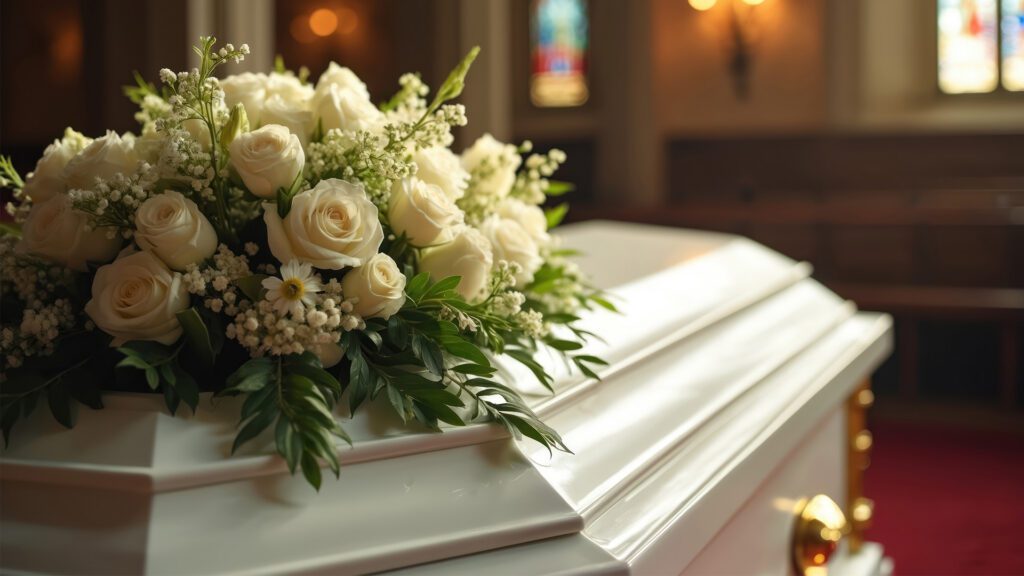
I have watched families stand beside a casket and tell stories that had an entire room laughing until someone could barely breathe. Thirty seconds later, those same people were crying. That’s grief. It is messy, unpredictable and occasionally hilarious. Human beings do not become saints simply because they die. Your uncle who told inappropriate jokes at Thanksgiving is still the guy who told inappropriate jokes at Thanksgiving. Your mother who loved bright lipstick, Motown and telling everyone exactly what she thought did not suddenly become a beige person because she died. Your friend who hated suits probably doesn’t need everyone pretending he would have wanted a room full of them. A meaningful funeral doesn’t manufacture dignity by erasing personality. It finds dignity in the personality.
“What Are We Allowed to Do?”
Families ask me versions of this question all the time. Can we play this song? Can we bring his motorcycle? Can everyone wear jerseys? Can we have food? Can we decorate the casket? Can we have the service somewhere else? Can we make it funny? Can we do something completely different? My answer is usually some variation of: Why not? There are obviously practical limitations, legal requirements and a few things that will make your funeral director develop an eye twitch. But culturally? We have far more freedom than most people realize. There are no funeral police. There is no committee waiting outside to determine whether Grandma’s celebration of life was sufficiently depressing. And there certainly isn’t a rule requiring every human being to be remembered in exactly the same way. The best funeral services I have witnessed weren’t necessarily the largest or most expensive.
They were the ones where I could walk into the room knowing nothing about the deceased and, an hour later, feel like I knew them. That’s the standard. Not how impressive it looked. How accurately it felt. We Do All of This for the Living People sometimes question why funerals matter at all. Why spend the money? Why gather everyone together? Why look at photographs? Why tell stories everyone has already heard? Why go through all of this when it cannot change what happened? Because human beings need punctuation. There was life before this death. There will be life after it. And somewhere between those two realities, we need a moment to stop. A funeral gives us that moment.
It forces us to acknowledge something our minds are remarkably talented at avoiding: This happened. Someone we love was here. They mattered. And now something has changed. That is why ritual surrounding death exists in virtually every culture. The details differ tremendously, but the instinct is remarkably consistent. We gather. We remember. We tell stories. We perform rituals. We care for the dead. And we surround the living. A funeral isn’t going to eliminate grief. It isn’t supposed to. It gives grief somewhere to go. Maybe we need to stop being so afraid of death.
I own a funeral home, so I recognize that I have a somewhat unusual relationship with mortality. Death is part of my Tuesday. For most people, it isn’t. We avoid talking about it. We avoid planning for it. We use softer words for it. We convince ourselves there will be plenty of time to deal with everything later. Until there isn’t. But acknowledging death doesn’t diminish life. Quite the opposite. Spend enough time around people who thought they had another Christmas, another birthday, another vacation or another ordinary Tuesday with someone they loved, and you begin to understand just how valuable ordinary Tuesdays actually are. Death has taught me far more about living than I expected when I entered this profession. Say what needs to be said. Take the photograph. Make the phone call. Forgive people when you can. Write down your wishes. Tell your family what you want. And for God’s sake, tell somebody where the important paperwork is.
A Funeral Should Feel Like a Person, Not a Template
I believe the future of funeral service is actually quite simple. Less performance. More authenticity. If tradition brings comfort, embrace every bit of it. If faith defined someone’s life, let faith fill the room. If military service mattered deeply to them, honor it. If they loved motorcycles, dogs, baseball, gardening, tattoos, classic cars, terrible jokes or Frank Sinatra, there ought to be some evidence of that too. And if the appropriate goodbye involves laughter, then laugh. None of this makes death less serious. It makes the funeral more human. At Schneeberger-Oser, we have said repeatedly that we aren’t interested in being a traditional funeral home simply for tradition’s sake. That doesn’t mean rejecting tradition. It means rejecting the idea that tradition is the only option. There is an enormous difference. Our profession has the privilege of meeting families on one of the worst days of their lives. They trust us with someone who means everything to them. That responsibility should never be treated casually. But taking our responsibility seriously does not require making every funeral look the same. Quite frankly, I think we owe families more imagination than that. So, when my own day eventually comes, I hope nobody spends much time worrying about what a funeral is “supposed” to be. Tell the stories. Play the music. Laugh at the inappropriate ones. Remember the good. Acknowledge the bad.
Raise a glass if that’s your thing. And then go home and keep living. Because in the end, the person in the casket isn’t the one who needs the funeral. You are. And perhaps the best way we can honor the dead is by creating a goodbye that reminds the living just how much life matters.
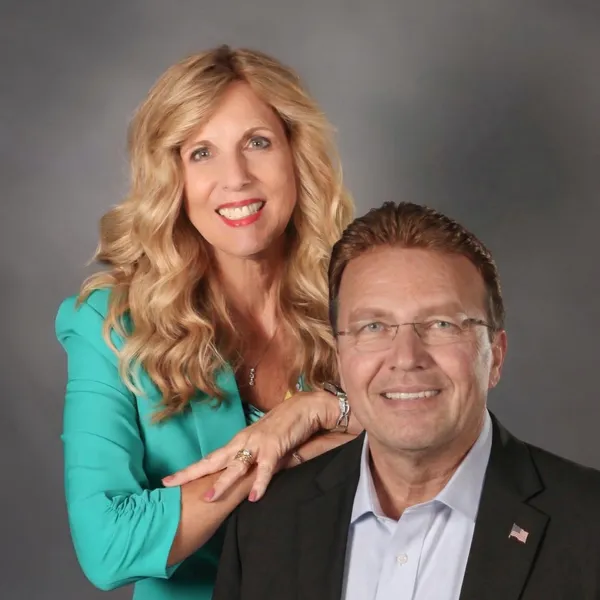
Andrew M. Oser is a licensed funeral director and embalmer and owner of Schneeberger-Oser Funeral Home in Canton, Ohio. His firm believes that changing the way we say goodbye should never change the way we care.
Any content, resident submissions, guest columns, advertisements, and advertorials are not necessarily endorsed by or represent the views of Best Version Media LLC (BVM) or any municipality, homeowners associations, businesses, or organizations that this publication serves. BVM is not responsible for the reliability, suitability, or timeliness of any content submitted, inclusive of materials generated or composed through artificial intelligence (AI). All content submitted is done so at the sole discretion of the submitting party.