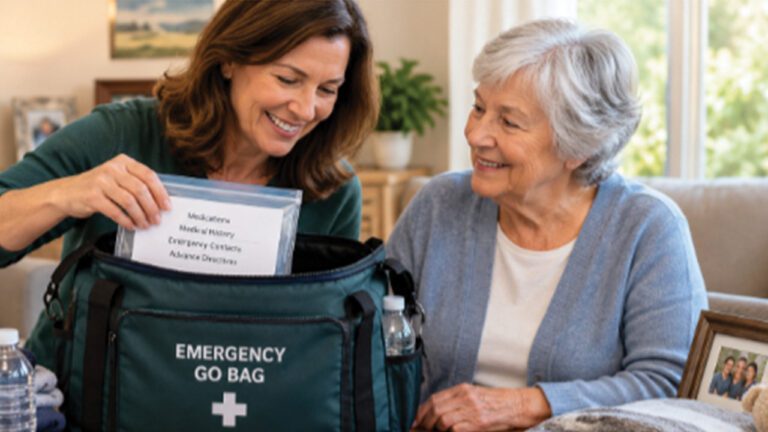
If your aging parent were rushed to the emergency room tonight, would you have everything you need? Could you quickly find their medication list, medical history, and healthcare directives? Would someone be available to advocate for them and help coordinate their return home?
For adult children caring for aging parents, spouses supporting an aging partner, and solo agers planning for the future, these questions are more than hypothetical. A little preparation today can reduce stress during a crisis and help make aging safely at home more achievable. A sudden illness, fracture, or trip to the emergency room can leave anyone feeling overwhelmed.
If you live alone, who will advocate for you if you cannot speak for yourself? If you are helping an aging parent, will you have the information you need to make informed decisions? And if your family lives far away, who can step in when help is needed? The best time to prepare for a medical emergency is before it happens.
Start With an Emergency Room “Go Bag”
When everything feels urgent, it is difficult to think clearly. A prepacked ‘go bag’ keeps essential information and supplies in one place, ready to grab when you need them.
Important documents to include:
- Current medication list, including prescription and over-the-counter medications
- Medical history, diagnoses, and allergies
- Names and contact information for physicians
- Emergency contacts and healthcare decision-makers
- Copies of advance healthcare directives and HIPAA authorizations
Helpful items to pack:
- A change of clothes and continence supplies, if needed
- Phone charger, pen, and notepad
- Extra pair of glasses
- *Note: If you wear hearing aids, pack an over-the-counter hearing amplifier for temporary use- hearing aids are the #1 item that gets lost in an emergency.*
Keep the bag somewhere accessible, like near the front door, and review its contents regularly. Update medication lists and contact information whenever something changes. Keep identification and insurance cards ready to grab, too.
Preparation Goes Beyond the Bag
An emergency plan should answer a few important questions:
- Have you documented your healthcare wishes and legally appointed someone to make decisions if you cannot?
- Does that person know where to find your important documents?
- Who could accompany you to the hospital, ask questions, and help coordinate your care?
- If you live alone or your family lives far away, who could help you return home safely?
Hospital discharge can involve new medications, follow-up appointments, rehabilitation, home health services, or additional support. Having a local professional advocate from a•bridge: Aging Life Care™ Management can help you understand your options and coordinate the next steps.
Make Your Home Safer Before a Crisis
Falls and household accidents can lead to avoidable hospital visits. A home safety evaluation from a•bridge: Aging Life Care™ Management can identify concerns such as poor lighting, loose rugs, bathroom hazards, and other fall risks. Addressing these issues early can support independence and help you remain safe at home.
You Don’t Have to Plan Alone
The local experts at a•bridge Aging Life Care™ Management help individuals and families prepare for the future and navigate challenging healthcare situations. A comprehensive needs assessment can help identify current and anticipated care needs, evaluate home safety, clarify available support, and develop a personalized plan. When a medical crisis occurs, our Aging Life Care Professionals® can also advocate for your needs and help coordinate the transition from hospital to home or anywhere in between. Whether you are a solo ager, concerned about an aging parent, or planning for your own future, you don’t have to wait for a crisis to get support.
Don’t Wait Until a Crisis to Make a Plan
An emergency go bag is a great first step, but a complete plan for aging in place goes further. At a•bridge Aging Life Care™ Management, we help families identify care needs, address home safety concerns, navigate healthcare decisions, and coordinate support when circumstances change. We can also provide professional advocacy during a hospital stay and help plan the transition back home.
Are you concerned about an aging parent? Caring for a sick spouse? Planning for a future when you may not have family nearby? Take the first step before an emergency happens. Call a•bridge Aging Life Care™ Management to schedule a consultation or a needs assessment. Together, we’ll identify potential challenges and develop a personalized plan to support safety, independence, and peace of mind.
Any content, resident submissions, guest columns, advertisements, and advertorials are not necessarily endorsed by or represent the views of Best Version Media LLC (BVM) or any municipality, homeowners associations, businesses, or organizations that this publication serves. BVM is not responsible for the reliability, suitability, or timeliness of any content submitted, inclusive of materials generated or composed through artificial intelligence (AI). All content submitted is done so at the sole discretion of the submitting party.