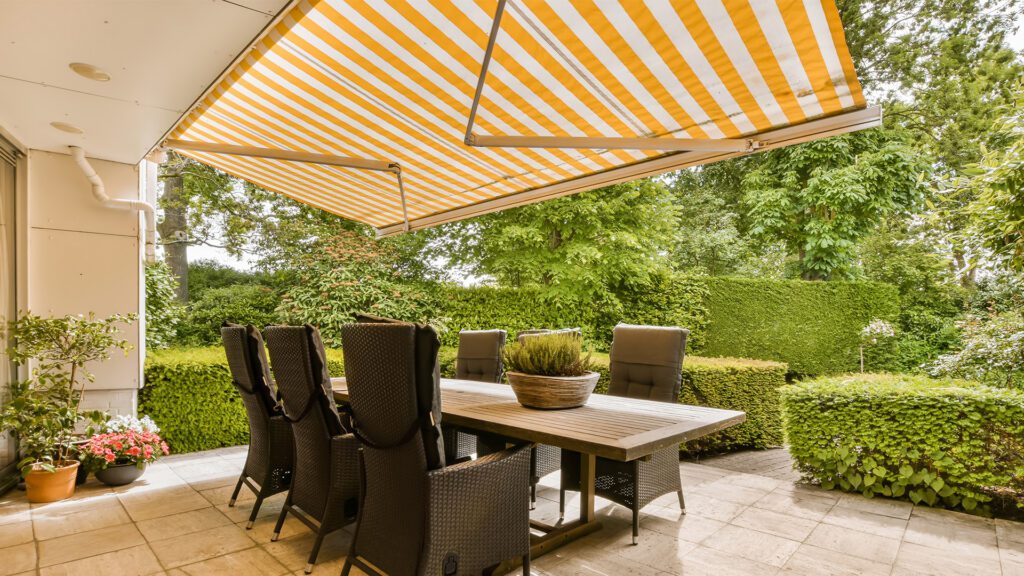
In Athens and Oconee County, some of the home’s most enjoyable rooms are not inside. A shaded porch or thoughtfully designed patio can become the setting for morning coffee, family dinners, and evenings with friends much of the year. Spring evenings and crisp fall afternoons are naturally inviting, and even in July, a well-shaded space can remain noticeably more comfortable than one in full sun. The difference often comes down to how a home handles light, heat, and passing storms.
If you have a patio or deck you rarely use, direct sun is often the reason. Georgia’s afternoon sun drops low in the western sky, and hard surfaces such as concrete and pavers hold heat long after the sun moves on. Shaded surfaces can remain 20 to 45 degrees cooler than comparable materials in full sun, while reducing glare and blocking much of the ultraviolet light that fades cushions, rugs, and outdoor furniture. Shading windows and doors along a sunny wall can also reduce indoor heat gain, easing the load on air conditioning during the hottest part of the year.
The most successful outdoor spaces begin with an understanding of how sunlight moves across the property, from soft morning light to the intense western sun of late afternoon. South- and west-facing spaces typically receive the harshest afternoon exposure and often benefit most from added shade, while a north-facing area may need very little. Watch how the sun crosses the yard throughout the day, because the shadow you want at noon is not the shadow you want at six o’clock.
The most attractive shade solutions also feel connected to the architecture of the home. Frame finishes, fabric colors, rooflines, and proportions should complement the exterior rather than appear added as an afterthought. Sight lines from inside, nearby landscaping, lighting, and furnishings all contribute to a result that feels useful and visually cohesive.
Material selection matters just as much as placement in Georgia’s climate. Solution-dyed acrylic fabrics retain their color longer than lower-grade printed fabrics, and a tighter weave blocks more UV while allowing warm air to escape. Lighter colors tend to reflect more heat, while darker fabrics may conceal pollen but retain more warmth. Whatever you choose should be built and anchored for Georgia’s demanding weather, including gusty winds, heavy downpours, and months of humidity. A proper pitch allows rain to run off instead of pooling, and solid attachment points help keep everything secure during sudden storms.
Finally, review neighborhood and permitting requirements early. Many communities have covenants governing exterior additions, and a permanent structure may require a permit. Planning ahead can prevent headaches and help protect your investment.
Done thoughtfully, shade can transform a patio that goes unused during summer into a comfortable extension of the home, ideal for morning coffee, family dinners, and evenings with friends from spring through late fall. In Georgia, thoughtful outdoor design does not simply add shade; it adds another place to live well.
Any content, resident submissions, guest columns, advertisements, and advertorials are not necessarily endorsed by or represent the views of Best Version Media LLC (BVM) or any municipality, homeowners associations, businesses, or organizations that this publication serves. BVM is not responsible for the reliability, suitability, or timeliness of any content submitted, inclusive of materials generated or composed through artificial intelligence (AI). All content submitted is done so at the sole discretion of the submitting party.