It’s that time of year again, when camping reservations open across the province. With options ranging from front-country and car camping to backcountry and wilderness camping, knowing what gear to bring is crucial. This guide breaks down the essential gear you need and how to choose the right gear for your trip.
Tents
Your tent should match your camping style.
If you’re heading into the backcountry, a lightweight backpacking tent is essential, as carrying a heavy car-camping tent for hours on the trail will quickly become uncomfortable and exhausting. You don’t need the most expensive ultralight option; the best backpacking tent will balance:
- Weight & packability
- Durability
- Budget & frequency of use
For car camping, comfort is the priority. Car camping tents are larger; designed to be a “home-from-home” at your site. When choosing one, consider:
- Ease of set-up
- How many people will be sharing it
- The packed volume, and your vehicle size
Sleep Systems
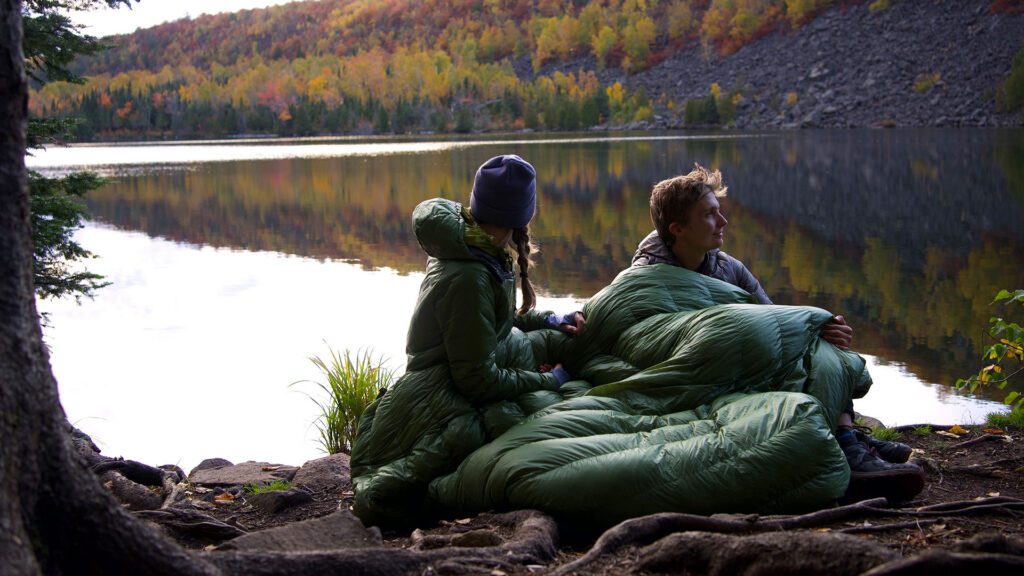
A good sleep system is vital for a comfortable night outdoors, involving both your sleeping bag & sleeping pad working together to keep you warm and rested.
Down vs. Synthetic Sleeping Bags
The type of insulation impacts price points and properties:
- Synthetic sleeping bags are cheaper and easier to clean, perform better in wet conditions, but are heavier and bulkier.
- Down sleeping bags are lighter, more durable, more compressible, and longer-lasting, but require more specialist care and come at a higher price point.
Understanding Sleeping Bag Temperature Ratings
Sleeping bags are rated by temperature, which is often a limit or transition temperature, not a comfort rating. Most people will likely be cold when the outside air temperature reaches the listed temperature. A simple rule is to subtract 3–5 degrees from the marked temperature to find what you will probably be comfortable with.
Quilts
Quilts became popular because hikers realized that the compressed insulation on the back of a sleeping bag adds very little, besides extra weight, to the load. They remove that compressed, ineffective material, resulting in a lighter, more compact sleep system that some campers find more comfortable and less restrictive.
Sleeping Pads and R-Value Explained
Your sleeping pad is just as important as your sleeping bag, as it provides insulation from the cold ground. Pads are rated by R-Value, which measures how well the pad provides this insulation. Even a very warm sleeping bag cannot compensate for a low R-value pad. Look for an R-value appropriate for the season you are camping in (higher for colder conditions).
Cooking Setups
Your cooking setup should match your camping style, keeping it simple if you aren’t aiming to be the “Gordon Ramsay of the trail or campsite”.
Backcountry Cooking
For backpacking, simplicity is key. A good trail setup is often just a single-burner stove and a small pot used for:
- Boiling water
- Making coffee
- Preparing dehydrated meals
This keeps your pack light and routine efficient. You can elevate your meals by adding a small spice kit for more flavour without much added weight.
Car Camping Cooking Setups
Car camping offers more flexibility to cook proper meals. A double-burner stove with 2–3 pots or pans lets you create great one-pot wonders for 3–8 people. A reliable coffee maker can also significantly improve mornings around other people.
Backpacks
Your backpack is one of the most important pieces of equipment to have fitted correctly, regardless of whether you are car camping or backpacking.
Daypacks
A 20–30L daypack is ideal for general use, such as day hikes to local viewpoints or carrying essentials around town.
Multi-day/Backpacking packs
For multi-day trips, a volume between 45–70L is the ballpark to aim for, depending on your equipment and days on the trail. This should be one of the last items you purchase, as the volume you need depends on the size of your other equipment.
With all packs, it is crucial to have them professionally fitted to ensure the best fit, which will help reduce fatigue and carry weight more comfortably on longer trips.
Final Thoughts: Choose Gear That Matches Your Trip
The best camping gear fits your needs; it isn’t necessarily the most expensive or the lightest. Before heading out, consider the following:
- Where are you going?
- How long will you be out?
- How much will you be carrying?
- What level of comfort do you desire?
Making the right choices upfront helps you avoid common mistakes and ensures you get the most out of your time outdoors. If you are unsure, seeking advice from experienced staff or testing gear in-store can help you find the right setup.
Any content, resident submissions, guest columns, advertisements, and advertorials are not necessarily endorsed by or represent the views of Best Version Media LLC (BVM) or any municipality, homeowners associations, businesses, or organizations that this publication serves. BVM is not responsible for the reliability, suitability, or timeliness of any content submitted, inclusive of materials generated or composed through artificial intelligence (AI). All content submitted is done so at the sole discretion of the submitting party.