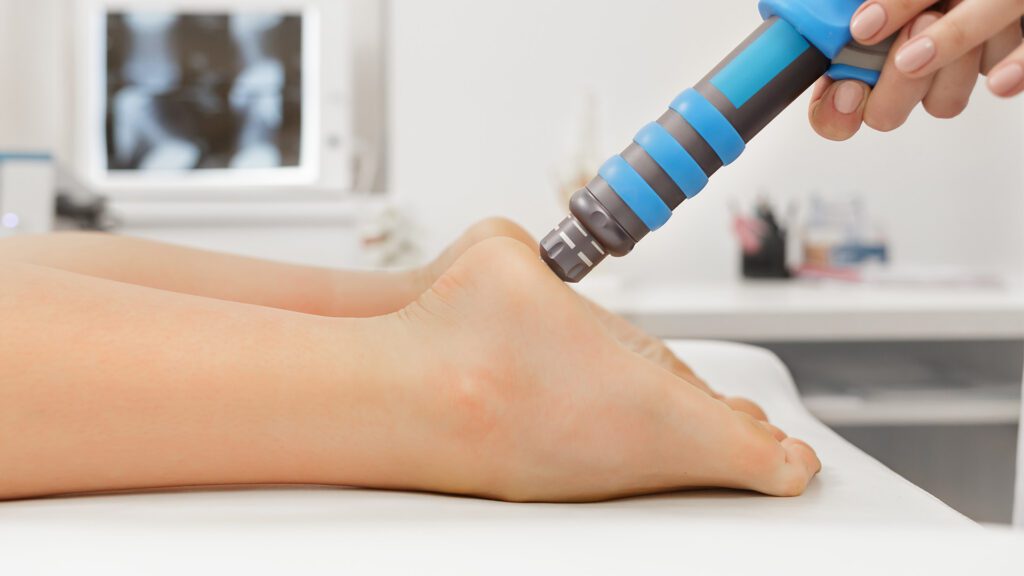
In sports medicine, the goal is simple: keep athletes active, recovering quickly, and performing at their best. Yet chronic soft tissue conditions like plantar fasciitis and Achilles tendinopathy can be stubborn. That’s where extracorporeal shockwave therapy (ESWT) has become a valuable addition to modern podiatric care.
Shockwave therapy is a non-invasive treatment that uses high-energy sound waves to stimulate healing in damaged tissue. Rather than simply masking pain, it works by reactivating the body’s natural repair processes – improving blood flow, promoting collagen production, and encouraging new vessel formation in areas where healing has stalled.
For athletes, this is a major advantage. Traditional treatments like rest, orthotics, and physical therapy are important, but they don’t always address the underlying degeneration. ESWT helps bridge that gap, often allowing patients to continue training with modifications instead of stopping activity altogether. Treatments are quick (about 10–15 minutes), require little to no downtime, and are typically performed in a series over several weeks.
In my practice, shockwave therapy is most effective for chronic, treatment-resistant conditions such as plantar fasciitis, Achilles tendinopathy, and other overuse injuries. It’s especially helpful for patients looking to avoid surgery. That said, it’s not a cure-all. Outcomes depend on proper diagnosis, addressing biomechanics, and patient compliance.
In younger athletes, shockwave therapy is used more selectively. Most pediatric heel pain is growth-related and responds well to conservative care like stretching, activity modification, and orthotics. ESWT may be considered in more persistent cases – particularly in competitive adolescents nearing skeletal maturity – but always as part of a broader treatment plan.
Ultimately, shockwave therapy fits into a stepwise approach between conservative care and surgical intervention. When used thoughtfully, it can reduce recovery time, restore function, and keep athletes doing what they love – being on the field, not on the sidelines. Shockwave therapy is another example of how “MOVEMENT IS MEDICINE.”