For many years, cable television was the standard way people watched TV. You paid one company each month, and they provided channels through a cable box connected to your television. Today, many people are switching to “streaming,” which works differently and often costs less.
However, streaming can also feel confusing at first, especially for seniors who are more familiar with traditional cable television. Streaming simply means watching shows and movies through the internet instead of through a cable line or satellite dish. Rather than channels coming through a cable wire, the programs are delivered over your home Wi-Fi connection. Services like Netflix, Hulu, Disney+, YouTube TV, and Amazon Prime Video are examples of streaming services.
Instead of turning to Channel 7 or Channel 42, you open an app and choose what you want to watch whenever you want to watch it. One important thing to understand is that streaming requires internet service in your home. If your Wi-Fi stops working, your streaming services usually stop working too. Cable television, on the other hand, can sometimes continue working even during internet outages because it is hardwired.
There are pros and cons to both cable and streaming. Cable television is usually easier for many seniors because it feels familiar. You simply turn on the TV and change channels with a remote. Local news channels are easy to find, sports are often straightforward to access, and there is less setup involved overall. Cable companies also usually provide customer service and technicians who can help if something stops working.
The biggest downside to cable is cost. Monthly cable bills can become very expensive, especially when extra channel packages, sports channels, DVR service, and equipment fees are added. Some people pay well over $150 each month for cable and internet combined. Streaming is often cheaper and gives viewers more flexibility. Many streaming services cost between $10 and $20 per month, and you can cancel them anytime.
Streaming also allows people to watch entire seasons of shows, classic television programs, movies, documentaries, church services, and hobby videos whenever they choose instead of waiting for scheduled programming. At the same time, streaming does come with a learning curve. Instead of one simple channel guide, there may be several different apps and menus to learn. It can sometimes be frustrating remembering which service has which show, and some people may accidentally subscribe to services they do not need if they are not careful while clicking through menus.
When people switch to streaming, they often hear terms like “Smart TV,” “Roku,” or “Fire Stick,” which can sound confusing at first. A Smart TV is simply a television with internet features built directly into it. It can connect to your home Wi-Fi and run apps such as Netflix or YouTube without needing extra equipment. Most newer televisions sold today are Smart TVs. If you have an older television that is not a Smart TV, you can still stream by using a small device such as a Roku or Amazon Fire Stick. These small devices plug into the back of your television using an HDMI port and connect to your Wi-Fi.
They basically turn a regular TV into a Smart TV. Many seniors like Roku devices because the menus are often simple and easy to navigate. Fire Sticks are also popular and include voice controls, which can make searching for shows easier. Some people also prefer these devices because they are inexpensive compared to buying an entirely new television.
Another important thing to remember is that streaming depends heavily on your internet connection. If your Wi-Fi is weak or slow, videos may freeze or “buffer” while loading, which can become frustrating. Cable television is often more reliable and familiar, while streaming offers more flexibility and lower monthly costs for many households. The truth is that there is no single “best” option for everyone. One is not necessarily better than the other. The right choice depends on your comfort level with technology, your monthly budget, the strength of your home Wi-Fi signal, the types of programs you enjoy watching, and your willingness to learn something new.
Some seniors prefer the simplicity and familiarity of cable, while others enjoy the freedom and savings that streaming can provide. Learning technology one step at a time can make the process much less overwhelming and help you find the setup that works best for your lifestyle.
Want To Learn More?
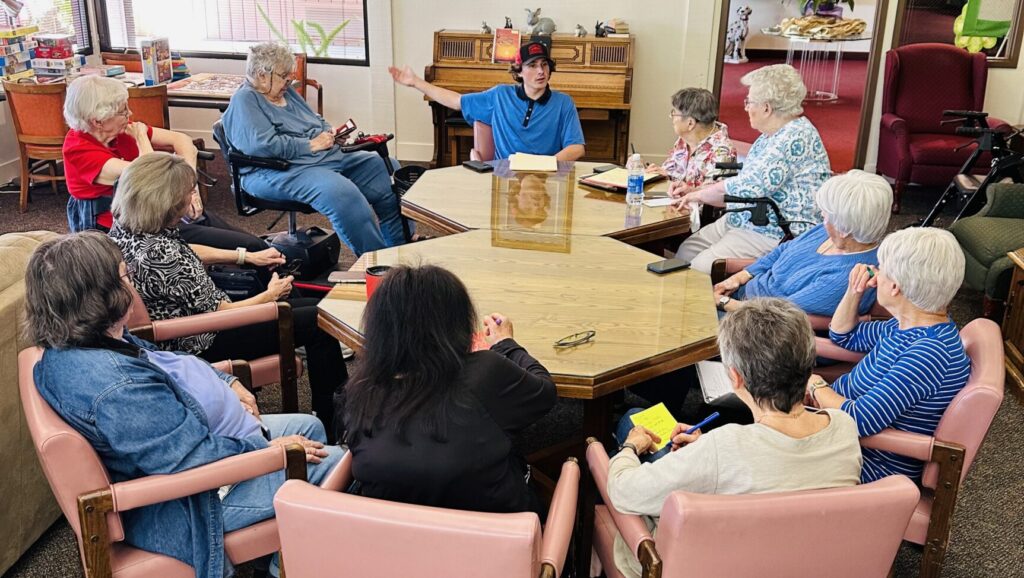
Come Join Tech Tuesday with Teagin
the last Tuesday of every month at 3:30PM!
Silverado Orchards Retirement Community
601 Pope Street, St. Helena, CA
Open to the public, free of charge!